
Reviewed · METEORA TOURS
Kalabaka: Meteora Small-Group Hiking Tour w/ Monastery Visit
Meteora rewards you on foot. This five-hour morning hike leads through sandstone pillars, old hermitage sites, and quiet trails before reaching one of the area’s famous monasteries. I especially like the close-up views of the rock formations and the way guides such as Christos, Evan, and Dimitris connect geology, wildlife, local legends, and Orthodox history.
I also like the practical setup: hotel pickup, a bottle of water, a map, and a route that gives you a genuine walk rather than a quick bus stop. The main consideration is fitness. Parts of the trail are gentle, but the route includes rocky ground, uphill walking, and a steep descent from the monastery, so this is not a sightseeing stroll in city shoes.
In This Review
- Key points to know before you book
- Why walking is the right way to see Meteora
- From Kalabaka to Kastraki Square
- Dupiani Hermitage and the first views
- Ypapanti Monastery and the ruins of St. Dimitrios
- Reaching Great Meteoron or Varlaam
- The descent to St. George the Madilas
- What the guides add to the experience
- Is this a hard hike?
- Timing, transport, and value at $35
- Who should book this Meteora hike?
- Should you book it?
- FAQ
- Where does the hike begin?
- How long does the tour last?
- Which monastery will I visit?
- How many monasteries can I enter?
- Is the monastery entrance fee included?
- Does the guide lead the monastery visit?
- Is hotel pickup included?
- What language is the tour conducted in?
- What shoes should I wear?
- Is the hike suitable for people with low fitness or mobility problems?
Key points to know before you book
- The route begins at Kastraki Square and follows traditional paths toward Dupiani Hermitage, Ypapanti Monastery, and Great Meteoron or Varlaam.
- You visit one monastery, with about an hour for the grounds and interior areas available to the public.
- The finest views come from the trail, not only from the monastery terraces and road pullouts.
- Guides add real value, explaining plants, animals, geology, myths, climbing traditions, and local history.
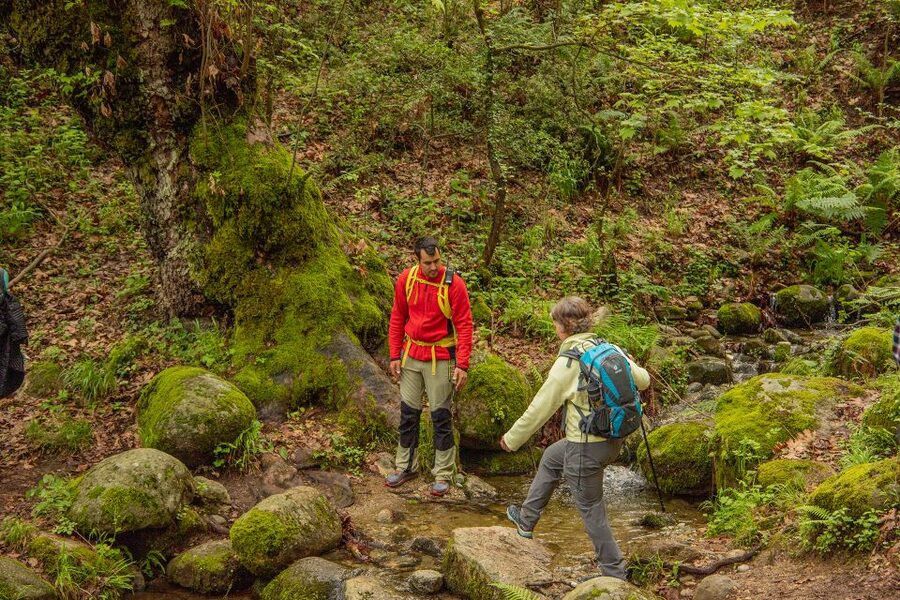
- The hike is often manageable for beginners, but rocky sections, heat, and the descent require proper footwear.
- The price is strong for a half-day outing, though monastery entry costs another €5 per person.
Why walking is the right way to see Meteora
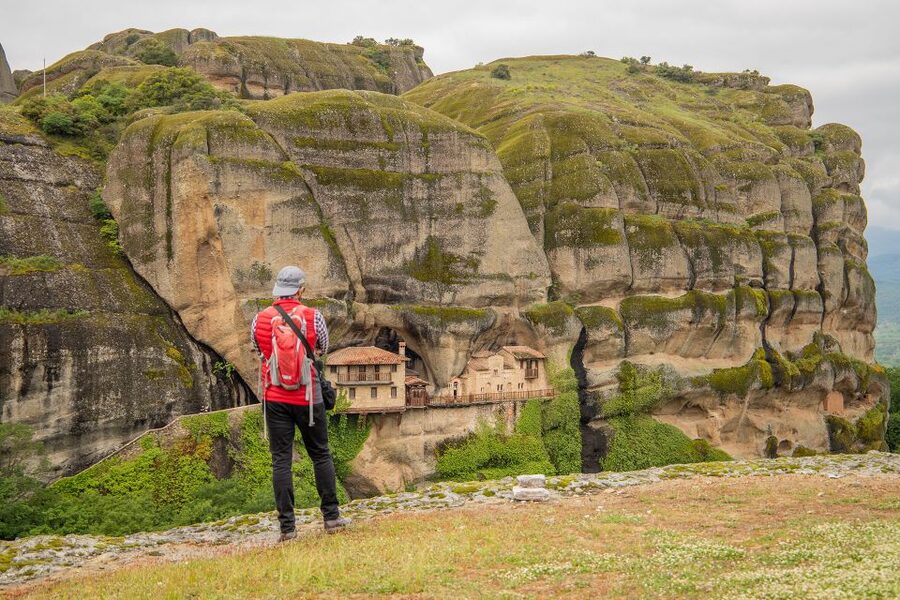
Meteora is famous for monasteries perched on tall sandstone pillars, but a road tour can make the setting feel flatter than it really is. From a vehicle, you see the cliffs and buildings. On foot, you notice how the rock walls fold around the paths, how caves open beneath the pillars, and how the monasteries seem to emerge from the stone.
That is the chief strength of this outing. The hike does not simply take you to a monastery and back. It uses the spaces between the monuments as part of the experience. You get changing views of the pillars, glimpses of several monasteries from outside, and a better sense of how earlier monks and local people moved through this difficult terrain.
The route is also a useful introduction to Meteora. You learn about the area’s Eastern Orthodox tradition, the local plants and animals, the sandstone formations, and stories connected with the monasteries. Guides have pointed out turtles and lizards along the way, and the natural setting gives the history a physical context.
A few more Kalabaka half-days to weigh up
- Meteora: Sunset Hike to Secret Caves
★ 4.9 · 56 reviews - From Chania: Full-Day Samaria Gorge Trek Excursion & Guide
★ 4.6 · 3,191 reviews - From Rethymno: Samaria Gorge Full-Day Trek, Pickup & Guide
★ 4.5 · 1,610 reviews
From Kalabaka to Kastraki Square
Pickup is included from a long list of hotels and guesthouses in Kalabaka and Kastraki. The drive is short, listed at about 10 minutes, so you do not lose much of the morning to transport. The tour begins in Kastraki Square, a practical starting point near the foot of the rocks.
From here, your guide leads the group onto the trail. The route is not a paved promenade. You should expect natural paths, uneven surfaces, inclines, and steps. One useful feature is the guide’s ability to adjust the pace. Dimitris and Christos, in particular, have been praised for allowing regular rests and keeping groups together without turning the walk into a race.
If you are used to hiking, the first section should feel moderate. If you rarely walk on rough ground, it may take more effort than the short description suggests. The total tour lasts five hours, and the walking portion occupies most of that time.
Dupiani Hermitage and the first views
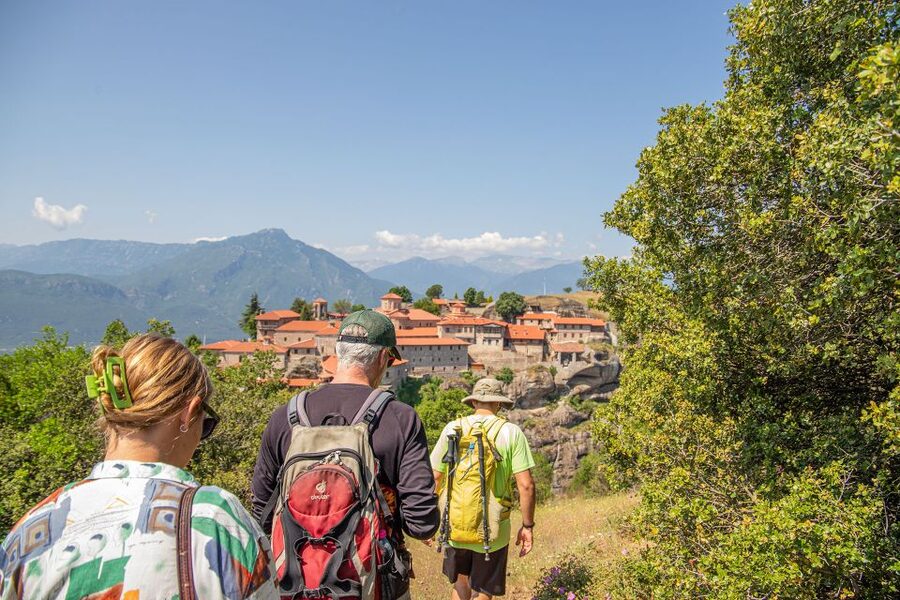
The path continues toward Dupiani Hermitage, an important early stop because it shows the quieter, more austere side of Meteora. Instead of beginning with the most famous monastery, you first move through the rocks and older religious sites.
You pass below the ruined Pantokratoros Monastery on the north side of Dupiani Rock. The ruins help explain how broad the monastic community once was. Meteora is not just six surviving monasteries on dramatic summits. The rocks also hold abandoned buildings, hermit shelters, caves, and traces of religious life that are easier to appreciate when you are walking between them.
The views begin to open as the trail rises. This is a good place to keep your camera ready, but do not spend the whole time looking at a screen. The unusual patterns in the sandstone and the changing angles of the cliffs are part of what makes the hike worthwhile.
Your guide also provides the details that are difficult to pick up alone. Evan has been especially praised for explaining what you are seeing without overloading the walk with lectures. The best guiding here is informal: a story at a ruin, a note about a plant, or an explanation of how the monasteries were built into high rock shelves.
Ypapanti Monastery and the ruins of St. Dimitrios
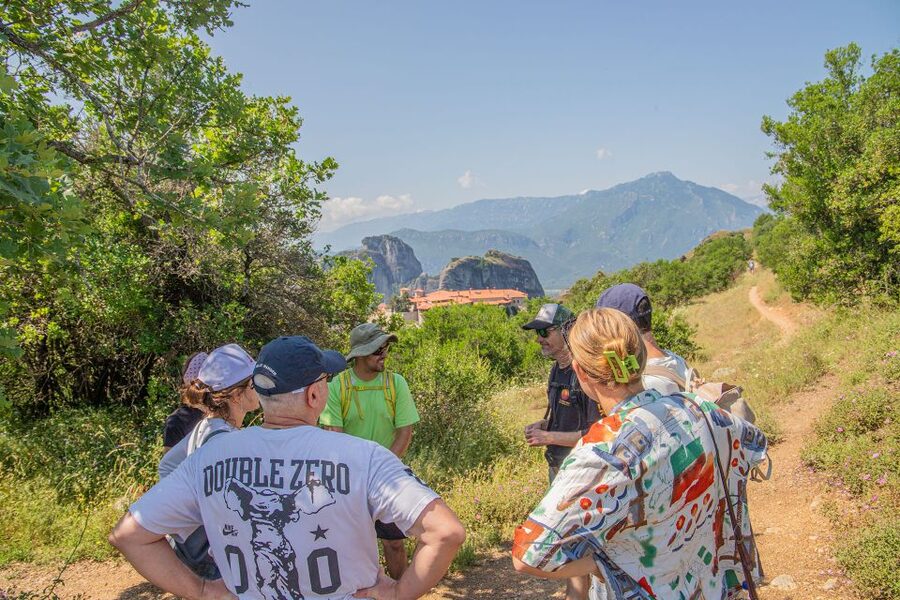
The trail reaches Ypapanti Monastery and the ruins of St. Dimitrios. These places feel more remote than the main monastery compounds, and they add depth to the route.
St. Dimitrios was destroyed by the Ottomans in 1808 during a local uprising. That single fact gives the ruins a strong historical connection, but the physical setting matters just as much. You see how exposed the old religious sites were and how much work it took to build and maintain them on the rocks.
Ypapanti offers another reminder that Meteora’s religious heritage is scattered across the hills. You are not simply walking from one famous attraction to another. The route connects remains, paths, and viewpoints that help you picture a larger network.
This section may be one of the most rewarding parts for people who prefer a quieter experience. It also gives you a break from the main road traffic and monastery crowds. Still, conditions can change with the weather. Rain can make rocks slippery, while summer heat makes the climbs feel harder. The guide sets the pace, but you should bring water and snacks rather than rely on finding food along the trail.
Same stretch of coastline, a completely different day out:
- Meteora: Morning Half Day Sightseeing and Monasteries Tour
★ 4.7 · 478 reviews - Meteora: Majestic Sunset Tour & Monasteries with Local Guide
★ 4.7 · 359 reviews - Meteora: Panoramic Morning Small Group Tour with Local Guide
★ 4.7 · 334 reviews - Athens: Guided Tour to Meteora Monasteries & Hermit Caves
★ 4.7 · 211 reviews
Reaching Great Meteoron or Varlaam
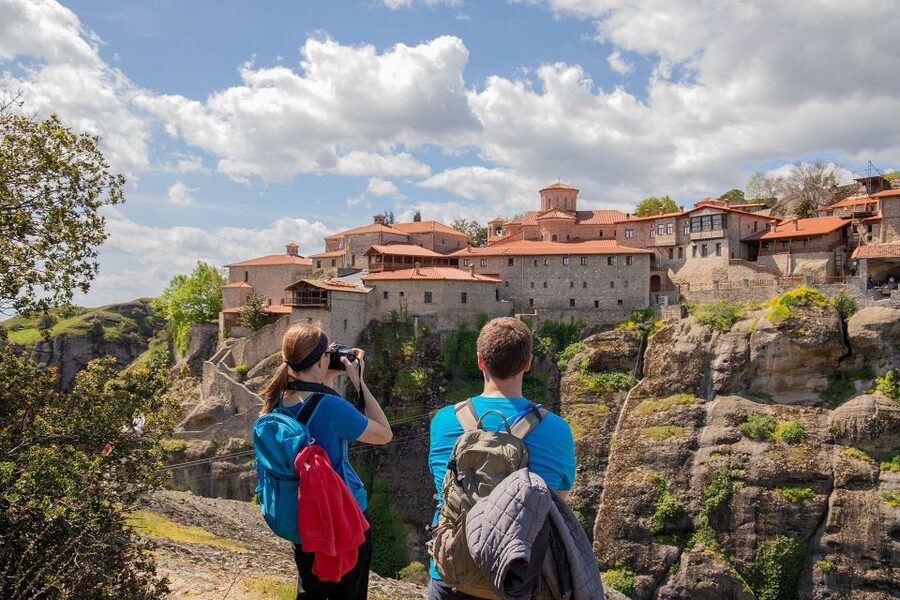
From the older sites, the trail climbs toward the two best-known monastery choices: Great Meteoron and Varlaam. The experience can focus on Great Meteoron, Varlaam, or the route selected by the local operator, so check the exact monastery for your date if that distinction matters to you.
Great Meteoron is the largest and most famous of the six surviving Eastern Orthodox monasteries in the area. Varlaam is another major monastery with its own setting and views. Both are part of the Meteora UNESCO World Heritage Site.
The walk gives you a different arrival than a road trip. You approach through the rocks, often seeing the building from several angles before reaching the entrance. That gradual arrival helps you understand why these sites were chosen. The monasteries were not placed on ordinary hills. They were built in places that offered solitude, protection, and a demanding route for anyone who wanted to reach them.
You have about an hour to tour the monastery grounds and explore independently. The guide does not provide the indoor monastery tour, so you should expect to read signs, look around at your own pace, and pay attention to opening arrangements on the day.
Entry is not included. Budget €5 per person for the monastery you visit. At $35 per person, the overall cost remains reasonable, but the extra fee is important if you are counting every euro.
Dress rules matter here. Sleeveless shirts are not allowed, and you should dress respectfully for an active religious site. Comfortable long or modest clothing is the safer choice, along with closed shoes.
The descent to St. George the Madilas
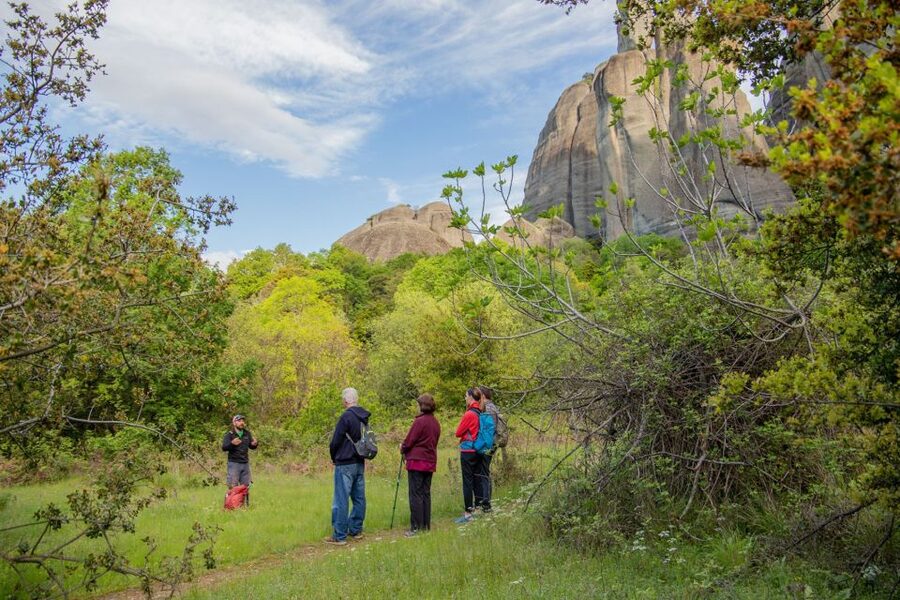
After the monastery visit, the hike continues down toward St. George the Madilas. This section gives you another view of Meteora’s living traditions.
St. George the Madilas is associated with a local custom in which children climb with only a rope to dedicate offerings to St. George. It is an unusual detail, and it gives the tour a human connection beyond architecture and scenery. Your guide can explain the story and point out the place connected with it.
The descent is where you should take the fitness warning seriously. Several people have described the downhill section as more challenging than the uphill walk. A rocky trail and steep steps can be awkward if you are wearing smooth-soled sneakers, and walking poles can help. One guide has carried poles for people who needed extra support.
This is not a technical climbing excursion, but it does demand balance and steady footing. Avoid sandals and flip-flops. Walking boots, trail shoes, or closed sneakers with non-slip soles are the right choice.
What the guides add to the experience
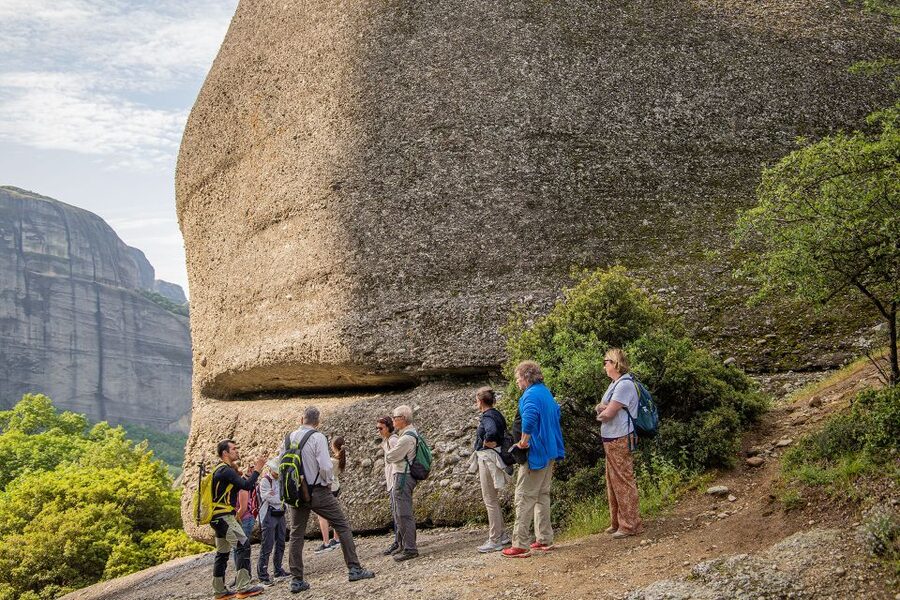
The guides are the strongest part of this tour. Christos, Evan, Dimitris, Chris, and Vangelis have all been praised for their warmth, clear English, and ability to connect different subjects.
You may hear about:
- The monasteries and how they were built
- Meteora’s geology and sandstone formations
- Plants, turtles, lizards, and other local fauna
- Local myths and climbing traditions
- The area’s political and religious past
- Traditional paths that are easy to miss without local help
The best benefit is not just information. A local guide helps you walk safely and keeps the group moving at a sensible pace. Guides have handled mixed abilities well, offering rest stops and adjusting speed. That matters when one person is an experienced hiker and another is visiting the hills for the first time.
The tour can also feel personal in poor weather. On a rainy day, Christos continued with a small group and turned the wet conditions into part of the experience. Rain will not make the trail easier, so you should still check the forecast and dress properly, but the outing does not depend on perfect sunshine.
Is this a hard hike?
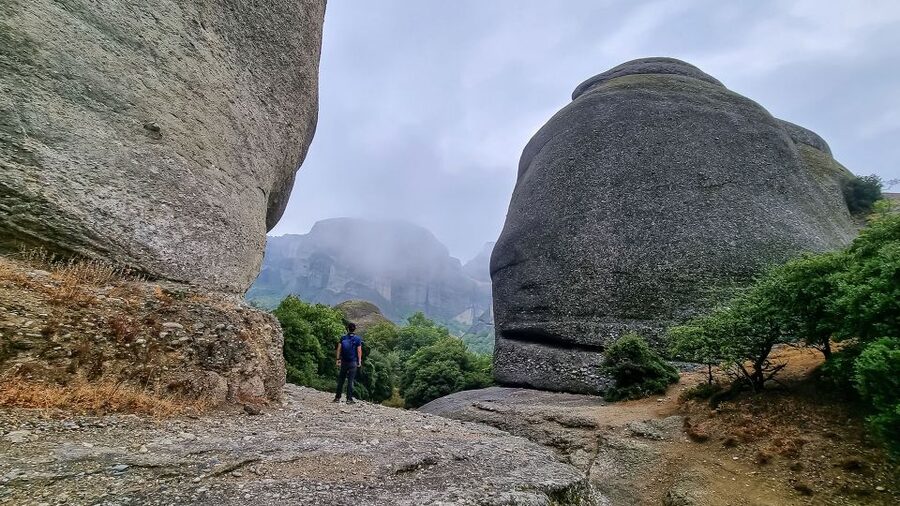
I would call it moderate rather than easy. Several sections are suitable for beginners, and people with limited hiking experience have completed the route at a comfortable pace. At the same time, the full five hours, uphill sections, uneven paths, and steep descent can challenge anyone who is not used to walking in the hills.
Older walkers have completed it successfully, especially with poles and regular breaks. One group in their seventies found it manageable but still described it as a real hike. That is the right way to think about it.
The tour is not suitable for children under seven, people with heart problems, people with mobility impairments, or people with a low level of fitness. It is also not suitable for visually impaired participants because of the uneven trail and changing surfaces.
Bring a hat, comfortable clothing, snacks, cash, and sturdy shoes. A bottle of water is included, but one bottle may not be enough for everyone on a warm day, especially if you tend to drink a lot while walking.
Timing, transport, and value at $35
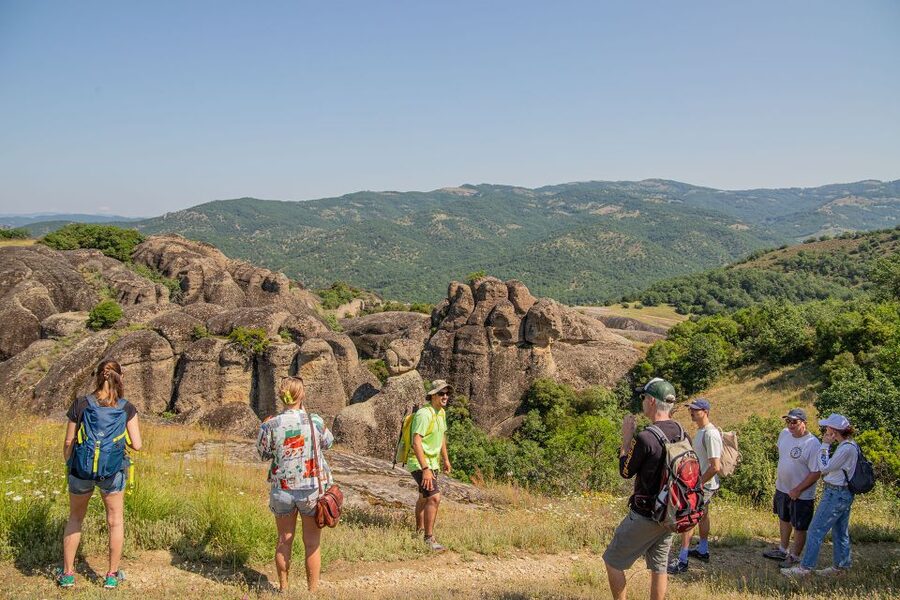
The advertised duration is five hours. The sample schedule allows roughly 2.5 hours for the first hiking and sightseeing section, one hour at the monastery, another hour on the trail, and about 25 minutes total for transport back and forth.
That is a good use of half a day in Meteora. You get a guided route, hotel pickup and drop-off, a map, water, and access to one monastery. A road-based tour may cover more viewpoints, but it will not give you the same contact with the old paths and rock formations.
At $35 per person, the tour is especially good value for visitors who want one active morning rather than a full-day package. Add the €5 monastery fee and any snacks or drinks you buy, and the total remains modest for a five-hour guided outing.
The tradeoff is choice. You do not get a full guided visit inside several monasteries. If your main goal is to study interiors, frescoes, and religious objects at multiple sites, choose a monastery-focused tour instead. If you want to understand how the monasteries fit into the cliffs and surrounding hills, this walking route gives you more.
Free cancellation up to 24 hours ahead and the option to reserve without paying immediately also make it easier to fit into an uncertain schedule.
Who should book this Meteora hike?
I would choose this tour if you want:
- A first introduction to Meteora
- Strong views without spending the whole morning on a bus
- A guided walk on traditional paths
- Stories about nature, geology, monasteries, and local customs
- A small-group outing with a flexible pace
- One monastery visit combined with outdoor activity
I would choose something else if you dislike uneven trails, want extensive indoor monastery visits, or need a fully accessible route. You should also think twice if you are visiting during a very hot period and are not comfortable walking uphill.
The route works well for couples, friends, solo participants, and families with older children. Children under seven cannot join, and even older children should be comfortable with a five-hour outing and rocky ground.
Should you book it?
Yes, if you want to see Meteora as a place rather than a collection of photo stops. The combination of old paths, ruined monasteries, huge sandstone pillars, and one major monastery visit gives you a fuller picture of the region.
Book it with realistic expectations. Wear proper shoes, bring snacks and cash, accept that the descent may be the hardest part, and allow time for the guide’s stories. At $35, this is one of the better-value ways to spend a morning in Meteora, especially for anyone who wants exercise, panoramic views, and local context in one outing.
FAQ
Where does the hike begin?
The walking portion begins at Kastraki Square after pickup from Kalabaka or a participating hotel and guesthouse.
How long does the tour last?
The tour lasts five hours, including transportation from Kalabaka and the return journey.
Which monastery will I visit?
The tour visits either Great Meteoron or Varlaam, depending on the arrangements for your departure.
How many monasteries can I enter?
You visit one monastery during the tour. You may also see other monasteries and ruins from the trail.
Is the monastery entrance fee included?
No. Entry costs €5 per person for the monastery you visit.
Does the guide lead the monastery visit?
No. The mountain guide leads the hike, but the monastery portion is self-guided.
Is hotel pickup included?
Yes. Pickup and drop-off are included from the listed hotels and guesthouses in Kalabaka and Kastraki.
What language is the tour conducted in?
The live tour guide speaks English.
What shoes should I wear?
Wear walking boots, trail shoes, or closed-toe sneakers with non-slip soles. Sandals and flip-flops are not allowed.
Is the hike suitable for people with low fitness or mobility problems?
No. The route includes uneven paths, uphill walking, and a steep descent, and it is not suitable for people with low fitness, mobility impairments, heart problems, or visual impairments.
Just added around Kalabaka
- Meteora Electric Bike Tour★ 5.0 · 61 reviews
- Meteora Sunset Tour on E-bikes★ 5.0 · 54 reviews
- From Kalabaka/Kastraki: Meteora Monasteries Morning Tour★ 4.8 · 178 reviews
- Meteora Evening Tour with Breathtaking Sunset View★ 5.0 · 44 reviews
- Kalabaka: Meteora Private Day Tour with a Local Guide★ 4.8 · 26 reviews
- Meteora: Sunset Hike to Secret Caves★ 4.9 · 56 reviews
- Meteora: Sunset Small Size Tour with Monastery & Caves visit★ 4.9 · 171 reviews
- Meteora: Monasteries Tour, Lunch, and Athens Transfer Option★ 4.8 · 102 reviews
Meteora Tours, compared.
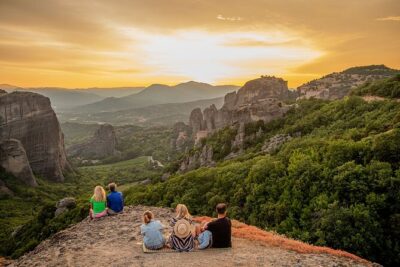
Meteora Sunset with Monastery & Hermit Caves Tour in Small Group
Read our review →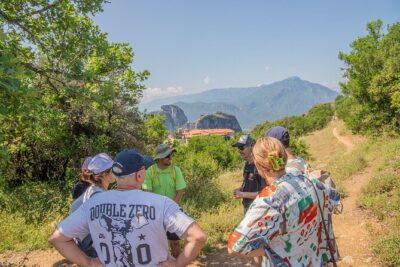
Meteora Small Group Hiking tour with Transfer and Monastery Visit
Read our review →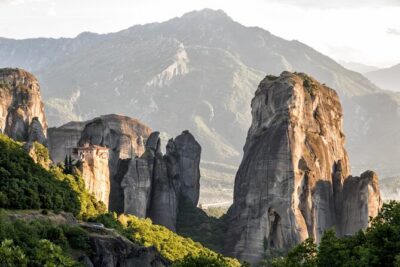
Morning Half Day Sightseeing and Monasteries Tour
Read our review →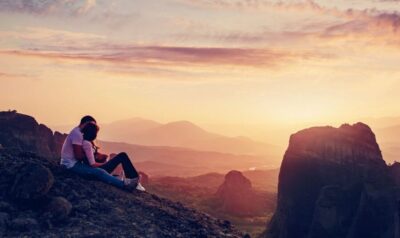
Guided Sunset Tour with Monasteries & Caves Visit
Read our review →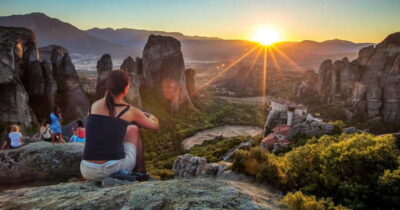
Majestic Sunset Tour & Monasteries with Local Guide
Read our review →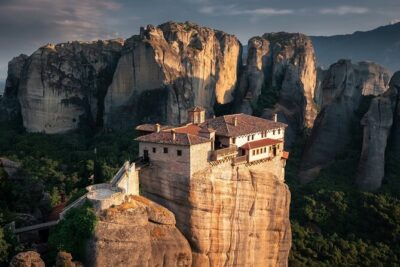
Panoramic Morning Small Group Tour with Local Guide
Read our review →
Guided Tour to Meteora Monasteries & Hermit Caves
Read our review →
From Kalabaka/Kastraki: Meteora Monasteries Morning Tour
Read our review →Browse the lists this tour appears in