
Reviewed · METEORA TOURS
Meteora: Panoramic Morning Small Group Tour with Local Guide
Meteora rewards an early start. This four-hour outing takes you from Kalabaka or Kastraki to all six active monasteries, with time to enter three, stop for wide views, and hear local stories from guides such as Yannis, Christos, Vavos, and Giannis. I especially like the small-group minibus and the many photo stops, which save you from driving and parking on steep roads. I also like that you get real time inside three monasteries rather than racing past every one from the road.
The main drawback is that the guide does not accompany you inside the monasteries. You receive explanations outside and on the road, then explore the interiors on your own with the free audio guide. You also need cash for the €5 entrance fee per monastery, and the steps can be harder than the short itinerary may suggest.
In This Review
- Key points to know before booking
- Why a morning visit works so well
- Pickup from Kalabaka or Kastraki
- The first views of Meteora
- St. Nicholas Anapavsa and the first monastery views
- Great Meteor Monastery, the largest stop
- Varlaam and Rousanou: two different experiences
- Holy Trinity and St. Stephen from the road
- What the guide adds, and where the audio guide helps
- Steps, clothing, and the pace of the four hours
- Is $35 a good value?
- Who should book this Meteora tour?
- Final verdict: a smart first morning at Meteora
- FAQ
- How long does the Meteora morning tour last?
- Where does pickup take place?
- How many monasteries will I see?
- Which monasteries will I enter?
- Are monastery entrance fees included?
- Is a guide provided inside the monasteries?
- What languages are available for the audio guide?
- What should I bring for the audio guide?
- What clothing is required?
- Is the tour suitable for people who do not walk easily?
Key points to know before booking
- Four hours covers all six monasteries: You see every active monastery from roads and viewpoints, then enter the three most popular ones.
- Morning timing matters: The early schedule helps you avoid some of the heavier crowds that build later in the day.
- Local guides add real context: Guides including Christos, Yannis, Nicolas, and Vavos have explained the monasteries, geology, local life, and Greek history in clear, engaging ways.
- You will climb steps: Two monasteries can involve about 120 steps, and some short walks feel more demanding than expected.
- The audio guide fills an important gap: You can use your smartphone inside the monasteries in 13 languages, but you need your own phone and earpads.
- The price is strong for a half-day: At $35 per person, transport, guiding, hotel pickup, WiFi, and three monastery visits offer good value, before entry fees.
Why a morning visit works so well
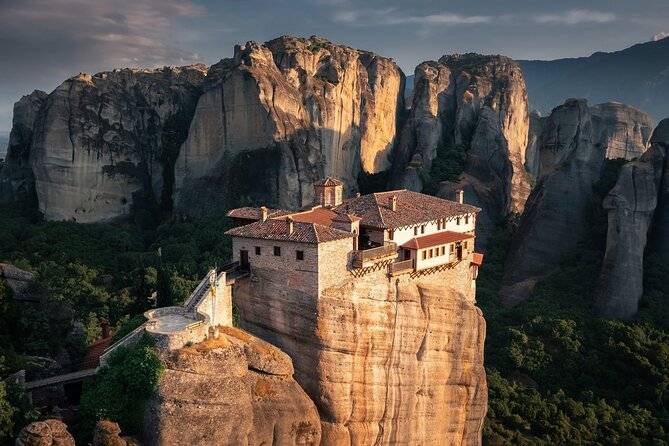
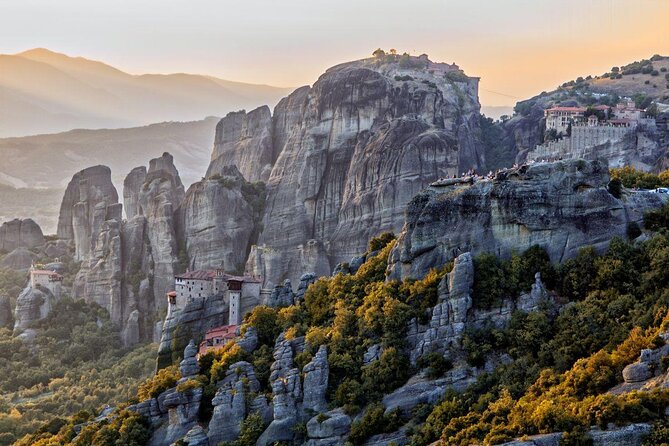
Meteora is one of those Greek sights that can feel almost unreal at first glance. Tall sandstone pillars rise sharply from the Thessalian plain, and monasteries sit on their tops or ledges. The setting is not just beautiful. It explains the entire story of the place.
Centuries ago, monks sought isolation in caves and on these difficult-to-reach rocks. Over time, a major Orthodox monastic community formed here. Six monasteries remain active today, cared for by a small number of monks and nuns.
I like this tour because it gives you both views and meaning. A self-guided drive can show you the rocks, but it is easy to miss why the monasteries were built where they are, how the community developed, and what makes each building different. The local guide handles that background during the short drives and at the viewpoints.
The morning departure is also practical. One August visitor found the tour wonderful but noted how busy the area became later in the morning. Another visitor in June found the monasteries crowded even around 9:30. You should not expect an empty site, but an early start gives you a better chance at calmer roads and shorter waits.
A few more Kalabaka half-days to weigh up
- Meteora: Morning Half Day Sightseeing and Monasteries Tour
★ 4.7 · 478 reviews - From Kalabaka/Kastraki: Meteora Monasteries Morning Tour
★ 4.8 · 178 reviews - Breath-taking Monasteries Morning E-Bike Tour
★ 5.0 · 31 reviews
Pickup from Kalabaka or Kastraki
Pickup is offered from hotels and Airbnbs in Kalabaka and Kastraki. The drive to Meteora takes only about five minutes, so very little of your four-hour allowance disappears in transit.
The vehicle is an air-conditioned minibus, with free WiFi. Group sizes vary, but the tour is designed for a small group, and one family reported fewer than 20 people. Other outings have had as few as seven participants. That difference matters: a small vehicle can stop more easily, and you spend less time gathering people at every monastery.
The driver is part of the experience. Several guides and drivers have been praised for being punctual, careful, friendly, and helpful with photographs. Some drivers have taken pictures for families and couples at the viewpoints, a small courtesy that can make a difference when everyone wants to be in the frame.
The itinerary also lists Trikala among pickup and drop-off options. Since the detailed pickup information focuses on Kalabaka and Kastraki hotels and Airbnbs, I would confirm the exact meeting point if you are staying in Trikala.
The first views of Meteora
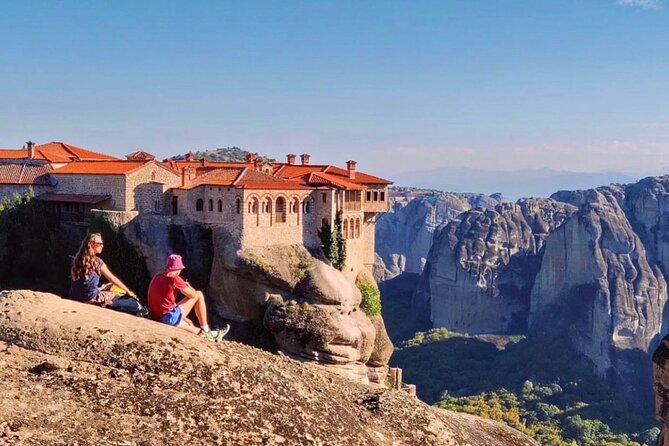
Once the minibus reaches Meteora, the tour shifts from transport to sightseeing. You get views of the sandstone pillars, the plain below, and monasteries perched above the road. There are several planned photo stops, so you are not limited to taking pictures through the vehicle window.
This is one of the tour’s strongest features. The monasteries are impressive inside, but the best sense of Meteora comes from seeing them against the rocks. The guide can point out all six active monasteries and explain where each one sits.
You will also see the Hermit Caves, where early religious communities lived in far more basic conditions. The caves help connect the grand monasteries you visit with the earlier, harsher form of monastic life.
A stop connected with the Eagles Nest location from Game of Thrones may also appeal to fans of the series. The more important reason to pause there is the view. It gives you another angle on the rock formations and the surrounding countryside.
St. Nicholas Anapavsa and the first monastery views
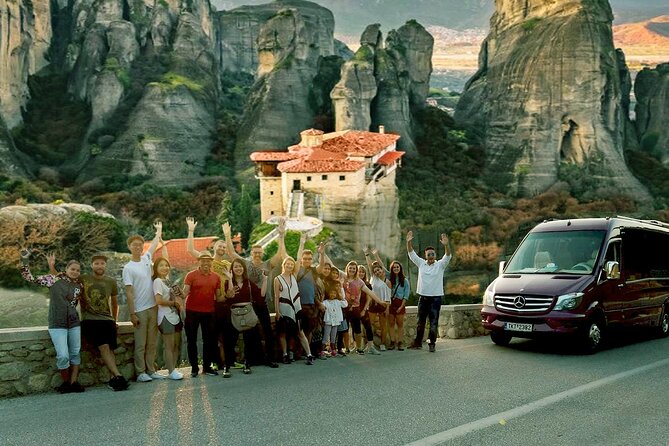
The Monastery of St. Nicholas Anapavsa is included as a photo and sightseeing stop. It is one of the six monasteries you see from the route, but it is not one of the three entered on this morning tour.
That arrangement is worth understanding before you book. You will see all six, but seeing a monastery from the road is not the same as walking through its chapel, courtyard, or museum areas. The tour uses the limited four-hour schedule to combine broad coverage with three interior visits.
I find that a sensible compromise for a first visit. You get the overall picture, then spend your walking time inside the monasteries most often included in the standard route. If St. Nicholas Anapavsa is your top priority, ask about the day’s plan before departure, since opening days can affect which three monasteries are visited.
Same stretch of coastline, a completely different day out:
- Meteora: Majestic Sunset Tour & Monasteries with Local Guide
★ 4.7 · 359 reviews - Athens: Guided Tour to Meteora Monasteries & Hermit Caves
★ 4.7 · 211 reviews - Kalabaka: Meteora Small-Group Hiking Tour w/ Monastery Visit
★ 4.9 · 205 reviews - Meteora: Sunset Small Size Tour with Monastery & Caves visit
★ 4.9 · 171 reviews
Great Meteor Monastery, the largest stop
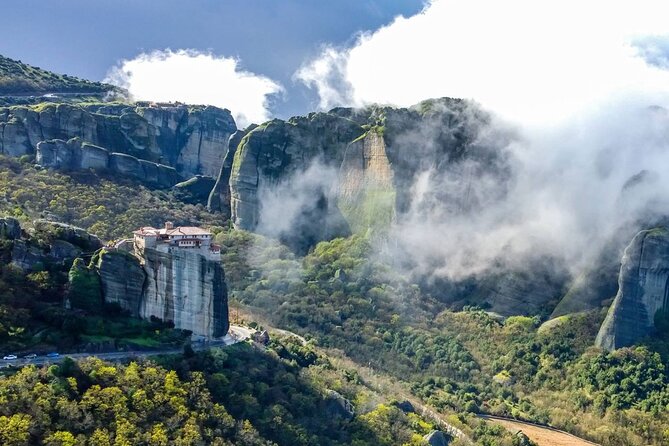
Great Meteor Monastery is one of the headline visits. You get a photo stop, an interior visit, and roughly an hour in the area according to the planned schedule.
The size and position of Great Meteor make it a major part of the Meteora story. This is where the scale of the monastic project becomes clear. The climb, stairs, and elevated setting also mean you should pace yourself rather than treat the stop as a quick photo opportunity.
Inside, the free Smart Audio Guide can explain the site in your chosen language. Options include English, Spanish, French, Italian, German, Dutch, Portuguese, Polish, Russian, Japanese, Korean, and Chinese. Bring your smartphone and earpads. The tour does not provide a guide inside the monastery, so the audio guide is more than a bonus. It is your main source of interior interpretation.
You should also allow for the entry charge. The current fee is €5 per monastery, payable in cash. Visiting three means budgeting €15 per person in cash, in addition to the tour price.
Varlaam and Rousanou: two different experiences
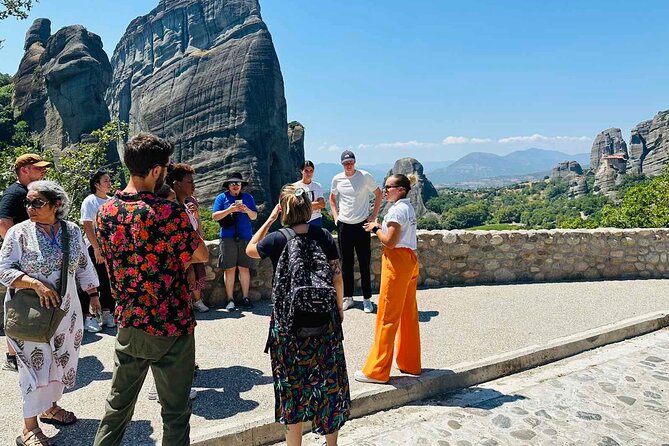
The Monastery of Varlaam receives a photo stop and an interior visit, with about 45 minutes planned. That is enough for a focused look, but not for lingering over every exhibit or taking a long break.
Varlaam is another place where sturdy shoes and a steady pace help. The tour gives you time to explore independently, which many people prefer. You are not tied to a guide’s every step inside, but you also need to keep an eye on the meeting time.
Rousanou is scheduled for about 30 minutes and is also visited inside. This shorter stop makes the four-hour plan possible, but it can feel brisk if you want to study the details. The guide’s outside commentary gives you the broad facts, while the audio guide lets you concentrate on the interior at your own speed.
Opening schedules matter at Meteora. Each monastery may close on a different day, so the exact three can change. The route can still offer views of all six, but you should not assume you will enter a particular monastery on a particular date.
Holy Trinity and St. Stephen from the road
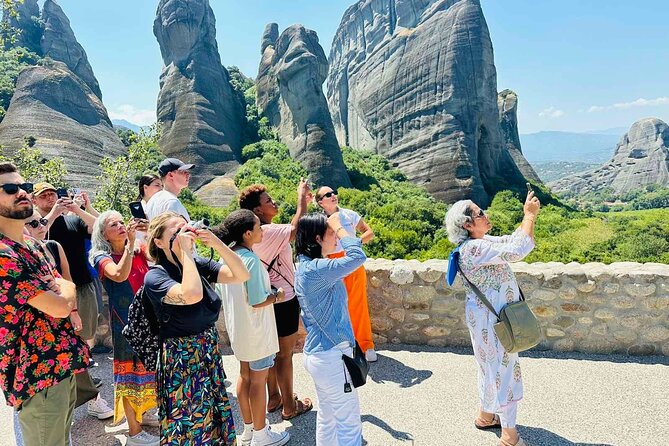
The tour also stops for views of Holy Trinity and St. Stephen. These are photo and sightseeing stops rather than interior visits on the standard route, with around 10 minutes planned at each.
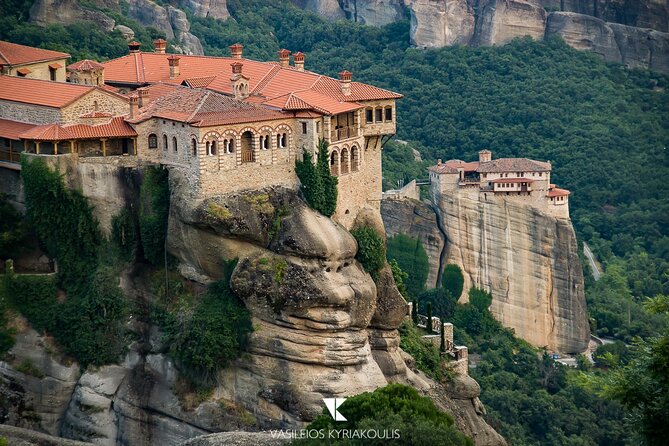
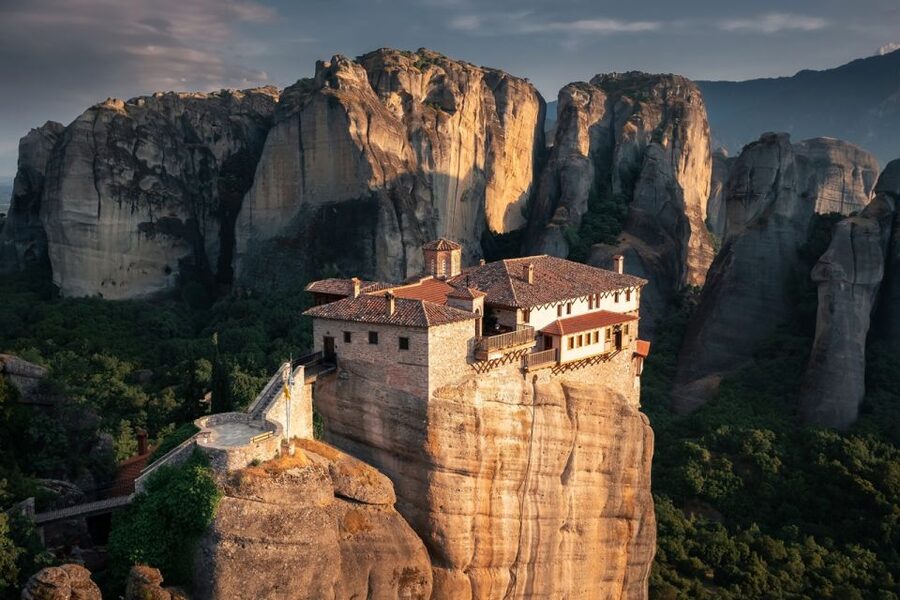
Holy Trinity is especially striking because of its dramatic position on the rock. St. Stephen is also easy to identify from the viewpoints, and seeing both helps complete your understanding of how the six monasteries are spread through the area.
These brief stops are useful, but they are not full visits. If your main goal is to enter as many monasteries as possible, you may find the three-visit format limiting. If your goal is to see the whole site without spending a full day climbing between separate locations, the balance works well.
What the guide adds, and where the audio guide helps
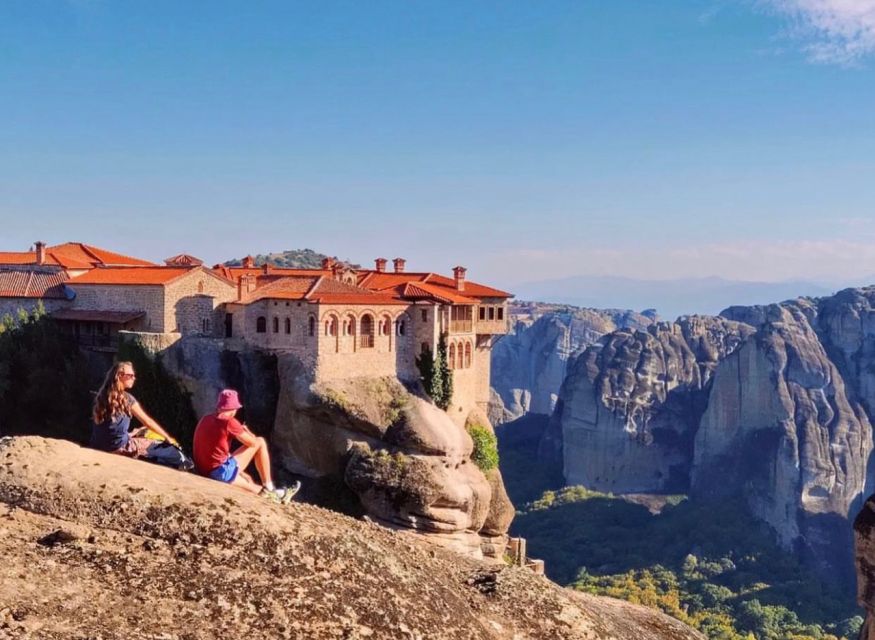
The strongest part of the guided experience is the live commentary between stops. Guides such as Christos have been praised for clear English and interesting explanations. Yannis has been described as funny and well informed, while Vavos gave one family the right amount of information without overwhelming them.
Good guiding is especially helpful here because Meteora combines several subjects: Orthodox monastic life, Byzantine history, geology, local traditions, and modern Greek life. Some guides have also explained the geological story of the rocks, which makes the setting easier to understand rather than simply photogenic.
There is some variation in delivery. One person found a guide’s English occasionally hard to follow, and another wished her guide would speak more slowly because the morning felt rushed. If you have hearing difficulties or prefer a slower pace, use the audio guide inside and stay close to the live guide during the road commentary.
The multilingual audio guide is a real advantage for non-English speakers. The live tour itself is in English, but the audio option covers a wide range of languages. You need to bring your own smartphone and earpads, and you should have the phone charged before leaving.
Steps, clothing, and the pace of the four hours
This is not a seated sightseeing ride. There are short walks, stairs, uneven surfaces, and monastery entrances that require decent mobility.
One detailed account put the climb at roughly 120 steps for two of the monasteries. Another person found the walking more demanding than expected, though the panoramic views made the effort worthwhile. Children aged 10 and 7 managed the route with their family, but parents should still prepare them for stairs and walking rather than a simple bus tour.
Wear sensible shoes and bring water. Food and drinks are not included, so plan to eat before or after the outing. The four-hour length makes it easy to fit the tour into a morning, leaving time for lunch or further independent sightseeing afterward.
Dress rules are strict. Women need a knee-length or longer skirt and cannot enter in pants, shorts, or sleeveless tops. Men cannot wear shorts or sleeveless clothing. If your normal sightseeing clothes do not meet the rules, bring suitable cover-up clothing with you.
Is $35 a good value?
At $35 per person, this is a strong-value way to see Meteora if you have only half a day. The price includes hotel pickup and drop-off in Kalabaka or Kastraki, an air-conditioned minibus, a local English-speaking guide, WiFi, a panoramic map, photo stops, views of all six monasteries, and visits to three.
You still pay €5 cash for each monastery entrance. That means the true basic cost for the standard three-monastery visit is the tour price plus €15 per person. Meals, drinks, and a guide inside the monasteries are not included.
I think the value comes from the transport as much as the commentary. Driving these roads yourself means managing parking, timing, monastery closures, and the steep route. The minibus drops you near the entrances, and the guide keeps the morning moving.
Private groups are available, and private tours can be more flexible. One private group shortened its outing to fit a connecting journey, while another was able to specify preferred monasteries. That option should suit you if your schedule is tight or you are traveling with family and want more control.
Who should book this Meteora tour?
I would choose this tour if you are staying in Kalabaka or Kastraki, do not have a car, and want a solid first look at Meteora without giving up an entire day.
It is also a good fit for families, couples, and first-time visitors who want the site explained rather than simply photographed. The short drives, air conditioning, hotel pickup, and planned stops make the day easy to manage.
I would hesitate if you want long, quiet visits inside each monastery, a serious walking route, or a guide beside you indoors. You may prefer a private tour or an independent visit with more time at fewer sites.
Final verdict: a smart first morning at Meteora
I recommend the Meteora Panoramic Morning Small Group Tour for its coverage, local guides, and practical timing. In four hours, you see all six active monasteries, enter three, visit the Hermit Caves, and collect a full set of views without handling the driving.
Book it if you value efficiency and context. Bring cash, proper clothing, a charged smartphone, earpads, water, and shoes suited to stairs. If you can choose your schedule, take the morning departure. It gives you the best chance of enjoying Meteora before the roads and monastery entrances become even busier.
FAQ
How long does the Meteora morning tour last?
The tour lasts four hours, including transportation, guided commentary, photo stops, sightseeing, and visits to three monasteries.
Where does pickup take place?
Pickup is included from hotels and Airbnbs in Kalabaka or Kastraki. Trikala is also listed among the possible pickup and drop-off locations, so confirm the exact meeting point if you are staying there.
How many monasteries will I see?
You will see all six active monasteries from roads and viewpoints. The standard tour includes interior visits to three monasteries.
Which monasteries will I enter?
The planned route includes visits to Great Meteor Monastery, Varlaam, and Rousanou. Opening days can affect which monasteries are visited, since each monastery may close on a different day.
Are monastery entrance fees included?
No. Entry costs €5 per monastery and must be paid in cash. Visiting three monasteries requires €15 per person under the current stated fee.
Is a guide provided inside the monasteries?
The live guide does not go inside the monasteries with you. A free Smart Audio Guide is available for use inside.
What languages are available for the audio guide?
The audio guide is available in English, Spanish, French, Italian, German, Dutch, Portuguese, Polish, Russian, Japanese, Korean, and Chinese.
What should I bring for the audio guide?
Bring a smartphone and earpads. The audio guide is intended for use on your own device.
What clothing is required?
Women must wear knee-length or longer skirts and cannot wear pants, shorts, or sleeveless shirts. Men cannot wear shorts or sleeveless clothing.
Is the tour suitable for people who do not walk easily?
The tour includes short walks and substantial stair climbing at some monasteries. About 120 steps may be required at two monasteries, so you should have decent mobility for the standard route.
Just added around Kalabaka
- Meteora Electric Bike Tour★ 5.0 · 61 reviews
- Meteora Sunset Tour on E-bikes★ 5.0 · 54 reviews
- From Kalabaka/Kastraki: Meteora Monasteries Morning Tour★ 4.8 · 178 reviews
- Meteora Evening Tour with Breathtaking Sunset View★ 5.0 · 44 reviews
- Kalabaka: Meteora Private Day Tour with a Local Guide★ 4.8 · 26 reviews
- Meteora: Sunset Hike to Secret Caves★ 4.9 · 56 reviews
- Meteora: Sunset Small Size Tour with Monastery & Caves visit★ 4.9 · 171 reviews
- Meteora: Monasteries Tour, Lunch, and Athens Transfer Option★ 4.8 · 102 reviews
Meteora Tours, compared.
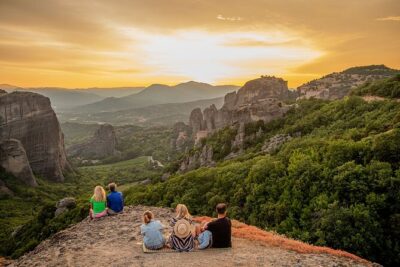
Meteora Sunset with Monastery & Hermit Caves Tour in Small Group
Read our review →
Meteora Small Group Hiking tour with Transfer and Monastery Visit
Read our review →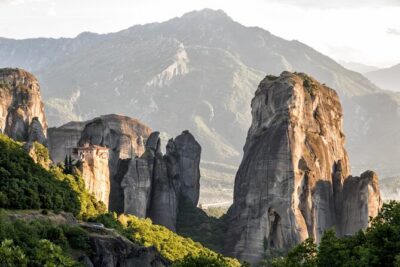
Morning Half Day Sightseeing and Monasteries Tour
Read our review →
Guided Sunset Tour with Monasteries & Caves Visit
Read our review →
Majestic Sunset Tour & Monasteries with Local Guide
Read our review →
Guided Tour to Meteora Monasteries & Hermit Caves
Read our review →
Kalabaka: Meteora Small-Group Hiking Tour w/ Monastery Visit
Read our review →
From Kalabaka/Kastraki: Meteora Monasteries Morning Tour
Read our review →Browse the lists this tour appears in