
Reviewed · METEORA TOURS
Meteora: Morning Half Day Sightseeing and Monasteries Tour
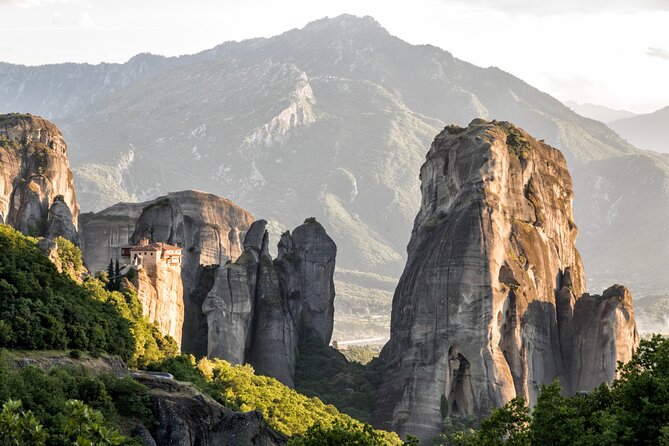
Six monasteries, one very efficient morning. This Meteora tour packs the region’s best sights into four hours, with hotel pickup, a comfortable air-conditioned minibus, and a local guide who explains the stories behind the cliffs and monasteries. I like the chance to see all six monasteries from the road, then enter three of them. I also like the small-group format and the excellent photo stops.
The main thing to note is that the guide does not lead you inside the monasteries. You receive explanations between stops, then explore each interior on your own. You also pay €5 in cash for each monastery you enter, so the $35 price is not the final cost for anyone visiting all three.
In This Review
- The Meteora details that matter most
- Why a morning tour works so well at Meteora
- Kalambaka and Kastraki pickup
- St. Nicholas Anapavsa and Rousanou
- Great Meteor Monastery, the major visit
- Varlaam and the rhythm of the morning
- The lesser-seen side of Meteora
- Holy Trinity and St. Stephen
- Dress rules and monastery etiquette
- English guide and multilingual audio
- Is $35 good value?
- Who should book this Meteora tour?
- FAQ
- How long does the Meteora morning tour last?
- Does the tour visit all six Meteora monasteries?
- Which monasteries can I visit inside?
- Is the inside of each monastery guided?
- How much are the monastery entrance fees?
- What languages are available?
- What should I wear to the monasteries?
- Should you book it?
The Meteora details that matter most
- All six monasteries in four hours: You see every surviving monastery from outside and enter three.
- Three substantial monastery visits: Great Meteor, Varlaam, and St. Stephen receive the longest visits.
- Local stories beyond the postcard views: Your guide explains the hermits, caves, Byzantine roots, and legends of the cliffs.
- Easy transport on difficult roads: The minibus takes you close to monastery entrances and removes the worry of parking.
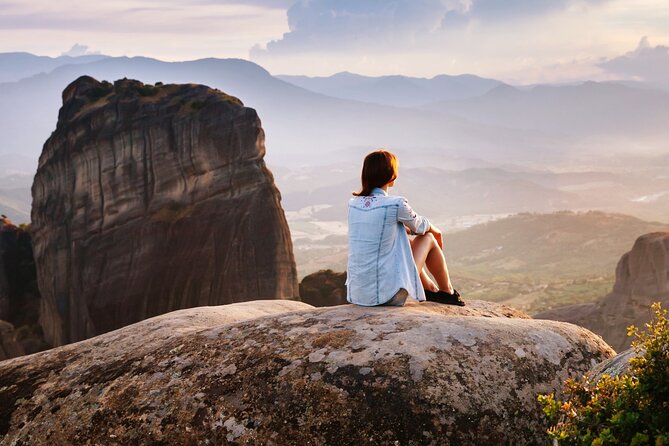
- Photo stops beyond the main sites: You pause near the Chapel of Doupiani and St. George Mandilas Cave.
- Useful language support: The live tour is in English, with free audio guides in seven additional languages.
Why a morning tour works so well at Meteora
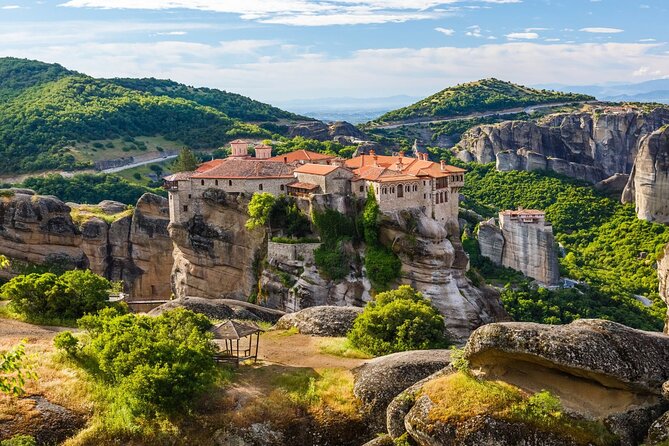
Meteora is not a place where you simply arrive, park, and tick off a few buildings. The monasteries sit high on huge sandstone pinnacles, and the roads between them are narrow, steep, and busy at popular times. Driving yourself can work, but parking near the entrances is limited.
I like this tour because the minibus handles the hard part. Pickup begins around 8:45 to 9:00 a.m. in Kalambaka and around 9:00 to 9:15 a.m. in Kastraki. From there, you spend the morning moving from viewpoint to viewpoint without worrying about directions, traffic, or where the next parking space might be.
The four-hour length is also well judged. You get enough time to enter three monasteries and stop for photographs, but the morning does not become an all-day bus excursion. If your schedule includes a train connection, a second activity, or an afternoon departure, this shorter format is useful.
The trade-off is simple: you will see a lot, but you will not have long, quiet periods at each site. The tour works best if you want a well-organized introduction rather than a slow day of walking and contemplation.
A few more Kalabaka half-days to weigh up
- Meteora: Panoramic Morning Small Group Tour with Local Guide
★ 4.7 · 334 reviews - From Kalabaka/Kastraki: Meteora Monasteries Morning Tour
★ 4.8 · 178 reviews - Breath-taking Monasteries Morning E-Bike Tour
★ 5.0 · 31 reviews
Kalambaka and Kastraki pickup
The tour includes pickup and drop-off at accommodation in Kalambaka or Kastraki. The booking information also lists Kastraki, Trikala, and Kalabaka among the possible location options, so check your exact pickup point carefully when reserving.
If your accommodation name does not appear at checkout, contact the company after booking with its name and address. This is worth doing early. Several people found the pickup easy to arrange, including one person staying farther from the town center who confirmed the meeting point by email.
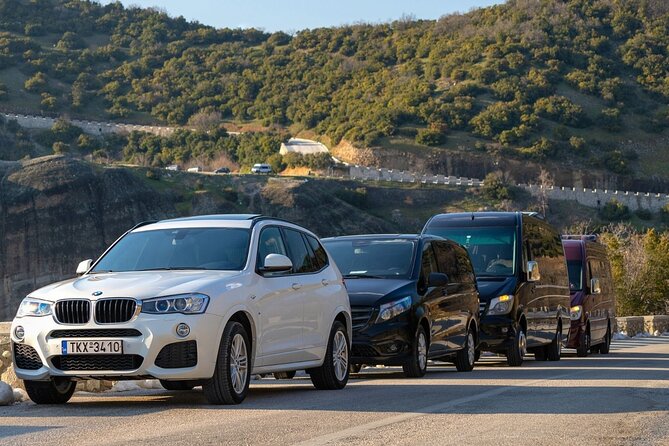
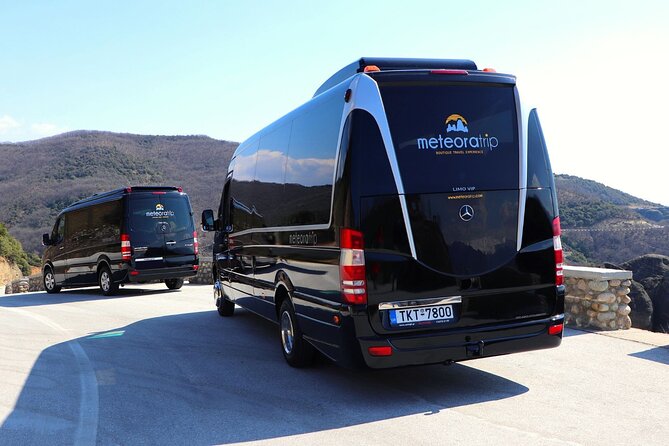
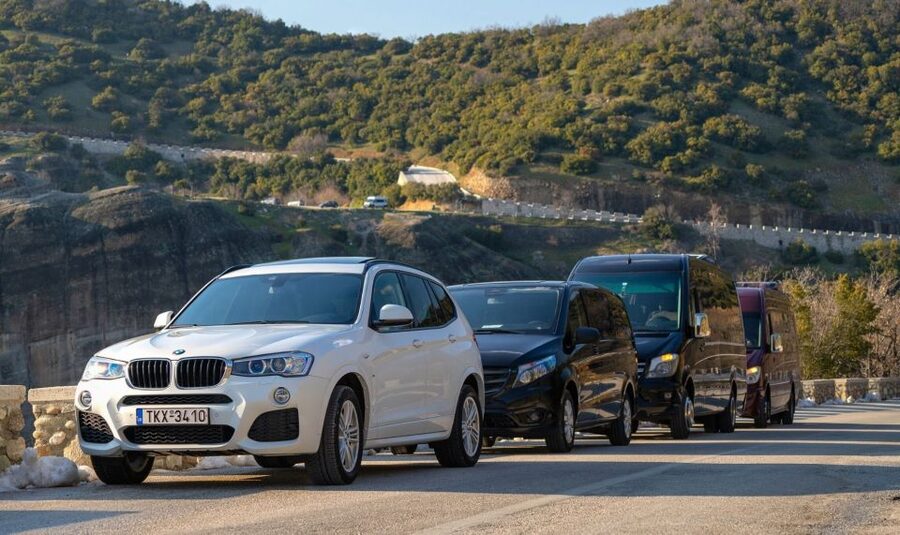
The minibus is air-conditioned, has onboard WiFi, and carries bottled water. The vehicle matters here. The road climbs and curves around the rock formations, and a small bus can stop much closer to the monastery entrances than a private car in many places.
The driver is not merely a background detail. Several guides and drivers have been praised for calm driving, careful handling of the steep roads, and good timing. If you prefer not to drive in an unfamiliar mountain setting, this alone may justify the cost.
St. Nicholas Anapavsa and Rousanou
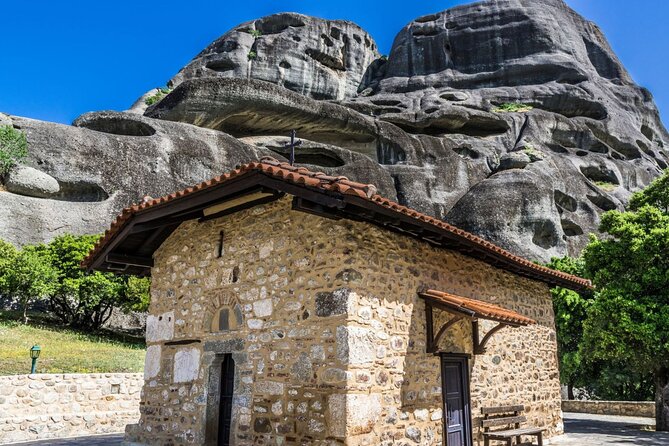
The first sightseeing stop is the Monastery of St. Nicholas Anapavsa, with about 15 minutes for views and photographs. It is a quick introduction to the way Meteora works: dramatic rock, a small monastery perched above you, and a guide putting the site into context before you move on.
The short stop means you should be ready with your camera as soon as you get out. This is not an interior visit, so you are seeing the monastery from outside and learning about its place in the wider group.
Next comes Rousanou, another 15-minute sightseeing stop. Rousanou is especially striking because of its position on a narrow rock pillar. From the road, you get a strong sense of how difficult access must have been before modern roads and stairs.
These first two stops are valuable because they help you understand the full group of six monasteries. You do not only visit the three selected interiors and forget the rest. You see the complete collection, with explanations along the way.
Great Meteor Monastery, the major visit
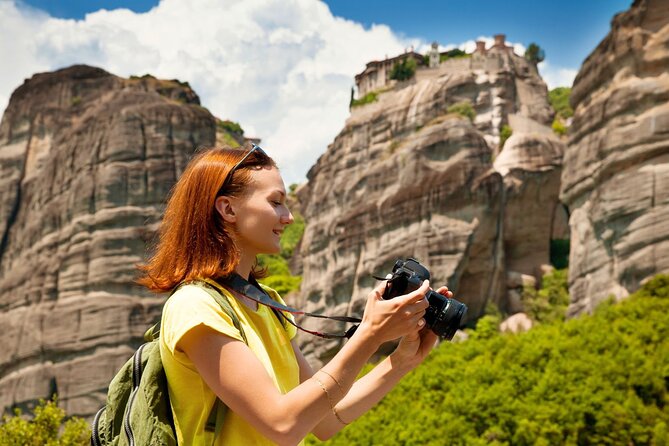
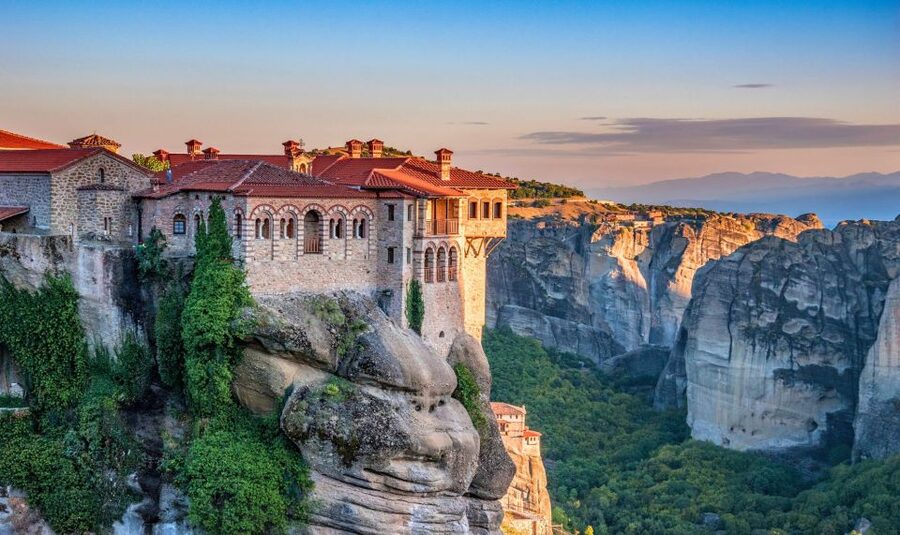
Great Meteor Monastery receives about an hour, making it the longest stop of the morning. It is one of the essential visits, both for its scale and for the way it shows the ambition of the monastic community that built in this seemingly impossible place.
You have free time to enter, look around, and take in the setting. The guide explains the site before you go inside, including stories about the monks and the practical problem of building and living high above the valley.
Remember that the interior visit is self-guided. The live guide does not accompany you through every room. For some people, this is a benefit because you can move at your own pace. For others, it is the biggest weakness of the tour, since religious art, architecture, and symbols can be easier to understand with an escort inside.
The entry fee is €5 in cash. The monasteries accept cash only, so bring enough for each one you plan to enter. At three monasteries, that adds €15 to the advertised tour price.
Same stretch of coastline, a completely different day out:
- Meteora: Majestic Sunset Tour & Monasteries with Local Guide
★ 4.7 · 359 reviews - Athens: Guided Tour to Meteora Monasteries & Hermit Caves
★ 4.7 · 211 reviews - Kalabaka: Meteora Small-Group Hiking Tour w/ Monastery Visit
★ 4.9 · 205 reviews - Meteora: Sunset Small Size Tour with Monastery & Caves visit
★ 4.9 · 171 reviews
Varlaam and the rhythm of the morning
Varlaam receives about 45 minutes. This is another interior visit and gives you time to see the monastery without feeling rushed through it. The shorter period compared with Great Meteor still allows a proper look around, although you should keep an eye on the meeting time.
I like the way the tour balances formal visits with road-based sightseeing. You are not climbing stairs for four straight hours. Instead, you alternate between getting out at a monastery, returning to the minibus, listening to stories, and stopping at viewpoints.
The amount of walking varies by monastery and your pace. Comfortable shoes are essential. The tour is not presented as a hiking trip, but the monastery entrances and paths still require walking, stairs, or uneven ground.
The guide usually explains the entry protocol before you arrive. That is useful because the monasteries remain active religious places, not just historic attractions. You need to dress properly and behave respectfully.
The lesser-seen side of Meteora
The central one-hour guided portion focuses on Meteora itself, not only the famous monastery interiors. This is where the tour adds value beyond a simple shuttle service.
You hear about the hermits who settled in the caves roughly a thousand years ago, why these cliffs appealed to them, and how later monks reached and built on the high pinnacles. The stories connect the caves, churches, ladders, ropes, and rock formations into one human story.
The Chapel of Doupiani is one of the lesser-known stops. It offers a look at an older layer of Meteora, before the large monasteries became the main image of the area. St. George Mandilas Cave is another memorable point. The cave is linked to a local tradition involving cloth offerings, giving your guide a chance to explain one of the region’s more unusual customs.
These stops are not long museum visits. Their value comes from the explanation and the view. Without a local guide, you might pass them without knowing why they matter.
The photo stops are also carefully chosen. You can expect wide views of the rock pinnacles and several monasteries at once. Guides such as Nikolas, Katerina, Vassilis, Maria, and Kostas have been singled out for explaining the area clearly and helping with photographs. That personal touch is useful when a good picture depends on standing in exactly the right place.
Holy Trinity and St. Stephen
Holy Trinity Monastery is a 15-minute sightseeing stop. It is one of the most dramatic monasteries to see from the outside, especially because of its position high above the surrounding plain.
This stop gives you time for photographs and a short explanation, but not an interior visit. If Holy Trinity is your personal priority, check the day’s plan before departure. The tour visits three monasteries inside, and the selected group is generally Great Meteor, Varlaam, and St. Stephen.
St. Stephen receives about 30 minutes inside. Its access is easier than some of the more demanding monastery approaches, making it a practical final visit. The shorter stop still gives you time to see the interior and enjoy the views before returning to the minibus.
One useful feature is the guide’s willingness to adapt when possible. In one case, a guide and driver arranged an alternative monastery visit for people who had already seen one of the scheduled sites the previous day. Do not assume every request can be accommodated, but it is worth asking politely at the start.
Dress rules and monastery etiquette
Plan your clothing before you leave your hotel. Men need long trousers and shirts with sleeves. Women must wear skirts below the knee and cover their shoulders. Trousers are not permitted for women under the stated monastery rules.
A long scarf wrapped around the waist can provide a practical solution over suitable clothing. One minibus has also carried sarongs for visitors to borrow, but I would not rely on that as your only plan.
The rules can feel strict, but these are working religious institutions. Treat the clothing requirements as part of visiting respectfully, not as an optional dress suggestion.
Bring cash for the €5 entry fee at each monastery. If you enter three, budget €15 per person. Also bring a smartphone and earphones if you want to use the free audio guide.
English guide and multilingual audio
The live guide speaks English. The strongest part of the experience is the commentary during the drives and before the entrances. Guides including Bob, Nikolas, George, Katerina, Vassilis, Maria, and Kostas have been praised for clear explanations, patience, humor, and a warm manner.
The free audio guides are available in French, Spanish, German, Italian, Japanese, Chinese, and Korean. You need your own smartphone and earphones. This is a useful backup for anyone who understands only limited English, although the main live presentation remains in English.
The audio guide does not change the fact that the monastery interiors are not guided by the tour leader. If you want detailed help inside, download or prepare your own material before setting out.
Is $35 good value?
At $35 per person, this is a strong value for the amount of transport and sightseeing included. You receive hotel pickup and drop-off, a four-hour minibus ride, an English-speaking local guide, bottled water, WiFi, all-six-monastery views, three interior visits, and several photo stops.
Add €15 for the three monastery entrance fees, and your practical total becomes the tour price plus €15. That remains reasonable, especially when you compare it with the cost and stress of driving, parking, and arranging a route yourself.
The price does not include an inside guide. That is the key value question. If you mainly want the history explained on the road, easy access, and time to explore the interiors independently, the price is excellent. If you want a fully escorted monastery tour, you may find the arrangement too light inside.
A private group is available for a few extra euros according to one recent experience. The private option can make sense for families, couples with a fixed schedule, or anyone who wants to reduce crowd-related delays. The standard small group already offers a more personal feel than a large coach.
Who should book this Meteora tour?
I would choose this tour if you have only one morning in Meteora, dislike driving, or want a clear introduction before exploring on your own. It also suits people arriving by public transport, since the pickup removes the need to connect local buses with the monastery road.
It is a good fit for families and mixed-age groups because the minibus limits long walks between sights. The four-hour schedule also suits people who want to keep the afternoon free.
You should look elsewhere if your main goal is hiking between the cliffs or spending a long time at every monastery. This is a sightseeing tour with walking at the sites, not a trail-based exploration.
I also would not book it without checking the dress requirements and cash fees first. Meteora is much more enjoyable when you arrive prepared rather than trying to solve clothing and entry money at the first gate.
FAQ
How long does the Meteora morning tour last?
The tour lasts four hours. Pickup is scheduled around 8:45 to 9:00 a.m. from Kalambaka and 9:00 to 9:15 a.m. from Kastraki, though you should confirm the exact time for your accommodation.
Does the tour visit all six Meteora monasteries?
Yes. You see all six monasteries from outside during the driving and sightseeing portions, and you have time to enter three of them.
Which monasteries can I visit inside?
The planned interior visits are Great Meteor Monastery, Varlaam Monastery, and St. Stephen Monastery. The schedule allows about one hour at Great Meteor, 45 minutes at Varlaam, and 30 minutes at St. Stephen.
Is the inside of each monastery guided?
No. The local guide explains the monasteries during the route and before the visits, but the interior visits are free time without a guided tour inside.
How much are the monastery entrance fees?
Entrance costs €5 per person at each monastery. The monasteries accept cash only, so visiting three requires €15 per person in entry fees.
What languages are available?
The live tour is conducted in English. Free audio guides are available in French, Spanish, German, Italian, Japanese, Chinese, and Korean. Bring a smartphone and earphones to use them.
What should I wear to the monasteries?
Men need long trousers and shirts with sleeves. Women need skirts below the knee and covered shoulders, and trousers are not permitted under the stated dress code. A long scarf can be wrapped around the waist as an alternative.
Should you book it?
I would book this tour for a first visit to Meteora, especially if you have limited time or do not want to handle the mountain roads and parking yourself. The best parts are the calm transport, strong local storytelling, three interior visits, and the chance to see all six monasteries in one morning.
The one clear limitation is the lack of guided commentary inside the monasteries. If that is acceptable, $35 is a very fair starting price, even after the entry fees. Choose the private option if you want a more flexible pace, and bring cash, proper clothing, comfortable shoes, water, and earphones.
Just added around Kalabaka
- Meteora Electric Bike Tour★ 5.0 · 61 reviews
- Meteora Sunset Tour on E-bikes★ 5.0 · 54 reviews
- From Kalabaka/Kastraki: Meteora Monasteries Morning Tour★ 4.8 · 178 reviews
- Meteora Evening Tour with Breathtaking Sunset View★ 5.0 · 44 reviews
- Kalabaka: Meteora Private Day Tour with a Local Guide★ 4.8 · 26 reviews
- Meteora: Sunset Hike to Secret Caves★ 4.9 · 56 reviews
- Meteora: Sunset Small Size Tour with Monastery & Caves visit★ 4.9 · 171 reviews
- Meteora: Monasteries Tour, Lunch, and Athens Transfer Option★ 4.8 · 102 reviews
Meteora Tours, compared.
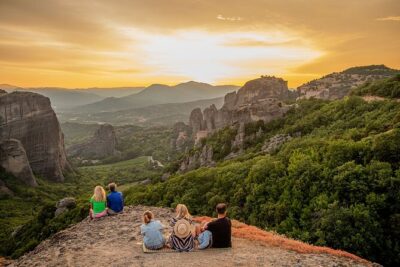
Meteora Sunset with Monastery & Hermit Caves Tour in Small Group
Read our review →
Meteora Small Group Hiking tour with Transfer and Monastery Visit
Read our review →
Guided Sunset Tour with Monasteries & Caves Visit
Read our review →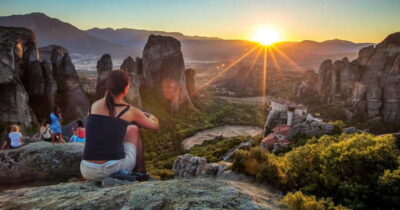
Majestic Sunset Tour & Monasteries with Local Guide
Read our review →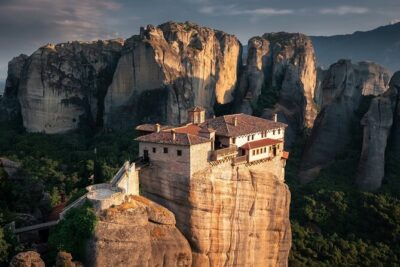
Panoramic Morning Small Group Tour with Local Guide
Read our review →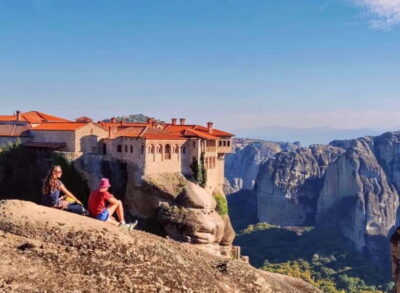
Guided Tour to Meteora Monasteries & Hermit Caves
Read our review →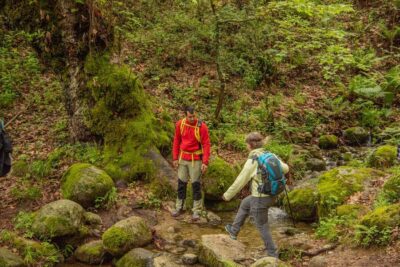
Kalabaka: Meteora Small-Group Hiking Tour w/ Monastery Visit
Read our review →
From Kalabaka/Kastraki: Meteora Monasteries Morning Tour
Read our review →Browse the lists this tour appears in