
Reviewed · METEORA TOURS
Meteora Sunset with Monastery & Hermit Caves Tour in Small Group
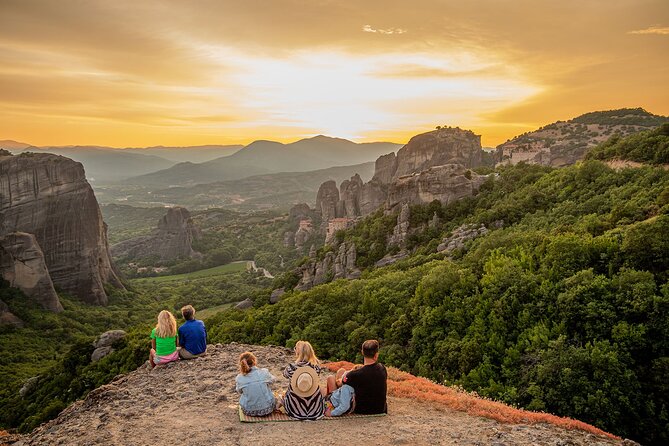
Meteora feels almost unreal. This four-hour small-group outing combines Saint Stephen’s Monastery with old hermit caves, a Byzantine church, local stories, and sunset views from a quieter lookout. I like that it shows more than the famous monasteries perched on rocks. I also like the easy hotel pickup from Kalambaka or Kastraki, which saves you from sorting out transport in a hilly area. The main drawback is timing: in summer, sunset comes late, and the tour can finish well after the advertised four-hour estimate.
The English-speaking guides are a major strength. Guides such as Lina, Jim, Maria, Dimitri, Apostolou, and Demetrios are praised for clear explanations, humor, local stories, and help with photographs. You should know, though, that the live tour is in English only. Spanish, French, German, and several other languages are available through a free audio guide, but it will not offer the same back-and-forth as a guide beside you.
At $36.28 per person, this is a good-value introduction to Meteora if you have limited time or arrive later in the day. You enter one monastery and the Byzantine church, while the other monasteries are viewed from outside or explained from the minibus. Bring cash for entrance fees, dress properly, and leave room in your schedule for a sunset that may stretch the evening.
In This Review
- Five things to know before you book
- Why this Meteora tour works well in a short visit
- The Byzantine Church of the Assumption of the Virgin Mary
- Saint Stephen’s Monastery, the accessible highlight
- The other monasteries, seen from the road and viewpoints
- Hermit caves and the first monks of Meteora
- The sunset viewpoint and the question of timing
- Guides, drivers, and the value of local context
- Price, admissions, and what you actually receive
- Who should book this sunset outing
- Should you book the Meteora Sunset Tour?
- FAQ
- How long does the Meteora sunset tour last?
- Where does the tour start and end?
- Is the tour guided in English?
- Which monastery do you enter?
- Is Saint Stephen’s Monastery open every day?
- What should I wear to the monasteries?
- Are admission fees included?
- How many people are in the group?
Five things to know before you book
- Saint Stephen’s Monastery requires a bridge, not a long staircase: It is the easiest monastery visit here for anyone who finds steep steps difficult.
- The hermit caves add a different side of Meteora: You see the early cave dwellings where solitary monks lived before organized monasteries developed.
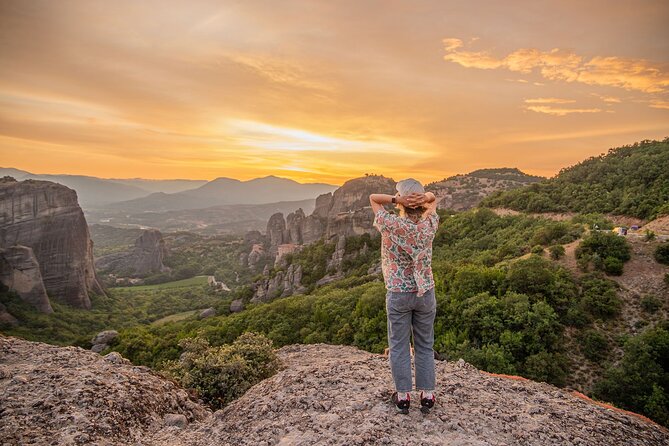
- The sunset viewpoint is chosen for atmosphere and photographs: It is described as a lesser-known lookout rather than the busiest standard stop.
- The group is capped at 18 people: You ride in a small minibus instead of joining a large coach.
- The tour is more than a sunset photo stop: Expect church art, monastic customs, geology, local history, and stories about life in the rocks.
- Summer timing can change the finish: In mid-June, one outing returned around 9:30 p.m. because sunset was so late.
Why this Meteora tour works well in a short visit
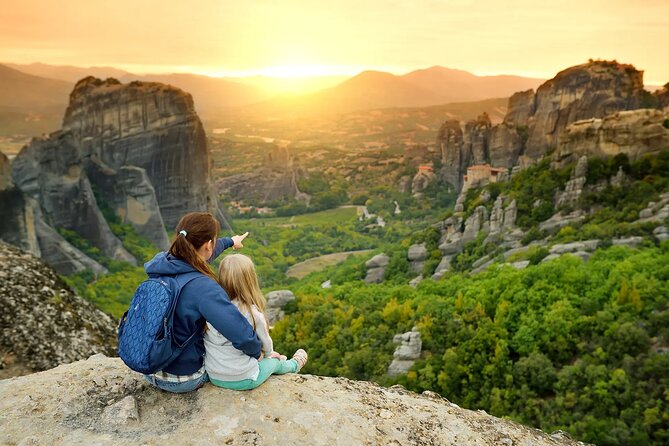
Meteora covers only a few square kilometers, yet it packs in enormous rock pillars, monasteries, churches, caves, and two settlements at their base: Kalambaka and Kastraki. The area is a UNESCO World Heritage Site, an archaeological site, and an officially declared holy place.
That combination is why a guided tour earns its keep. You can drive around and see the monasteries on your own, but it is harder to understand how the religious community developed, why the rocks mattered, and where the first hermits lived. A good guide turns a series of dramatic views into a connected story.
I especially like the range of stops. You are not sent up one staircase after another for four hours. Instead, the route mixes a church in town, a monastery reached by bridge, cave dwellings, roadside viewpoints, and a final sunset stop. The result feels varied and manageable.
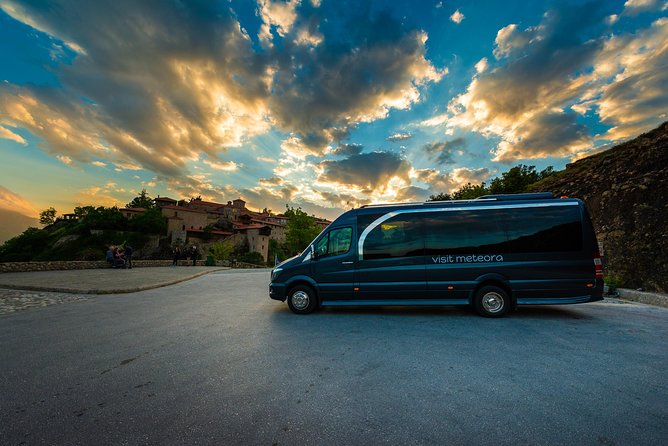
The minibus format matters, too. With a maximum of 18 people, the group remains smaller than a standard sightseeing coach. Pickup and drop-off are offered at hotels and Airbnbs in Kalambaka and Kastraki, making this a practical choice if you do not have a car.
A few more Meteora half-days to weigh up
- Meteora: Guided Sunset Tour with Monasteries & Caves Visit
★ 4.7 · 409 reviews - Meteora: Majestic Sunset Tour & Monasteries with Local Guide
★ 4.7 · 359 reviews - Meteora: Sunset Small Size Tour with Monastery & Caves visit
★ 4.9 · 171 reviews
The Byzantine Church of the Assumption of the Virgin Mary
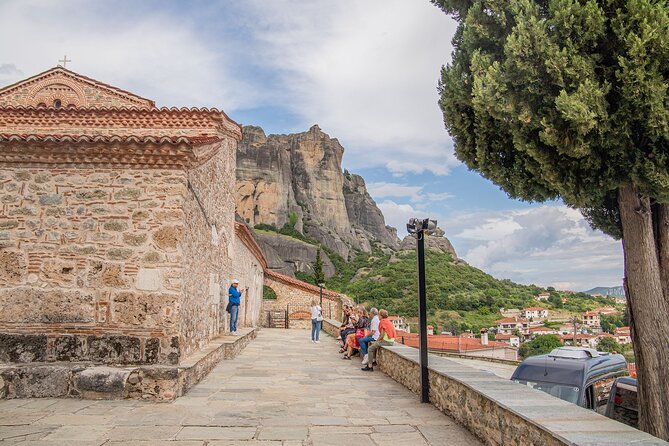
The church visit gives you an early historical layer before the tour moves into the rocks. The Church of the Assumption of the Virgin Mary is an active place of worship for local people, not simply a preserved monument.
Its age is one reason to pay attention. The church contains precious 11th-century Byzantine frescoes, and sections of an older mosaic floor can be seen beneath the current flooring. Even more unusual, pieces of an ancient Greek temple dedicated to Apollo were built into the walls.
This stop lasts about 30 minutes. That can feel long if you are mainly eager to reach the cliffs and sunset, and one person found the church portion overextended. Still, I think the visit earns its place because it gives you close access to religious art and building materials that are easy to miss from a roadside viewpoint.
The church admission fee is not included. Entrance charges are handled separately, and you should carry cash. One important practical complaint was that card payment was not accepted at the sites, so do not assume a bank card will cover every admission.
Saint Stephen’s Monastery, the accessible highlight
Saint Stephen’s is the monastery you enter during this tour. It is also the most accessible of Meteora’s monasteries, since you cross a small bridge rather than climb a long flight of steps to reach the entrance.
That makes a real difference. Meteora is famous for dramatic stairways and cliffside access, but not everyone wants, or is able, to tackle them. Saint Stephen’s gives you a genuine monastery visit without making the entire experience depend on strenuous climbing.
Monastic life on this rock reaches back to the early 12th century. Hosios Antonios is associated with the first period of religious life here, while Hosios Philotheos rebuilt the small catholicon from its foundations in 1545. The church and setting give you a direct sense of how monks adapted daily life to an isolated rock.
Allow about 30 minutes inside. Modest clothing is required. Men need trousers and long sleeves, and women need a long skirt. If you arrive in unsuitable clothing, trousers and skirts are provided, but I would still dress correctly from the start. It is more respectful and avoids wasting time at the entrance.
Saint Stephen’s is closed on Mondays. On that day, the itinerary changes to Saint Nicholas Monastery or Roussanou Monastery. If entering Saint Stephen’s is the main reason you are booking, check the day carefully.
The other monasteries, seen from the road and viewpoints
The tour passes the main Meteora monasteries, including Great Meteoron, Roussanou, and Varlaam. You should be clear about what that means: this is not a full inside visit to all of them.
Great Meteoron is the largest and oldest monastery in Meteora. Its name refers to the rock formation that seems to suspend it in the air. Saint Athanasios the Meteorite founded it and organized a formal communal monastic system, a major shift from the earlier life of solitary hermits.
Varlaam is the second-largest monastery and sits opposite Great Meteoron. It was founded in the mid-14th century by Hosios Varlaam. Its main church was built in 1541 and 1542 by two priest-monks from Ioannina, and its wall paintings are linked by style to the Theban artist Frago Catelano.
Roussanou occupies a lower rock, so it is more accessible than some of the higher monasteries. The main church dates to the late 16th century and was decorated about 30 years later. The site suffered serious damage during World War II and became a convent in 1988.
These stops are valuable even without an interior visit. From the road and photo points, you can compare their positions, see how the buildings cling to the pillars, and hear how the monastic community changed over the centuries. If you want to study the interiors of Great Meteoron, Varlaam, or Roussanou, plan a separate morning or another day.
One particularly useful approach is to visit the monasteries independently in the morning, then use this tour as an afternoon and evening extension. That avoids repeating the same sites and lets the guide fill in the gaps with caves, church art, and local stories.
Same stretch of coastline, a completely different day out:
- Meteora Small Group Hiking tour with Transfer and Monastery Visit
★ 5.0 · 484 reviews - Meteora: Morning Half Day Sightseeing and Monasteries Tour
★ 4.7 · 478 reviews - Meteora: Panoramic Morning Small Group Tour with Local Guide
★ 4.7 · 334 reviews - Athens: Guided Tour to Meteora Monasteries & Hermit Caves
★ 4.7 · 211 reviews
Hermit caves and the first monks of Meteora
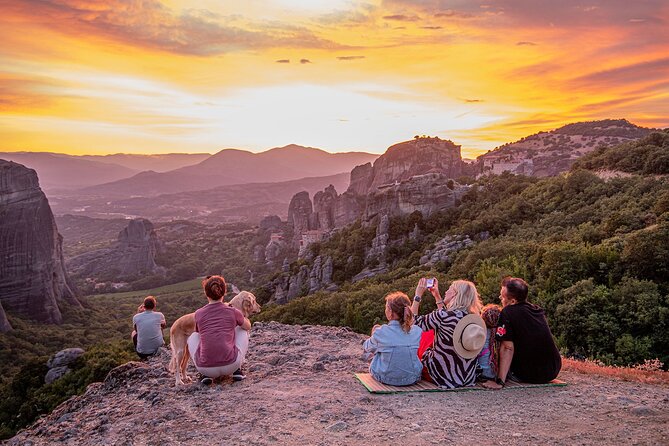
The hermit caves may be the most distinctive part of the outing. The famous monasteries are striking, but the caves explain how religious life began here.
Before large organized communities formed, solitary monks lived in small natural openings and shelters in the rocks. The caves are easy to overlook if you simply follow the main road between monasteries. A guide shows you where to look and explains how these early residents lived in such severe surroundings.
This is also where storytelling matters more than a list of dates. Guides describe the lives of monks, nuns, and hermits, helping you picture the difference between a solitary cell and a communal monastery. The history also reaches into the Byzantine and Ottoman periods, World War II damage, and postwar rebuilding.
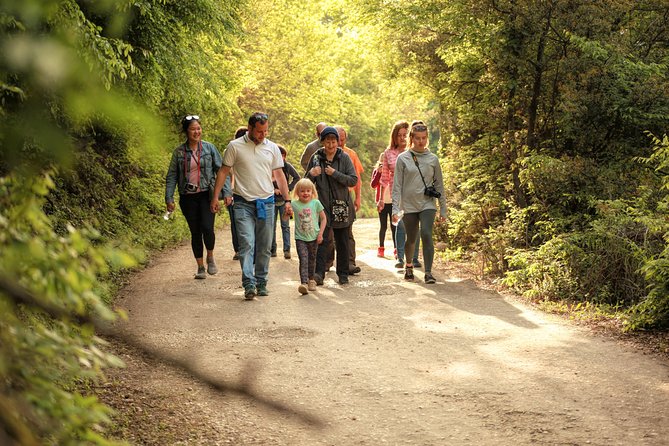
You should not expect a long wilderness hike. The tour is designed around a minibus, short stops, and viewpoints. Exact walking conditions are not specified, so wear sensible shoes and be prepared for uneven ground around historic sites.
The sunset viewpoint and the question of timing
The final viewpoint is the emotional payoff. Meteora’s pillars catch changing light well, and the sunset stop gives you time to watch the rocks shift in color rather than simply snap a quick photograph from a parking area.
The exact feel depends on the weather. One outing ended with rain, yet the clouds opened enough to produce a striking sunset. That is a useful reminder that a cloudy evening is not automatically a lost evening.
Timing is the one issue you need to take seriously. The tour is described as approximately four hours, but sunset changes with the season. In mid-June, the sun sets late, and one group did not return until about 9:30 p.m. Another person felt the tour was slightly long, while several others considered the extra time worthwhile.
I would not book this immediately before a train, dinner reservation, or other fixed commitment. The tour may begin with pickup a few minutes after the listed start time, and the finish can move later when the sunset itself is late. If your schedule is flexible, the timing becomes part of the reward.
Guides, drivers, and the value of local context
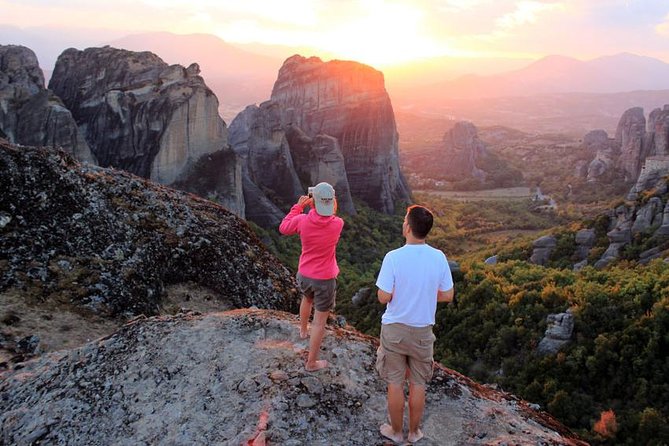
The strongest praise goes to the people leading the tour. Lina is repeatedly noted for her enthusiasm and storytelling, while Jim is praised for combining geological and historical detail with memorable stories. Maria, Dimitri, Apostolou, and Demetrios are also described as friendly, engaging, and well prepared.
That range of names matters because the quality of a small-group tour depends heavily on the person in front of you. The guide is not only pointing out rock formations. The best commentary connects geology, Orthodox Christianity, monastic rules, war damage, and local life.
Drivers also receive credit for friendly service and helping with photographs. The minibus makes it possible to cover the scattered viewpoints without asking you to walk between every site. For a place spread around steep rock formations, that is a useful saving of energy.
The tour is guided in English. A smart audio guide is available in Spanish, French, German, Italian, Portuguese, Russian, Polish, Korean, Chinese, and Japanese. Spanish, French, and German are specifically identified as free audio options. The audio guide can help with basic orientation, but it will be less detailed and less responsive than the live English commentary.
Price, admissions, and what you actually receive
At $36.28 per person, the price is attractive for a four-hour outing with pickup, transport, bottled water, a monastery visit, a Byzantine church, hermit caves, several viewpoints, and a sunset stop. You are paying for access to a well-planned route and local interpretation, not simply for a ride to a scenic overlook.
The value is strongest if you are staying in Kalambaka or Kastraki without a rental car. It is also strong if you arrive later in the day and want an efficient first look at Meteora. The tour gives you enough context to make a later independent monastery visit more rewarding.
The price does not include food or drinks beyond bottled water. It also does not include the Meteora admission charge, listed as €7 per booking, or a state-licensed guide inside the monastery. Bring cash and allow a little extra for anything you buy afterward.
Who should book this sunset outing
I would recommend it to you if you want a broad first look at Meteora without a demanding hike. It suits couples, families, solo visitors, and small groups who prefer a minibus and a guide to managing the roads and viewpoints themselves.
It is particularly useful for:
- First-time visitors with only one afternoon
- People staying in Kalambaka or Kastraki
- Anyone interested in caves and early monastic life, not only famous buildings
- Visitors who want to enter a monastery without tackling a major staircase
- Photographers who value several viewpoints and sunset light
- People planning a separate monastery visit the next morning
I would choose another plan if your main goal is to enter several monasteries. This outing enters Saint Stephen’s only, with the other major monasteries viewed from outside. I would also avoid scheduling it on a tight evening, especially in June.
The tour requires good weather and a minimum number of participants. If poor weather or low enrollment cancels it, you are offered another date, another experience, or a full refund. Free cancellation is available up to 24 hours before the start time.
Should you book the Meteora Sunset Tour?
Book it if you want variety, storytelling, and easy transport in one half-day. The combination of Saint Stephen’s, the Byzantine church, hermit caves, monastery viewpoints, and sunset gives you a fuller introduction than a quick circuit of the main monasteries.
Skip it only if you need a guaranteed four-hour finish or want to tour several monastery interiors. For most visitors with an open evening, the $36.28 price is fair, and the local guides add the context that makes Meteora more than a collection of spectacular rocks.
FAQ
How long does the Meteora sunset tour last?
The tour is listed as approximately four hours, but the actual length can vary with the season and sunset time. In mid-June, one outing returned around 9:30 p.m.
Where does the tour start and end?
The listed meeting point is Patriarchou Dimitriou 2 in Kalambaka. The activity ends back at the meeting point, and pickup and drop-off are offered at hotels and Airbnbs in Kalambaka and Kastraki.
Is the tour guided in English?
Yes. The live tour is guided in English only. A free audio guide is available in Spanish, French, German, Italian, Portuguese, Russian, Polish, Korean, Chinese, and Japanese.
Which monastery do you enter?
The standard visit inside is Saint Stephen’s Monastery. It is reached by crossing a small bridge instead of climbing a long staircase.
Is Saint Stephen’s Monastery open every day?
Saint Stephen’s is closed on Mondays. On Mondays, the tour visits Saint Nicholas Monastery or Roussanou Monastery instead.
What should I wear to the monasteries?
Men must wear trousers and long sleeves. Women must wear a long skirt. Trousers and skirts may be provided at the entrance if your clothing does not meet the dress code.
Are admission fees included?
No. Food and drinks are also not included. The Meteora admission fee is listed as €7 per booking, and you should bring cash because card payment may not be accepted at the sites.
How many people are in the group?
The tour has a maximum of 18 participants and uses a small minibus.
Just added around Meteora
- Kastraki: Meteora Morning Horse Riding with Monastery Visit★ 5.0 · 27 reviews
- Kastraki: Meteora Via Cordata Hiking Tour to the Great Saint★ 5.0 · 27 reviews
- Meteora: Morning Monasteries Tour with Photo Stops★ 5.0 · 26 reviews
- Meteora Electric Bike Tour★ 5.0 · 61 reviews
- Meteora Sunset Tour on E-bikes★ 5.0 · 54 reviews
- From Kalabaka/Kastraki: Meteora Monasteries Morning Tour★ 4.8 · 178 reviews
- Meteora Evening Tour with Breathtaking Sunset View★ 5.0 · 44 reviews
- Meteora: E-Bike Epic Sunset Tour With Local Guide & Drink★ 5.0 · 67 reviews
Meteora Tours, compared.
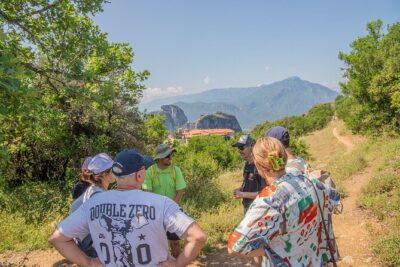
Meteora Small Group Hiking tour with Transfer and Monastery Visit
Read our review →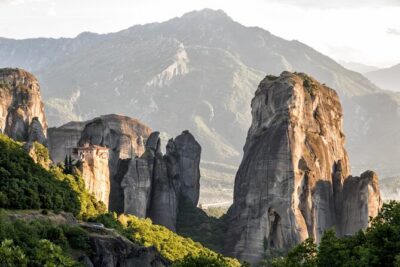
Morning Half Day Sightseeing and Monasteries Tour
Read our review →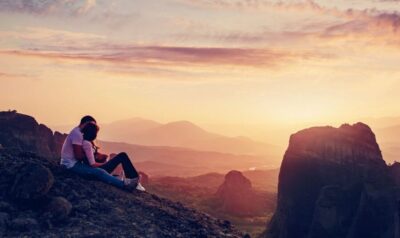
Guided Sunset Tour with Monasteries & Caves Visit
Read our review →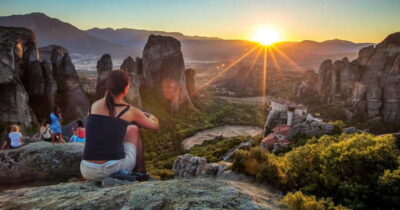
Majestic Sunset Tour & Monasteries with Local Guide
Read our review →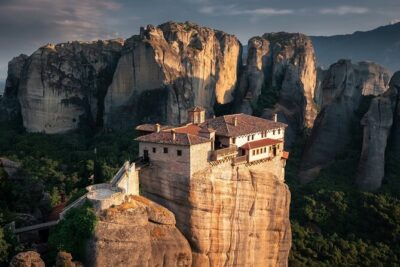
Panoramic Morning Small Group Tour with Local Guide
Read our review →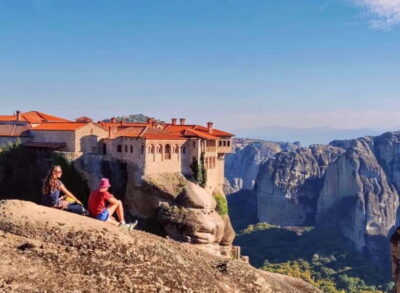
Guided Tour to Meteora Monasteries & Hermit Caves
Read our review →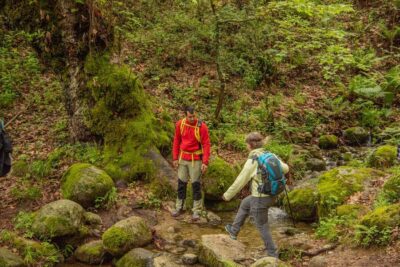
Kalabaka: Meteora Small-Group Hiking Tour w/ Monastery Visit
Read our review →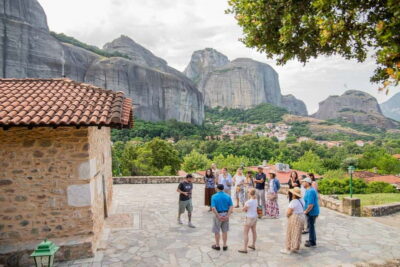
From Kalabaka/Kastraki: Meteora Monasteries Morning Tour
Read our review →Browse the lists this tour appears in