
Reviewed · KNOSSOS PALACE TOURS
Knossos Palace Skip-the-Line Ticket & Private Guided Tour
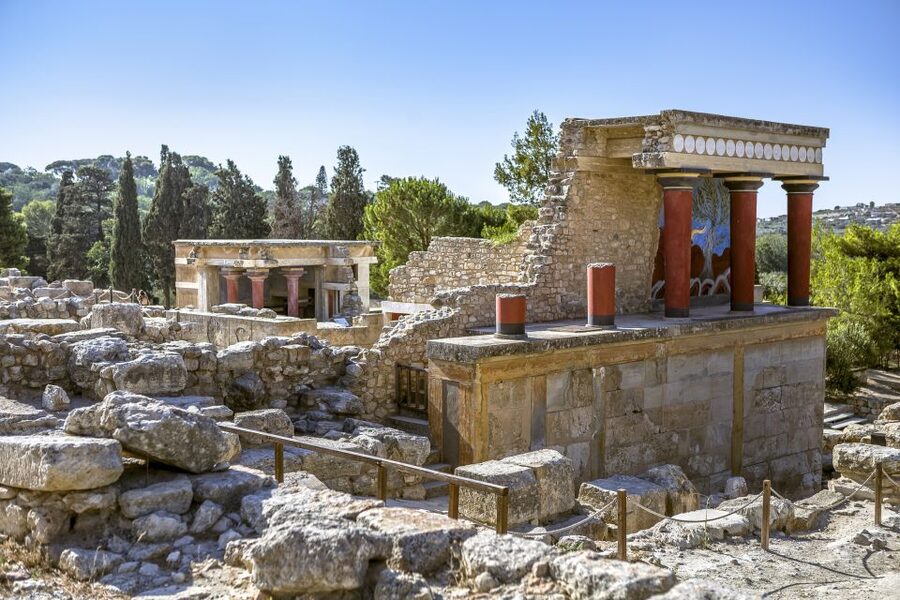
Knossos makes ancient Crete feel surprisingly close. This 1.5-hour private tour combines fast entry with a licensed archaeologist who can explain what you are seeing, from palace storerooms to Minoan customs and myths. I especially like the small-group format and the way guides such as Vangelis use old images and clear comparisons to help you picture the palace as it once looked.
I also like the practical care built into the visit. Guides have kept groups in the shade when possible, suggested strong photo spots, answered questions at a comfortable pace, and adjusted their approach for children. The main drawback is the price: at $247 per group of up to two, it is costly for solo visitors or couples on a tight budget. You also need comfortable shoes, sun protection, and enough mobility for uneven ground and stairs.
In This Review
- The essential facts at a glance
- Why Knossos is worth your time
- Meeting your guide at the palace entrance
- The first part of the tour: building the Minoan picture
- Palace rooms, corridors, and storerooms
- Myths, symbols, and the palace’s human side
- Choosing the right start time
- Heat, stairs, and the practical side of the visit
- What the $247 group price really buys
- Who will get the most from this tour
- Should you book the Knossos private tour?
- FAQ
- Where does the tour meet?
- How long does the tour last?
- Is admission to Knossos Palace included?
- Which languages are available?
- Is the tour suitable for wheelchair users?
- What should I bring?
The essential facts at a glance
- A private 1.5-hour visit: Your group receives its own licensed guide rather than joining a large general tour.
- Skip the ticket line: A pre-booked admission ticket helps you avoid the ticket queue at the palace entrance.
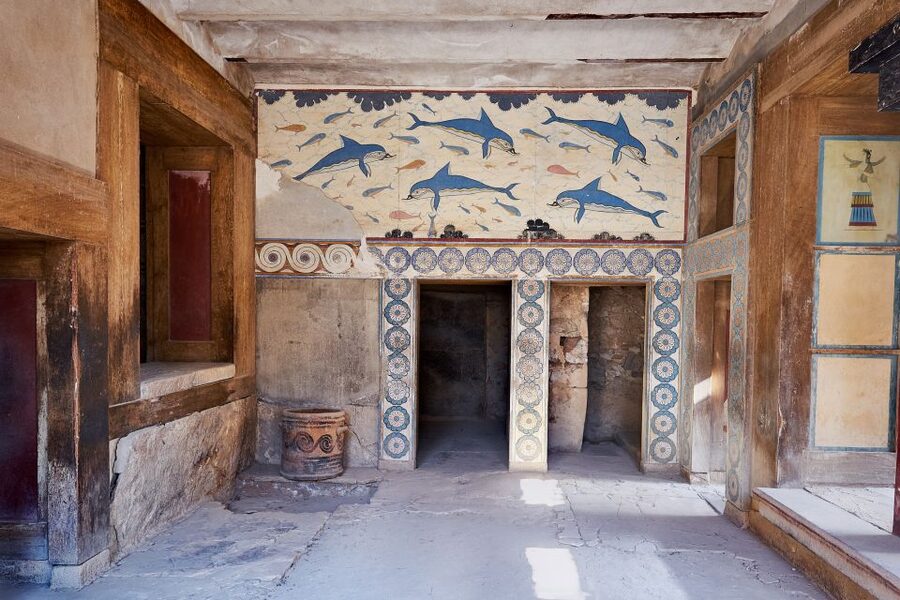
- Archaeologist-led context: Vangelis, Stella, and Manos are among the guides praised for explaining the site, excavation, architecture, customs, and chronology clearly.
- Best times for comfort: The 9:00 a.m. start can be much quieter, while late afternoon brings softer light and less heat.
- Several languages: Tours are offered in English, German, Italian, Russian, and Greek.
- Not designed for every visitor: The site has stairs and uneven walking areas, and the tour is not suitable for wheelchair users or people with mobility impairments.
Why Knossos is worth your time
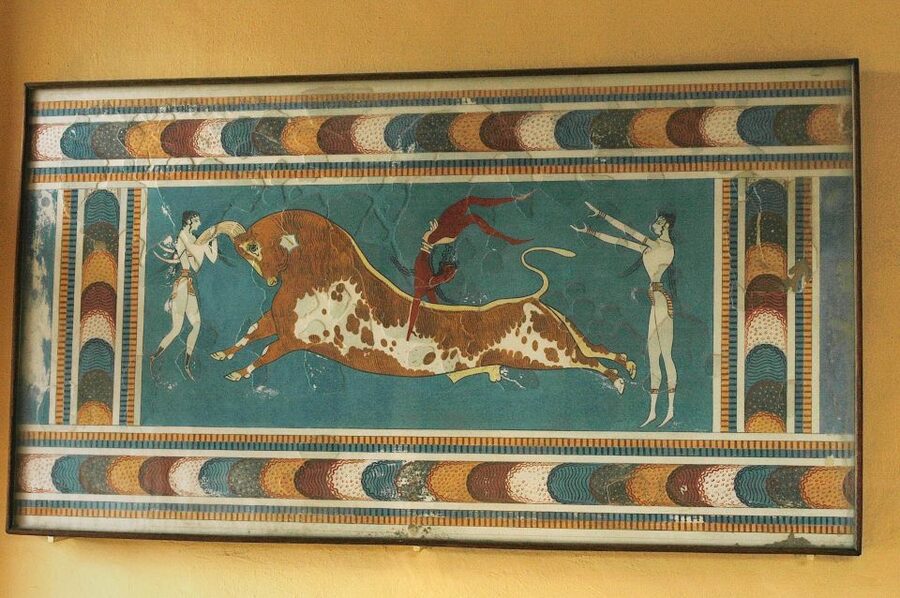
Knossos is not simply a pile of old stones. Settlements here reach back to the Neolithic period, with remains connected to communities living in Crete around 7000 BC. The palace most people come to see was built much later, from roughly 1700 to 1400 BC, during the height of Minoan civilization.
That timeline matters. The Minoans lived long before the classical Greek world of Athens and the familiar temples of the fifth century BC. At Knossos, you are looking at one of Europe’s earliest major palace societies, with elaborate buildings, storage systems, ceremonial spaces, and a complex social order.
The site once contained about 1,300 rooms linked by corridors. Parts of the palace reached five stories, an astonishing scale for the Bronze Age. A theater, extensive storerooms, and large clay containers for oil, grain, dried fish, beans, and olives point to a place that was both a royal center and a working administrative hub.
The famous stories of King Minos, the Minotaur, and the labyrinth are tied to Knossos, but a good guide helps you separate myth from archaeology. That is one of the strongest reasons to book a guided visit. Without context, the remains can be hard to read. With context, a wall, doorway, or storage jar becomes a clue to how the palace functioned.
More Knossos and Minoan palace days:
- Crete: Knossos Palace Entry Ticket with Optional Audio Guide
★ 3.9 · 2,251 reviews - Crete: Palace of Knossos E-Ticket and Audio Guide
★ 3.8 · 1,540 reviews - Knossos: Knossos Palace Skip-the-Line Guided Walking Tour
★ 4.8 · 1,380 reviews
Meeting your guide at the palace entrance
The meeting point is the front entrance of Knossos Palace. You do not receive hotel pickup or transportation with this activity, so you need to make your own way to the site and arrive at the stated meeting time.
Look for the guide at the entrance and bring your passport or ID card. The pre-booked ticket is included, allowing you to bypass the ticket line rather than spending part of your visit waiting to buy admission.
The meeting arrangement is simple, but the entrance can be busy during popular hours. Give yourself enough time to find the correct area, especially if you are arriving by taxi or public transport. Large bags and oversize luggage are not allowed, so pack lightly. Pets are also not permitted.
The first part of the tour: building the Minoan picture
A strong guide does not rush straight to the most famous room. The tour begins by giving you a basic framework for the Minoans and the different periods represented at the site.
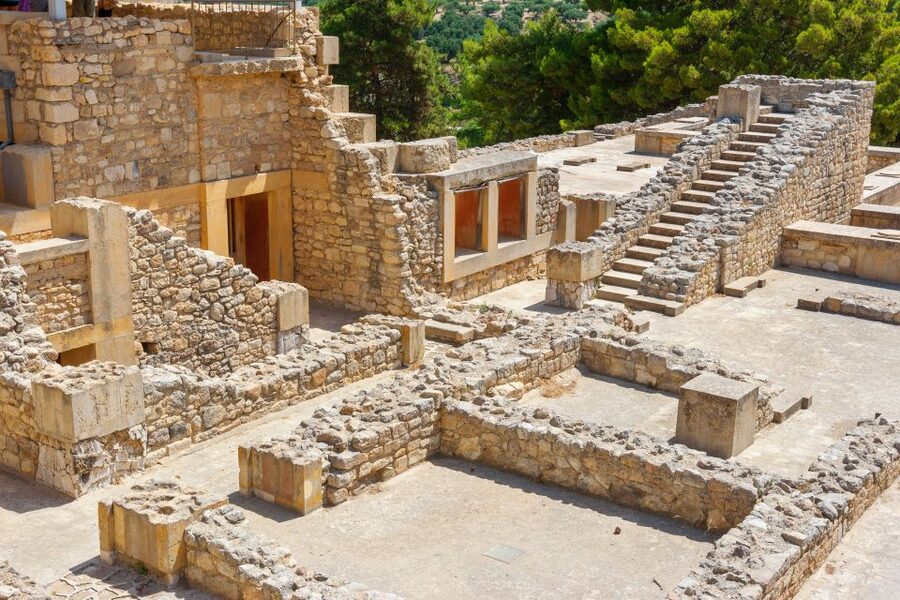
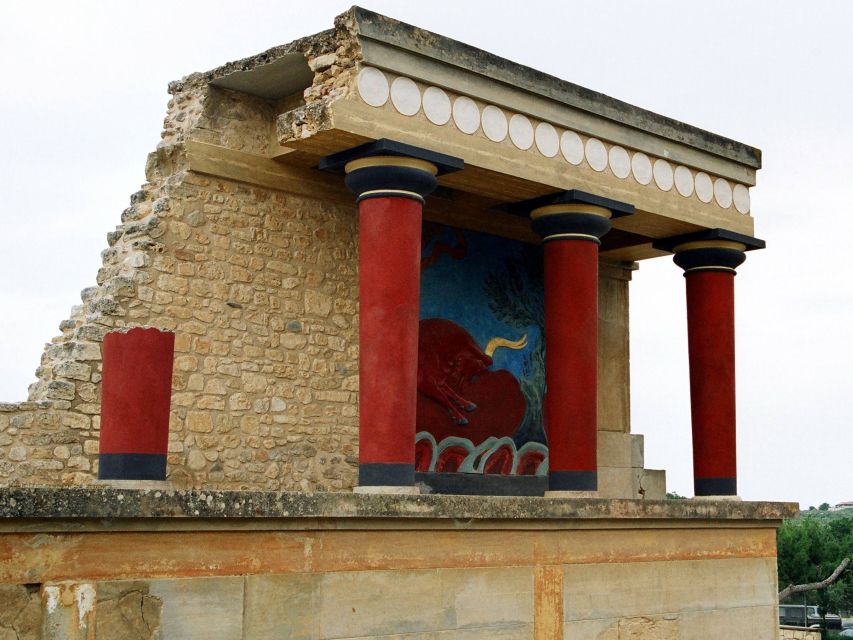
This is where guides such as Vangelis have made a particularly good impression. He has used photographs and drawings showing how parts of the palace may have appeared in the past, helping you compare the excavated remains with the original structures. That visual aid is valuable because Knossos is a mixture of ancient remains, reconstructed sections, and modern interpretation.
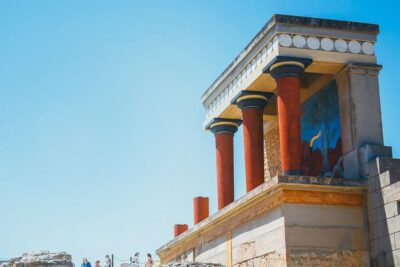
You should also expect explanations about excavation and restoration. Knossos is closely associated with the work of Sir Arthur Evans, whose reconstruction choices shaped the way many people imagine the palace today. A thoughtful guide can point out the difference between original material and restored features, an important distinction if you want to understand the site rather than simply admire its colorful columns.
One particularly useful feature is the chance to ask questions as you go. Guides have been praised for explaining difficult points in plain language and for connecting buildings with artifacts seen at the Archaeological Museum in Heraklion. Visiting the museum as a separate stop can add meaning to the palace, especially if you want to see objects found in or connected with the site.
Palace rooms, corridors, and storerooms
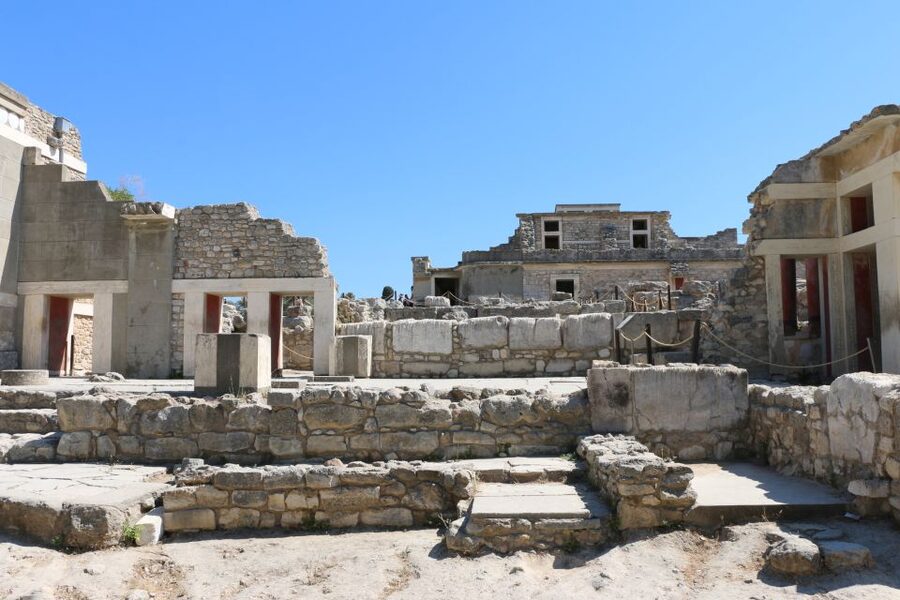
The palace layout is confusing at first. Corridors branch off in several directions, and the surviving walls do not always make the original purpose of each space obvious. A private guide helps you move through the site in a logical order instead of wandering from one fragment to another.
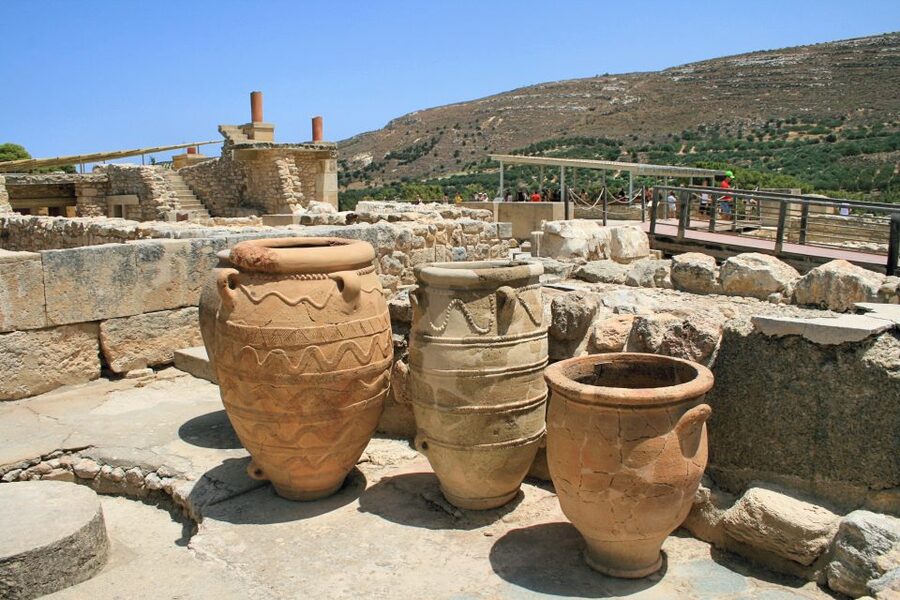
The storerooms are among the most revealing areas. Large clay containers once held food and other supplies, including oil, grains, dried fish, beans, and olives. The mention of gold hidden beneath some containers adds a little drama, but the larger point is practical: the palace had systems for gathering, storing, and managing resources on a serious scale.
Your guide should also explain how architecture supported daily life and administration. Rooms were connected by corridors, and the multi-level construction used advanced techniques for its time. You may find that the most interesting details are not the grandest ones. A storage system or carefully planned passage can tell you more about how the palace worked than a famous myth.
The tour does not promise access to every archaeological corner or unlimited time at every point. Its purpose is to give you a clear, guided route through the main areas in 90 minutes. That is enough for a strong introduction, but not enough for a slow, solitary study of every wall.
A few more Crete half-days to weigh up
- Heraklion: Knossos Private Guided Tour & Skip-the-Line Entry
★ 5.0 · 59 reviews - Essential Athens Highlights Plus Cape Sounion Skip-The-Line Tour
★ 5.0 · 705 reviews - Athens Skip the Line: Open Air Ancient Greek Theatre Performance
★ 4.5 · 520 reviews - Acropolis Of Athens & Acropolis Museum Skip The Line Private Guided Tour
★ 5.0 · 102 reviews
Myths, symbols, and the palace’s human side
Knossos is wrapped in stories, and the best tours use those stories without letting them take over. The Minotaur and labyrinth legends make the place memorable, but the archaeological evidence points to a real society with trade, storage, ceremony, craftsmanship, and political power.
Guides have been praised for explaining Minoan customs, art, and beliefs alongside the famous myths. That balance helps you enjoy the romance of the site while keeping your feet on the ground.
Families can benefit from this approach. Several guides have made a point of involving children, including younger visitors and teenagers. Vangelis has been singled out for patience and an engaging style, while German-speaking tours have also worked well for families with children aged seven and twelve.
If your children are interested in stories but less interested in dates, this format can work well. The guide can turn the palace into a sequence of questions: Who used this room? Why were so many storage jars needed? How did people move through the building? The site becomes easier to follow when the information has a human angle.
Choosing the right start time
Timing may affect your experience as much as the guide does. The 9:00 a.m. tour is a strong choice in summer because the site can become very crowded later. Early morning also gives you a better chance of walking through the main areas before the heat builds.
Late afternoon has its own advantages. A 5:00 p.m. start has been especially pleasant for visitors who wanted cooler temperatures and fewer people. A 6:30 p.m. tour can offer soft light and a quieter atmosphere as well.
There is one catch with the late option. The palace closes promptly at 8:00 p.m., so a 6:30 p.m. start gives you about 1.5 hours and little extra time afterward. If you want to linger alone after the guided portion, an earlier appointment gives you more breathing room.
I would choose 9:00 a.m. during the hottest months if quiet conditions are your priority. I would choose late afternoon if you care more about softer light and avoiding the strongest heat. Availability will determine which start times you can select.
Heat, stairs, and the practical side of the visit

Knossos is an open archaeological site, and Crete’s summer sun can be demanding. Wear comfortable walking shoes, carry water, and bring sunglasses, a hat, and sunscreen. Guides have often tried to keep groups in the shade when possible, but shade is not available everywhere.
The ground includes uneven surfaces and stairs. A stroller may be awkward, and one family specifically found that a small child was manageable but a stroller would have been inconvenient. This is not a suitable tour for wheelchair users or people with mobility impairments.
The 1.5-hour length is both a strength and a limit. It is short enough to fit into a busy day in Heraklion, and you are unlikely to lose concentration. On the other hand, the site is extensive enough that you may want more time to look around after the guide finishes.
Private tours are easier to pace than large group visits. You can ask for clarification, pause for photographs, or tell the guide if you need a short break. The guide may also take pictures for you, a small but useful service when you want everyone in the family to appear in the shot.
What the $247 group price really buys
At $247 for a group of up to two, this is not a bargain admission ticket. It is a premium experience built around private attention, a pre-booked entrance, and a licensed archaeologist guide.
For a couple who wants to understand Knossos rather than simply walk around it, the price can make sense. You are paying for interpretation, time saved at the ticket line, and the chance to ask questions without competing with a large crowd. If you are fascinated by ancient sites, the additional context may be the part you remember long after the visit.
For a solo visitor, the value is harder to defend because the full group rate still applies. The same is true for budget-conscious families unless the cost can be shared across the permitted group arrangement. Check the current booking conditions carefully if your party is larger than two, since the stated price specifically covers up to two people.
Children from European countries receive free entry and a free guided tour. Children from other countries do not receive free admission under the included terms, so families should check the final cost before booking.
The flexible cancellation policy helps reduce the risk. You can cancel up to 24 hours in advance for a full refund, and the reserve-now, pay-later option lets you hold a place without paying immediately.
Who will get the most from this tour
I would recommend this experience to you if:
- You want the main palace areas explained in a clear order.
- You care about the difference between ancient remains and modern restoration.
- You enjoy asking questions about archaeology, architecture, myth, and daily life.
- You are visiting in summer and want help dealing with heat and crowds.
- You are traveling as a couple or a small private group.
- You want a guide who can keep children or teenagers involved.
You may prefer a self-guided visit if you already know Minoan archaeology well, want to spend several hours photographing details, or need the lowest possible entrance cost. The 90-minute format gives you a strong foundation, but it is not designed for exhaustive independent study.
The guide quality appears to be the biggest strength. Vangelis is repeatedly praised for his clear explanations, patience, historical range, and ability to bring the palace to life with images and stories. Stella has also been praised for thoughtful pacing and attention to shade, while Manos has been noted for clear English and strong command of the site’s history and culture.
Should you book the Knossos private tour?
Book it if you want Knossos to make sense. The palace is important, but its scattered walls and reconstructed sections can be difficult to interpret alone. A licensed archaeologist can show you where to focus and explain why the site matters.
I would choose the early morning appointment for the quietest conditions, or late afternoon for cooler air and attractive light. Bring water, sun protection, and shoes that can handle stairs. If you are paying $247 as a couple, the private format offers fair value for a major archaeological site. If you are alone or watching every euro, compare the cost with standard admission and decide how much expert guidance matters to you.
FAQ
Where does the tour meet?
The meeting point is at the front entrance of Knossos Palace.
How long does the tour last?
The private guided tour lasts 1.5 hours.
Is admission to Knossos Palace included?
Yes. The ticket includes entry to Knossos Palace and allows you to skip the ticket line.
Which languages are available?
The live guide can conduct the tour in English, German, Italian, Russian, or Greek.
Is the tour suitable for wheelchair users?
No. The tour is not suitable for wheelchair users or people with mobility impairments. The site includes stairs and uneven walking areas.
What should I bring?
Bring your passport or ID card, comfortable shoes, sunglasses, a sun hat, sunscreen, and water. Pets, oversize luggage, and large bags are not allowed.
Just added around Crete
- VIP Luxury Private Tour – Full Day – 4×4 Excursion with LandRover★ 5.0 · 32 reviews
- Lasithi –Plateau Traditional Vilages★ 5.0 · 40 reviews
- Private Full-Day Knossos-Lasithi Plateau-Cave of Zeus from Elouda★ 5.0 · 28 reviews
- Sarakina Gorge, Kritza, Oliveoil Tasting, Mountains, South Coast★ 5.0 · 92 reviews
- Full-Day Land Rover Safari from Rethymno with Lunch Swimming★ 5.0 · 215 reviews
- Knossos Palace and Pottery experience (Luxury Adventure)★ 4.5 · 32 reviews
- Island Spinalonga, Milatos Cave,private Speedboat,OliveOilTasting★ 4.5 · 39 reviews
- Richtis Waterfall, History, Azoria, OliveTasting, NorthCoast★ 5.0 · 83 reviews
Knossos Palace Tours, compared.
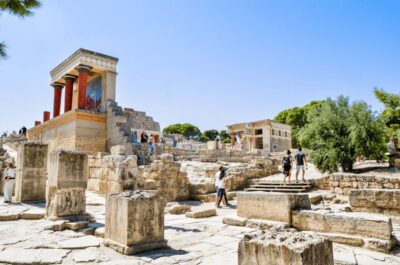
Knossos Palace Entry Ticket with Optional Audio Guide
Read our review →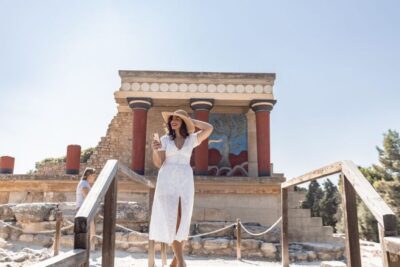
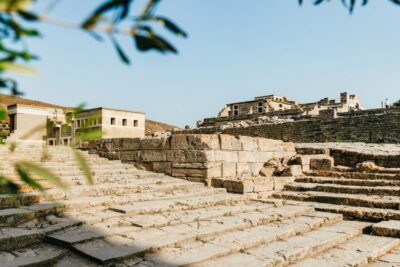
Knossos: Knossos Palace Skip-the-Line Guided Walking Tour
Read our review →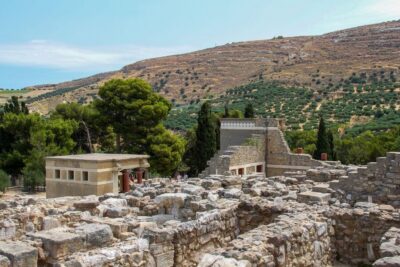
Knossos Palace and Museum E-Tickets with Audio Guides
Read our review →
Knossos-Zeus Cave -Old Traditional Villages-Olive Oil Factory
Read our review →
Knossos, Lasithi, Lasinthos and Olive Farm Combo Tour
Read our review →
Browse the lists this tour appears in