
Reviewed · MUSEUMS
Megalochori: Lost Atlantis 9D Experience Museum Entry Ticket
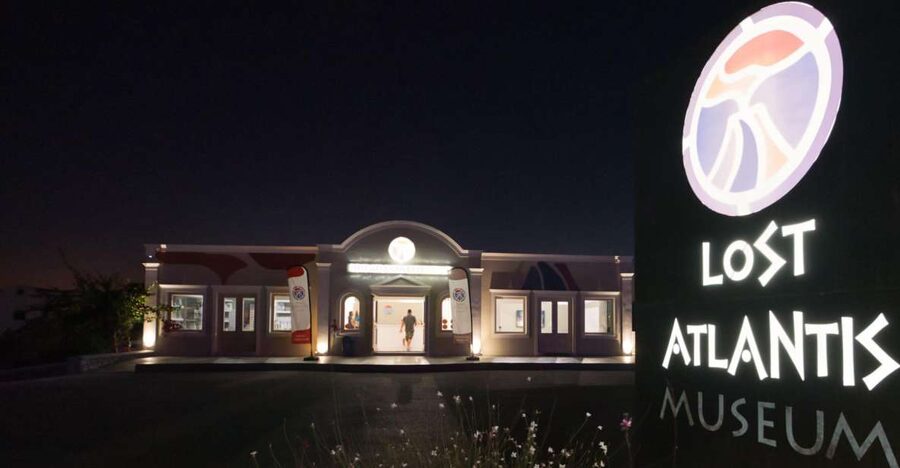
Atlantis comes to life in Santorini. The Lost Atlantis 9D Experience Museum turns Plato’s old myth into a lively one-hour visit, with interactive history displays and a dramatic earthquake, tsunami, and eruption film. I especially like the giant Atlantis model and the chance to question an animated Plato about his ideas. The hands-on style also gives children a reason to pay attention.
The main drawback is size: the museum is compact, and some visitors see everything in 45 minutes rather than the full hour. The 9D effects are fun, but this is not a substitute for seeing Akrotiri itself. Think of it as a playful introduction to the island’s past, not a serious archaeological museum.
In This Review
- Key things to know before you go
- What the Lost Atlantis museum is trying to explain
- The opening exhibits and Santorini’s Minoan past
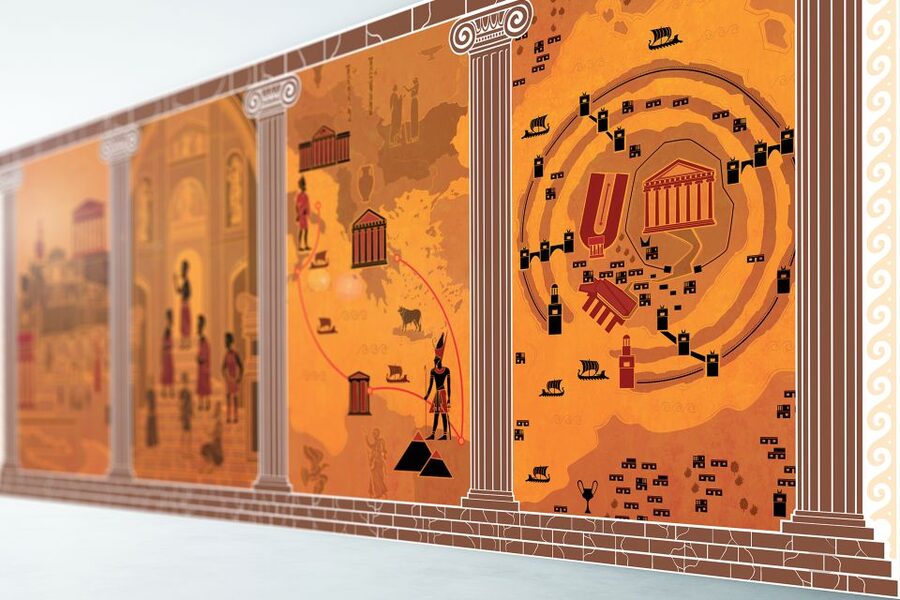
- Plato’s journey through an interactive fresco
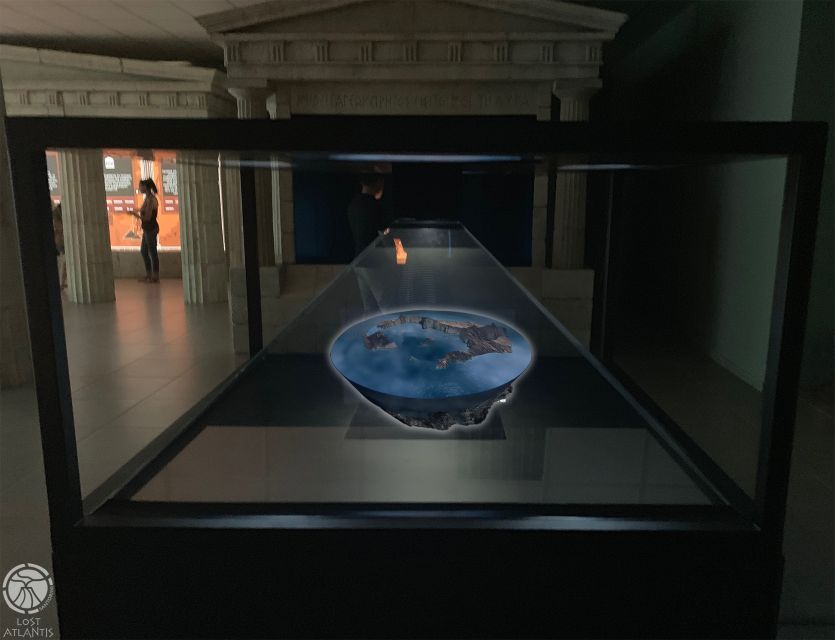
- The world’s largest Atlantis diorama
- Geological Santorini shown as a hologram
- The 9D destruction of Atlantis
- How long the visit really takes
- Why it works well before Akrotiri
- Getting there in Megalochori
- Is $16 a fair price?
- Who will enjoy this most?
- Should you book the Lost Atlantis 9D Experience?
- FAQ
- Where is the Lost Atlantis 9D Experience Museum?
- How long does the experience last?
- What languages are available?
- Is the museum wheelchair accessible?
- Is transportation included?
- Can I cancel or pay later?
Key things to know before you go
- Plato appears as an animated hologram: You can ask him about Atlantis, his ideal city, and the theory linking the myth to Santorini.
- The 9D film uses physical effects: Expect simulated ash, wind, smoke, water sprays, bubbles, and movement during the volcanic destruction scene.
- The Atlantis diorama is a major feature: It shows the imagined city in detail and lets you look into daily life through augmented-reality windows.
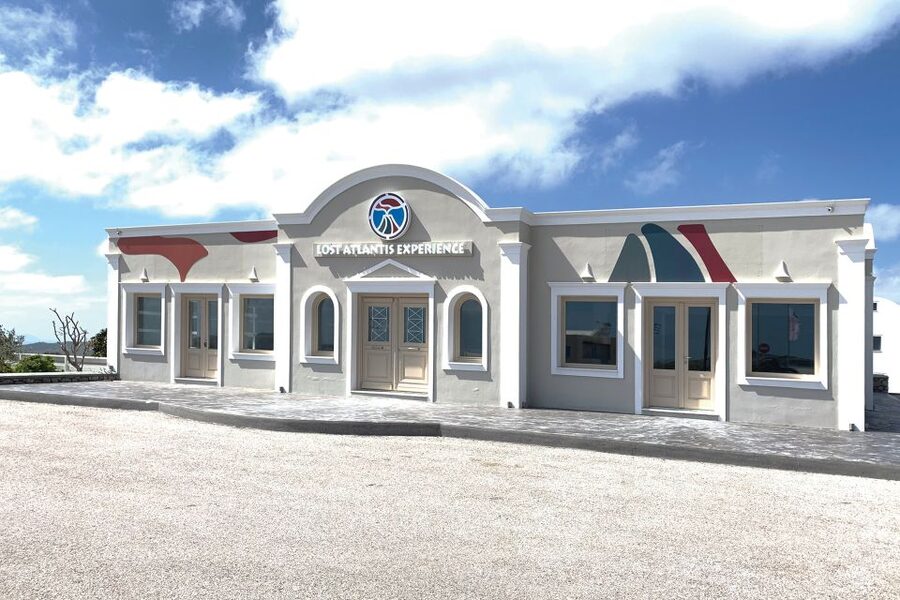
- The visit fits neatly into an Akrotiri day: The museum is in Megalochori, near a local bus stop and opposite the Denaxas supermarket.
- It works especially well for families: Interactive panels and guided exhibits make ancient history easier for children ages 8 and up to follow.
- The price is reasonable for a short stop: At $16 per person, it offers a focused indoor activity lasting about 45 to 60 minutes.
What the Lost Atlantis museum is trying to explain
Santorini is often linked with the Atlantis story because of its enormous volcanic eruption, the destruction of settlements, and the Minoan world that once flourished in the Aegean. Plato wrote about Atlantis as a powerful island civilization destroyed by earthquakes and floods. The museum presents the theory that Santorini may have helped inspire that story.
That theory remains a theory. You will not leave with archaeological proof that Santorini was Atlantis, and the museum does not turn a legend into established fact. Its real strength is showing why the idea continues to fascinate people.
The displays connect Plato’s writing with Santorini’s geological past, Minoan culture, and the volcanic event that reshaped the island. For you, the result is easier to follow than a wall of dates and academic terms. The museum uses animation, sound, holograms, models, and guided explanations to tell the story in small steps.
All exhibits are available in Greek, English, French, German, Italian, Spanish, Turkish, and Chinese. The host or greeter speaks Greek and English, while guides are positioned around the exhibits to explain how the displays work.
More museums and sites in Santorini:
- Athens: Acropolis, Parthenon & Acropolis Museum Guided Tour
★ 4.8 · 9,316 reviews - Athens: Mythology of Delphi, Museum and Arachova Guided Tour
★ 4.6 · 4,008 reviews - Athens: Acropolis, Parthenon & Acropolis Museum Guided Tour
★ 4.8 · 3,579 reviews
The opening exhibits and Santorini’s Minoan past
Your visit begins with the background needed to understand the Atlantis theory. Interactive videos lay out the evidence connecting the myth with the volcano eruption and the island’s prehistoric settlement.
This part matters because Atlantis is easy to treat as pure fantasy. The museum gives you a useful middle ground. You learn about the real Minoan civilization and the real volcanic disaster, then see how later writers and modern researchers connect those facts with Plato’s story.
The interactive panels are helpful if you like to control the pace. You can stop, look, and listen rather than simply stand in front of a display while a guide talks over you. Guides remain available at the exhibits, which is useful if you are unsure what to press or want a little more context.
I would allow extra attention here if you plan to visit the Akrotiri archaeological site afterward. The museum gives you a basic picture of the people, buildings, and natural forces involved. Then Akrotiri can provide the physical remains and archaeological detail.
Plato’s journey through an interactive fresco
One of the more unusual sections follows Plato’s journey and the ideas that led him to write about an ideal city. An interactive fresco helps present this story.
This is not a traditional lecture about Greek philosophy. Plato appears as an animated hologram, giving the ancient thinker a more approachable presence. You can ask him about his philosophy and about the theory that Santorini may be the source of the Atlantis myth.
That feature should appeal to adults who want more than a special-effects show. It also gives older children a simple way into a difficult subject. Plato’s writing, political ideas, and imagined city can feel remote in a normal museum. Here, the conversation format makes the material less formal.
Keep in mind that the hologram is designed for entertainment and basic explanation. You should not expect a long philosophical discussion or a scholarly debate. Its value is that it makes you curious enough to explore the subject further.
The world’s largest Atlantis diorama
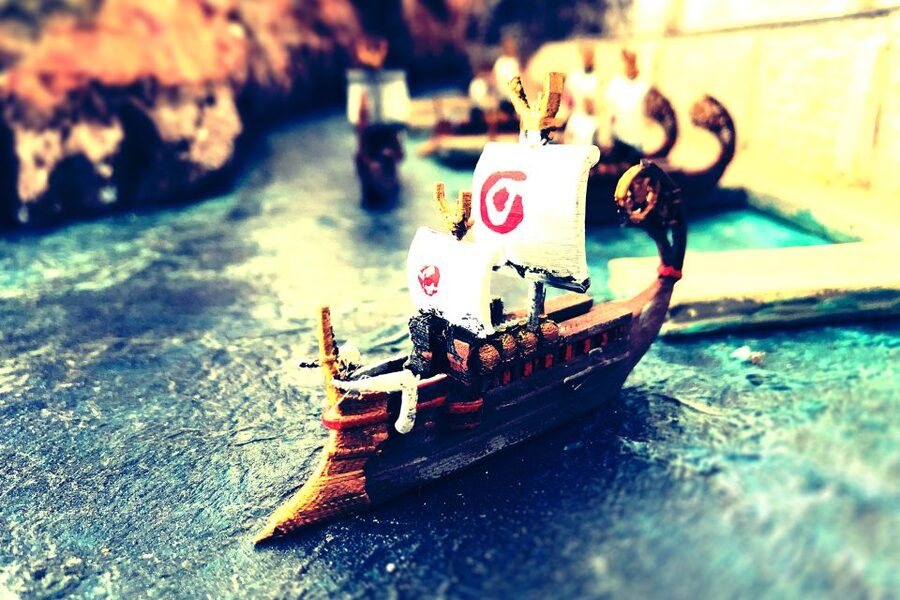
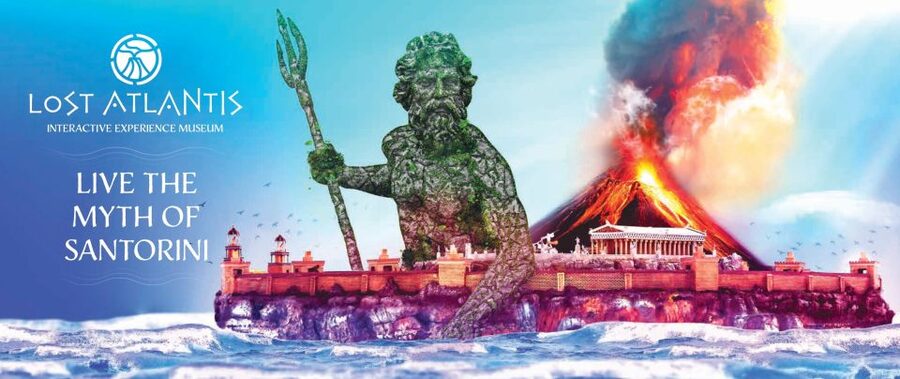
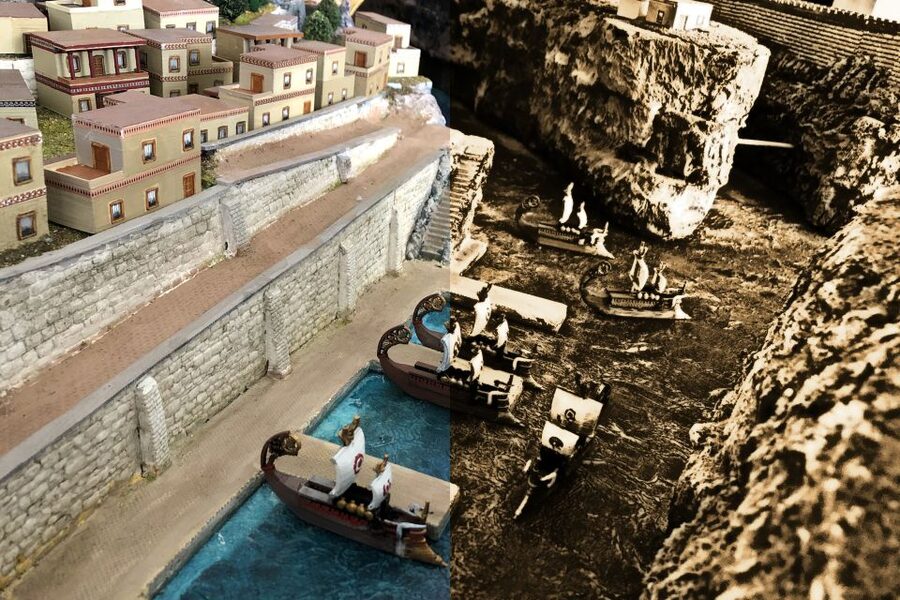
The museum’s large Atlantis model is one of its strongest visual features. The diorama presents the imagined city as a place with buildings, streets, and everyday activity rather than as a vague mythical island.
You can use augmented-reality windows to look into daily life. These virtual windows give you a sense of how people may have lived, worked, and moved through the city. The feature adds scale to the myth, turning Atlantis from a name into a place you can examine.
I like this part because it rewards looking closely. The 9D film delivers the big drama, while the model gives you time to pause and notice details. Families can also spend a few minutes here without needing to read long blocks of text.
The museum calls it the largest Atlantis diorama in the world. That is a bold claim, but the important point for your visit is simpler: the model is detailed enough to serve as the visual center of the museum. If you enjoy miniatures, ancient cities, or imagined worlds, plan to give it more than a quick glance.
A few more Santorini half-days to weigh up
- Santorini Classic Catamaran Cruise with BBQ, Drinks and Transfers
★ 5.0 · 3,933 reviews - Half-Day Exclusive Catamaran Cruise in Santorini with Meal and Open Bar
★ 5.0 · 2,975 reviews - Santorini Gold Catamaran Cruise with Snorkel, BBQ & Open Bar
★ 4.8 · 2,822 reviews - Private Santorini Tailor Made – Choice of the Guest!
★ 5.0 · 1,972 reviews
Geological Santorini shown as a hologram
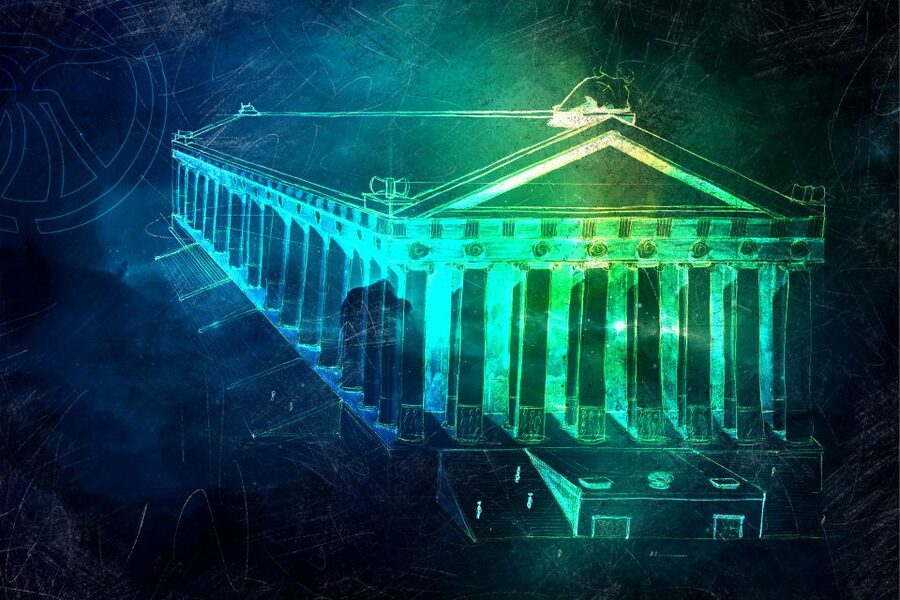
Another exhibit presents the geological evolution of Santorini in holographic form, from prehistoric ages to the island you see today.
This is valuable because Santorini’s shape is not just a pretty backdrop for holiday photographs. It is the result of immense volcanic forces. The holographic presentation helps you see the island as something that has changed over time, rather than as a fixed object.
The display also supports the museum’s main argument. The Atlantis theory depends partly on the scale of the eruption and its effects. Seeing the island’s geological development first makes the later destruction sequence easier to understand.
You may find this section more interesting if you have already visited the caldera viewpoints or plan to explore the volcanic islands by boat. The museum does not replace those experiences, but it gives the geology a clearer story.
The 9D destruction of Atlantis
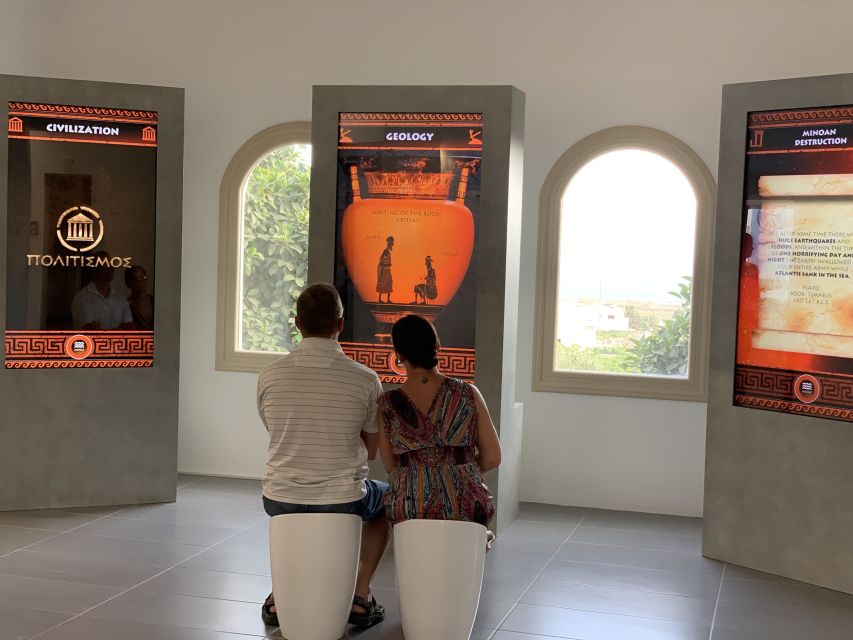
The final major attraction is the 9D experience, which recreates the earthquake, tsunami, and volcanic eruption said to have destroyed Atlantis.
The title sounds grand, and the experience is built around sensory effects rather than a long film alone. You may feel movement and encounter water sprays, bubbles, smoke, simulated ash, and wind. The effect is meant to make you feel caught inside the disaster.
Different visitors describe it as 3D, 4D, 5D, or 9D, but the practical point is the same: it adds physical effects to the story. The film is short, energetic, and designed to entertain. Several people particularly enjoyed how realistic the water, ash, and smoke felt.
I would place this near the end of your visit. The earlier rooms explain the setting, the Minoan connection, and the Atlantis theory. By the time you reach the film, you understand what the eruption is meant to represent.
The effects may be too much for very young children or anyone sensitive to motion, loud sound, smoke effects, or sudden changes. The supplied information does not give an age restriction or a detailed accessibility warning for the film, so ask the staff before entering if you have concerns.
A listed feature also lets you walk on lava inside an active volcano and dress up for photographs as a citizen of Atlantis. These extras add a playful touch, particularly for families and children who enjoy taking pictures. They are not the main reason to visit, but they help keep the experience from feeling like a standard video presentation.
How long the visit really takes
The stated duration is one hour, but your exact time depends on how carefully you use the interactive exhibits. Some people finish in about 45 minutes, while others spend the full hour moving through the displays and waiting for the film sequence.
That makes the museum easy to add to a day in southern Santorini. You do not need to give it half a day, and you can use it as a cool indoor break during hot weather. It can also fill an awkward gap before a meal, bus departure, or visit to another nearby attraction.
The compact size is both a benefit and a limitation. You can see the main features without getting tired, but the museum may feel small if you expect a large archaeological collection. This is an experience center built around one story, not a vast institution with room after room of artifacts.
Why it works well before Akrotiri
The Lost Atlantis museum pairs naturally with the Akrotiri archaeological site. The museum gives you a dramatic, easy-to-follow account of the eruption and the Minoan world. Akrotiri then lets you see the remains of a real prehistoric settlement.
I would visit Lost Atlantis first if your schedule allows. The interactive explanations can give you useful context before you face the ruins and conservation work at Akrotiri. One visitor specifically recommended this order, and it makes sense: start with the story and theory, then examine the archaeological evidence.
Do not confuse the two experiences. Lost Atlantis presents a theory through entertainment and technology. Akrotiri offers archaeology. The first is more accessible and playful; the second is more grounded in excavated remains. Together, they create a fuller day focused on Santorini’s prehistoric past.
Getting there in Megalochori
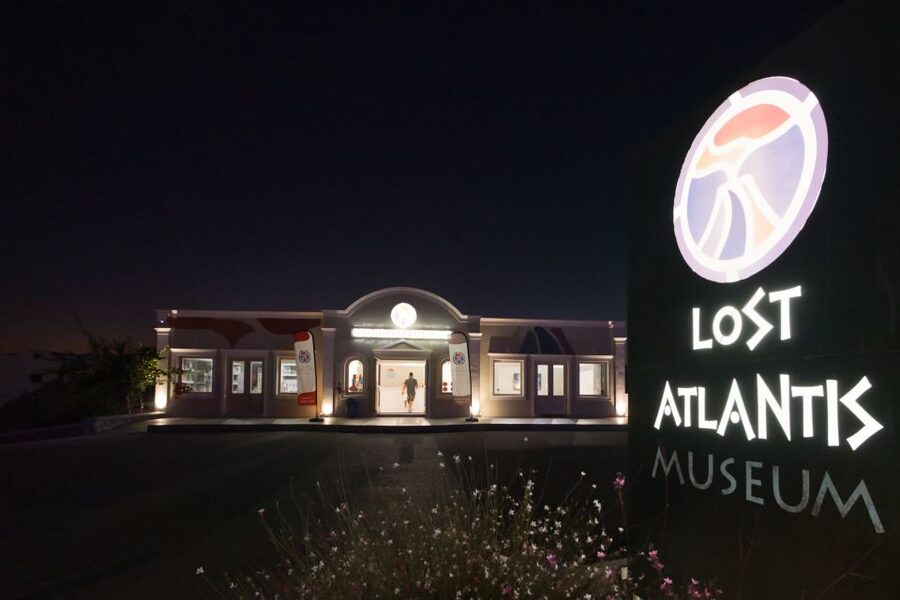
The meeting point is Lost Atlantis, on Epar.Od. Firon-Ormou Perissis in Santorini, opposite the large Denaxas supermarket.
A local bus stop is about 100 yards away. Staff have helped visitors with information about the next bus, which can make the return journey easier. Pickup and drop-off at your accommodation are not included, so you need to arrange your own transport.
The location makes this better as part of a wider southern-island outing than as a stand-alone trip from the far side of Santorini. Check the bus schedule and allow time for delays if you are connecting to Akrotiri or another appointment. If you arrive by car or taxi, use the Denaxas supermarket as a clear landmark.
Oversize luggage and pets are not allowed. The museum is wheelchair accessible, but ask staff directly about the specific 9D seating and effects if you require an adapted arrangement.
Is $16 a fair price?
At $16 per person, the ticket is fairly priced for a one-hour indoor attraction with several different elements. You are paying for the 9D film, the guides, the holograms, the diorama, the augmented-reality displays, and the themed photo activities.
The value is strongest if you enjoy interactive museums or are visiting with children. A family can learn about Santorini’s past without committing to a long guided tour. The English-language support and multilingual exhibit text also make it easy for international visitors to follow.
The value is weaker if you want original artifacts, detailed excavation reports, or a quiet museum experience. Much of the appeal comes from presentation. The film and effects are the parts you are most likely to remember, while the historical content is an accessible introduction rather than a full academic treatment.
There is no food or drink included, although one review noted that snacks and drinks were available on site. Treat that as a possible convenience, not part of the ticket. At an hour long, the museum does not need a meal break anyway.
Free cancellation is available up to 24 hours before the visit, and you can reserve now and pay later. Those options help if your Santorini schedule depends on weather, transport, or cruise timing.
Who will enjoy this most?
I would recommend the experience to:
- Families with school-age children who need history presented through movement, images, and technology.
- First-time visitors who want a simple introduction to Santorini’s volcanic past.
- Anyone planning to visit Akrotiri and looking for context beforehand.
- Adults who enjoy legends, ancient cities, holograms, and theatrical effects.
- Visitors needing a short indoor activity during a hot afternoon.
You may want to skip it if you dislike simulated rides or prefer museums filled with original objects. The small size may also disappoint you if you expect a full-day attraction.
The staff receive especially strong praise for being friendly, cheerful, and willing to explain the interactive panels. That matters here because the technology is part of the visit. A guide can help you move through the exhibits in the right order and get more from each display.
Should you book the Lost Atlantis 9D Experience?
Book it if you want a fun, focused hour that links Santorini’s volcano, Minoan past, and Plato’s Atlantis story. At $16, it is a sensible add-on to an Akrotiri visit, especially for families and anyone who learns better through films, models, and hands-on displays.
Do not book it expecting proof that Atlantis was Santorini or a substitute for archaeology. The museum presents an intriguing theory, then wraps it in water effects, holograms, augmented reality, and a lively disaster film.
For the best use of your time, visit before Akrotiri, allow 45 to 60 minutes, and ask staff about the 9D effects if you are sensitive to motion or sound. If that sounds like your kind of history lesson, this compact museum earns its place on a southern Santorini itinerary.
FAQ
Where is the Lost Atlantis 9D Experience Museum?
It is in Megalochori at Lost Atlantis, Epar.Od. Firon-Ormou Perissis, Santorini 847 00. The entrance is opposite the large Denaxas supermarket.
How long does the experience last?
The stated duration is one hour. You may see the main exhibits in about 45 minutes, depending on how long you spend with the interactive displays.
What languages are available?
The exhibits are available in Greek, English, French, German, Italian, Spanish, Turkish, and Chinese. The hosts or greeters speak Greek and English.
Is the museum wheelchair accessible?
Yes, the museum is listed as wheelchair accessible. If you need specific information about the 9D experience, ask the staff before entering that section.
Is transportation included?
No. Pickup and drop-off at your accommodation are not included. A local bus stop is about 100 yards from the museum.
Can I cancel or pay later?
You can cancel up to 24 hours in advance for a full refund. You can also reserve your place and pay later, keeping your plans flexible.
Just added around Santorini
- Small-Group Tour: Best of Santorini★ 4.7 · 42 reviews
- Santorini Volcano, Hot Springs Adventure★ 3.6 · 54 reviews
- Santorini Wine Roads: Tour of 3 Wineries with a Sommelier★ 4.8 · 79 reviews
- Santorini: Private Sightseeing Tour with Local Guide★ 4.9 · 105 reviews
- Santorini: Tour of Wineries with Wine Tasting & Food★ 5.0 · 279 reviews
- From Santorini: Volcano Cruise With Oia Sunset★ 4.3 · 97 reviews
- Santorini: Wine Tour with Sunset in Oia★ 4.6 · 199 reviews
- Santorini: Small-Group Highlights Tour of Venetian Castles★ 4.9 · 83 reviews
Museums, compared.
Acropolis, Parthenon & Acropolis Museum Guided Tour
Read our review →
Mythology of Delphi, Museum and Arachova Guided Tour
Read our review →Acropolis, Parthenon & Acropolis Museum Guided Tour
Read our review →
Acropolis monuments & Parthenon Walking Tour with Optional Acropolis Museum
Read our review →
Athens All Included: Acropolis and Museum Guided Tour with Ticket
Read our review →
Acropolis Museum Ticket with optional Audio Guide
Read our review →
Small-Group Delphi, Museum & Arachova Day Trip
Read our review →
Parthenon & Acropolis Museum with Audio or Live Tour Option
Read our review →Browse the lists this tour appears in