
Reviewed · METEORA TOURS
Morning Monastery E-bike Tour
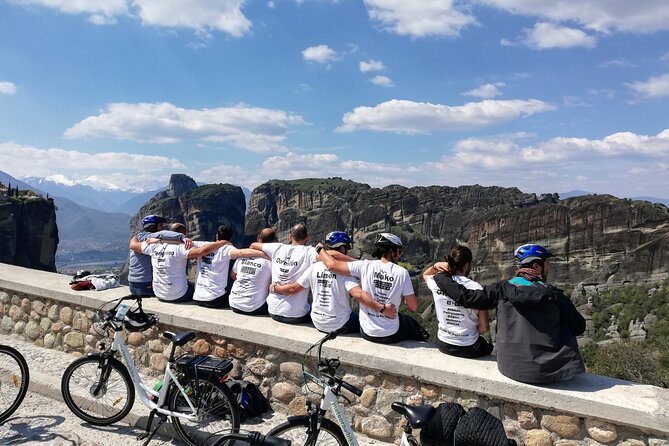
Meteora looks even better from two wheels. This four-hour ride offers a relaxed way to see the famous cliff-top monasteries without spending the morning inside a bus, and I especially like the small group of up to 10 people and the chance to stop often for photos and questions. I also like the gentle, eco-friendly pace, though you should budget extra for monastery admission and expect some hills.
The route begins in Kalambaka and passes through Kastraki before reaching the monasteries and viewpoints above town. Guides such as Bill and Vasilis have earned particular praise for explaining not only the monasteries, but also the surrounding communities, local customs, films made in Meteora, and the practical details of monastic life.
In This Review
- Four things to know before you book
- Why an e-bike works so well at Meteora
- Starting in Kalambaka with a proper bike fit
- Kastraki gives the ride local scale
- Saint Nicholas Anapafsas and the first cliff views
- Rousanos and Saint Barbara: a photo stop with a purpose
- Varlaam or Great Meteoron for the main monastery visit
- Holy Trinity brings the big panorama
- Saint Stephen offers a second monastery perspective
- The downhill ride back to Kalambaka
- What the $54.31 price gives you
- Weather, clothing, and practical comfort
- Who should choose this Meteora tour?
- Should you book the Morning Monastery E-Bike Tour?
- FAQ
- How long does the Morning Monastery E-Bike Tour last?
- What time does the tour start?
- Where does the tour end?
- Is monastery admission included?
- How many people can join the tour?
- What equipment and refreshments are provided?
- Can children participate?
Four things to know before you book
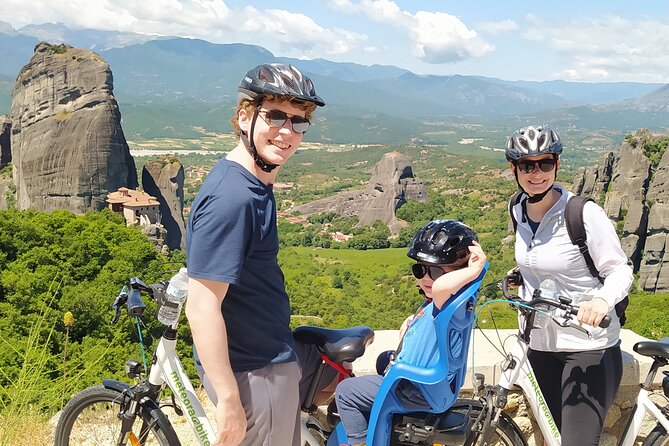
- You ride through both Kalambaka and Kastraki: The route gives you more than a quick visit to the famous rocks. You see the two communities that frame Meteora before climbing toward the monasteries.
- One monastery visit is central to the tour: Varlaam or Great Meteoron is included in the planned experience, with admission charged separately.
- The group is capped at 10 people: That makes it easier to hear the guide, ask questions, and pause for photos without holding up a large crowd.
- Electric assistance keeps the ride manageable: You still ride a bicycle and encounter hills, but the motor takes much of the strain out of getting around.
- The morning timing works in your favor: Starting at 9:00 am gives you cooler riding conditions and good light before the day gets hotter.
Why an e-bike works so well at Meteora
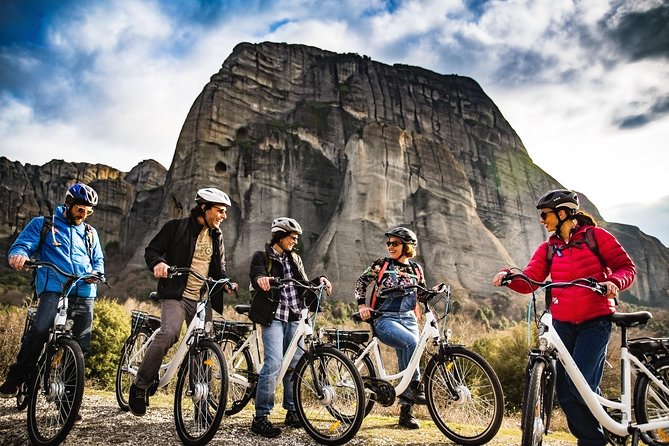
Meteora is famous for its monasteries perched on tall rock formations, but the area is spread out. Walking between the main sights would take too long for a half-day visit, while a standard sightseeing vehicle can make the experience feel like a series of quick roadside stops.
An e-bike offers a useful middle ground. You move under your own power, feel the open air, and can pull over for a photo or a short explanation. At the same time, the motor helps with the climbs. You will still need to pay attention to the road and follow the guide, but you are not facing the full effort of a conventional bicycle ride.
I like this format for people who want more contact with the setting than a bus tour provides. You get the smell of the countryside, changing views as you ride, and the small pleasure of coasting downhill on the return. The route also gives you time to look up at the cliffs instead of focusing only on a vehicle window.
The tour lasts about four hours, including stops and monastery time. That is long enough to see the main sights without taking over your entire day. You can still plan lunch, another visit in Kalambaka, or onward travel afterward.
More bike days around Meteora:
- Meteora Sunset E-Bike Tour
★ 5.0 · 92 reviews - Meteora: E-Bike Epic Sunset Tour With Local Guide & Drink
★ 5.0 · 67 reviews - Meteora Electric Bike Tour
★ 5.0 · 61 reviews
Starting in Kalambaka with a proper bike fit
The meeting point is the Meteora e-Bike office at Ioanninon 3 in central Kalambaka. The tour starts at 9:00 am, and the first 15 minutes are used for fitting the bicycles and giving a short briefing.
This opening matters. A correctly adjusted bike makes a noticeable difference during a four-hour ride, especially if you are not used to cycling. The briefing should also help you understand how to ride in the group and use the electric assistance.
Bicycles, helmets, reflective vests, bottled water, and local snacks are included. Rain ponchos and extra clothing can be supplied if needed, which is useful in a place where weather can change around the high rocks.
Families have some added flexibility. A child seat, bike trailer, and co-pilot attachment are available, though you should arrange the option you need in advance. The information provided says most people can participate, but the experience still involves riding and hills, so it is sensible to consider your own comfort on a bicycle before booking.
Kastraki gives the ride local scale
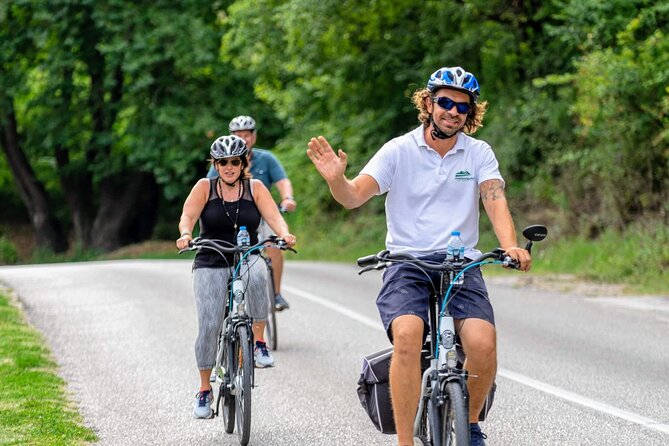
From Kalambaka, the group rides toward Kastraki. The stop here lasts about 20 minutes and takes place at the end of the village, where the guide explains the area and answers questions.
This is a valuable pause because Kastraki helps you understand how close daily life is to Meteora’s dramatic cliffs. The monasteries are the headline attraction, but Kalambaka and Kastraki are not just parking areas for sightseeing. They are working communities, and the guides make the setting easier to read.
Bill has been praised for explaining the surrounding communities as well as the monasteries. That wider focus adds something important to the tour. You learn about the place people live in today, not only the stones and religious buildings above them.
The ride through the village also gives the group time to settle into the bicycles before the monastery stops begin. If you have questions about the route, this is a good moment to ask them.
Saint Nicholas Anapafsas and the first cliff views
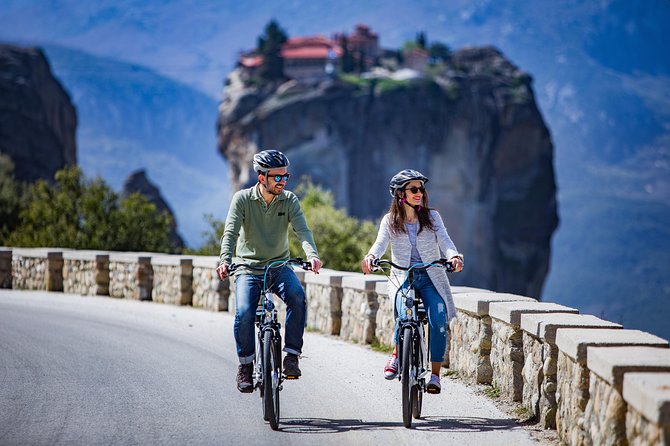
The next stop is the Holy Monastery of Saint Nicholas Anapafsas. The planned pause is brief, around 10 minutes, mainly for photographs and conversation with the guide.
Do not expect a full visit here. This is a view and orientation stop, not one of the longer monastery entries. That short format works because Meteora offers several important buildings in a compact area, and spending too long at every one would make a four-hour tour impossible.
The stop lets you see how the monasteries sit among the rock formations and gives the guide a chance to explain what you are looking at before the route continues. Keep your camera ready, but also give yourself a moment to look away from the screen. The appeal of Meteora comes from the relationship between the cliffs, the buildings, and the open space around them.
A few more Meteora half-days to weigh up
- Meteora Sunset Tour on E-bikes
★ 5.0 · 54 reviews - Sunset Meteora Tour on E-Bike
★ 5.0 · 46 reviews - Breath-taking Monasteries Morning E-Bike Tour
★ 5.0 · 31 reviews - Athens Electric Bike Tour
★ 5.0 · 836 reviews
Rousanos and Saint Barbara: a photo stop with a purpose
The ride continues to a viewpoint near the Holy Monastery of Rousanos, also known as Saint Barbara. Again, the stop lasts about 10 minutes and focuses on photographs, scenery, and questions.
The monastery is not listed as a full interior visit on this part of the route. That may disappoint you if you hoped to enter every building, but the short stop helps preserve the tour’s relaxed rhythm. You see more of Meteora instead of spending the whole morning in one or two sites.
This is also where the small group becomes useful. With no more than 10 people, the guide can point out details and allow time for individual photographs. In a larger group, a short stop can feel rushed. Here, the pace is designed around seeing and understanding rather than simply checking off names.
Varlaam or Great Meteoron for the main monastery visit
At Varlaam, the tour pauses for snacks and broad views toward two of Meteora’s largest monasteries, Varlaam and Great Meteoron. The stop is planned for about 20 minutes, but the key feature is the visit to one monastery, either Varlaam or Great Meteoron.
Admission is not included. The supplied tour information lists the monastery ticket at 3 euros per person, so carry a little cash or confirm the current payment arrangements before setting out. Since entry details can change, you should also check which monastery is scheduled for your date.
This is the most substantial cultural part of the morning. Inside, you can learn about monastic life, see the church and museum, and understand how supplies once reached these remote buildings. One especially memorable detail highlighted by the guide is the net used to lift amenities up to the monastery. It is a simple piece of practical history that makes the site feel less like a postcard and more like a functioning religious community built in a difficult place.
Guides Bill and Vasilis have both been praised for making this material approachable. Bill is noted for his explanations of the monasteries and nearby communities, while Vasilis has been praised for sharing the story of the place with families. You can also expect cultural details beyond architecture, including references to films and television series that used Meteora as a setting.
The 20-minute stop may feel short if you want to study every room. That is the tradeoff. This tour gives you a taste of the inside and a broad ride through the area, rather than a long, specialist visit to several monasteries.
Holy Trinity brings the big panorama
The next pause is at Holy Trinity Monastery, or Agia Triada. The stop lasts around 10 minutes and is designed around one of the most panoramic viewpoints in Meteora.
This is the kind of stop that explains why an e-bike is useful here. You can reach a series of high points without repeatedly searching for parking or climbing into a vehicle. The guide can position the group, explain what you are seeing, and give you time to take photographs.
Holy Trinity is also one of the places where scale becomes clear. From the viewpoints, the rock formations, roads, villages, and other monasteries connect into one broad scene. You get a better sense of how isolated the monasteries once were and how carefully their builders chose their locations.
The stop is short, so use your time well. Take a few photographs, listen to the guide’s explanation, and then look around without trying to document every angle.
Saint Stephen offers a second monastery perspective
The route includes a second monastery stop at the Monastery of Agios Stefanos, or Saint Stephen. This visit is planned for about 30 minutes, making it longer than the brief photo pauses.
The tour information identifies this as the second monastery visit, while the main highlights describe entry to Varlaam or Great Meteoron. Because the wording presents monastery admission as an extra cost, you should confirm exactly which entrances are included in your chosen departure and allow for the listed 3 euro ticket charge per person.
Saint Stephen adds variety to the morning. After the earlier visit and the viewpoints around the cliffs, you get another chance to see a monastery at closer range. The longer stop gives you more breathing room for the church, museum areas, and the guide’s explanation of monastic life, where accessible under the day’s arrangements.
The tour does not promise entry to every monastery along the route. That is worth keeping in mind. You will see several buildings from the road and viewpoints, but the full interior experience is focused on selected sites.
The downhill ride back to Kalambaka
The return takes about 30 minutes, riding back through Kastraki and Kalambaka. The route includes downhill coasting and more chances for photographs.
This final stretch should feel easier than the outward ride, thanks to the electric bicycles and the descending sections. Still, you should keep your helmet on, remain alert, and follow the guide’s pace. A downhill road can be enjoyable, but it is not the place to race ahead for a photograph.
The return to the original meeting point makes planning simple. You do not need to arrange a separate pickup, and the activity ends where it began. That is useful if you have a hotel, restaurant, or public transport connection in central Kalambaka.
What the $54.31 price gives you
At $54.31 per person, this is not the cheapest way to see Meteora, but the price covers more than bicycle rental. You receive the bike, helmet, reflective vest, water, local snacks, a guide, and roughly four hours of organized riding.
The guide is the main part of the value. Without one, you could rent a bicycle and reach some of the same roads, but you would miss the explanations about monastic life, the nearby communities, the supply net, and the cultural references connected with Meteora. You would also need to plan the route and work out where to stop.
The small group improves that value. A maximum of 10 people gives the guide room to answer questions and adjust the pace within reason. It also makes the ride feel less like a procession.
Admission is the extra cost to watch. The supplied information lists monastery tickets at 3 euros per person. Since the itinerary describes stops at more than one monastery, ask for a clear explanation of which entry fees apply before booking or at the office.
The tour is often reserved well ahead, with an average booking lead time of 43 days. That suggests you should not leave it until the last morning of a short Meteora visit, especially if your schedule is fixed.
Weather, clothing, and practical comfort
This is an outdoor activity, and good weather is required. If poor weather forces cancellation, you can choose another date or receive a full refund.
Wear comfortable clothing suitable for cycling and bring an extra layer if the morning feels cool. Reflective vests, rain ponchos, and extra clothing may be provided when needed, but you should still arrive ready for changing conditions.
The start time is 9:00 am. An early start gives you a cooler part of the day and leaves the afternoon free, but it means you need to reach the Kalambaka meeting point on time. The activity is near public transportation, which helps if you are staying nearby or arriving without a car.
Free cancellation is available up to 24 hours before the start time. Changes or cancellations made less than 24 hours before departure are not accepted for a refund, except when the provider cancels because of poor weather.
Who should choose this Meteora tour?
I would choose this tour if you want a broad introduction to Meteora, enjoy being outdoors, and prefer active sightseeing to sitting in a vehicle. It is particularly well suited to families and mixed-age groups because electric assistance reduces the effort of the hills, while child equipment is available.
It also suits first-time visitors who want a guide to handle navigation and explain what they are seeing. The route combines village life, cliff views, several monastery exteriors, selected interior visits, and a snack break in one morning.
I would think twice if your main goal is a long, detailed study of the monasteries’ interiors. The stops are carefully timed, and several are mainly for views and photographs. A dedicated monastery visit may suit you better if you want to linger.
You should also be comfortable riding a bicycle for several hours. Most people can participate, according to the supplied information, but an e-bike does not remove every physical demand. You still need to balance, steer, climb, and stay alert on the road.
Should you book the Morning Monastery E-Bike Tour?
Book it if you want the best mix of fresh air, monastery access, and local explanation in a half-day outing. The route is thoughtfully paced, the group stays small, and the e-bike makes Meteora’s hills far less intimidating.
The strongest reasons to go are the guides, the chance to learn about both the monasteries and nearby communities, and the freedom to stop at viewpoints that a vehicle tour can pass too quickly. Just confirm the monastery entry arrangements, set aside the extra admission fee, and remember that the tour needs good weather.
For an active first look at Meteora, this is a strong-value choice. For a slow, in-depth religious or architectural visit, choose a longer monastery-focused experience instead.
FAQ
How long does the Morning Monastery E-Bike Tour last?
The tour lasts approximately four hours, including the bike fitting, briefing, riding, viewpoints, monastery stops, snacks, and return to Kalambaka.
What time does the tour start?
The tour starts at 9:00 am from Ioanninon 3 in central Kalambaka.
Where does the tour end?
The activity ends back at the original meeting point in Kalambaka.
Is monastery admission included?
No. Monastery admission is listed as an extra cost of 3 euros per person. The route includes a visit to one of Varlaam or Great Meteoron, plus a second monastery stop at Agios Stefanos, so confirm the exact entry arrangements before departure.
How many people can join the tour?
The maximum group size is 10 people.
What equipment and refreshments are provided?
The tour includes use of an e-bike, helmet, reflective vest, bottled water, and local snacks. Rain ponchos or extra clothing may also be provided if needed.
Can children participate?
Child equipment is available, including a bike trailer, child seat, and co-pilot attachment. The supplied information says most people can participate, but you should arrange the equipment you need in advance.
More Morning in Meteora
- Meteora: Morning Half Day Sightseeing and Monasteries Tour
★ 4.7 · 478 reviews - Meteora: Panoramic Morning Small Group Tour with Local Guide
★ 4.7 · 334 reviews - Meteora Panoramic Morning Small Group Tour with Local Guide
★ 5.0 · 311 reviews - From Kalabaka/Kastraki: Meteora Monasteries Morning Tour
★ 4.8 · 178 reviews
Just added around Meteora
- Meteora: Morning Half Day Sightseeing and Monasteries Tour★ 5.0 · 165 reviews
- Sunset Meteora Tour on E-Bike★ 5.0 · 46 reviews
- Meteora Motorized or Footlaunch Flight Experience★ 5.0 · 54 reviews
- Truffle Hunting at Meteora★ 5.0 · 171 reviews
- Secret Caves of Meteora – Sunset Hike★ 5.0 · 29 reviews
- Majestic Sunset Meteora Tour with Local Guide★ 5.0 · 237 reviews
- Private Tour: Meteora Tour with Transport from Kalambaka★ 5.0 · 50 reviews
- 3-Hour Hiking and Scramble Guided Tour of Great Saint in Meteora★ 5.0 · 28 reviews
Meteora Tours, compared.
Meteora Sunset with Monastery & Hermit Caves Tour in Small Group
Read our review →
Meteora Small Group Hiking tour with Transfer and Monastery Visit
Read our review →
Morning Half Day Sightseeing and Monasteries Tour
Read our review →
Guided Sunset Tour with Monasteries & Caves Visit
Read our review →
Majestic Sunset Tour & Monasteries with Local Guide
Read our review →
Meteora Monasteries Half-Day Small Group Tour with Transport
Read our review →
Panoramic Morning Small Group Tour with Local Guide
Read our review →Meteora Panoramic Morning Small Group Tour with Local Guide
Read our review →Browse the lists this tour appears in