
Reviewed · ACROPOLIS TOURS
Private Guided Tour: Athens, Acropolis and Acropolis Museum
Ancient Athens rewards a well-timed walk. I like the private format, which lets you ask questions and set a comfortable pace, and I like the route from Syntagma Square through the National Garden, Roman ruins, Acropolis, and museum. The main catch is cost: $318 per person does not include entrance tickets, food, or drinks.
This is also a serious walking day, not a gentle city stroll. You may cover many miles, climb uneven ground, and wait in summer heat at security. Still, guides such as Annie, Tina, Vicky, and Panagiota have earned especially warm praise for making Greek history clear, lively, and suitable for both adults and children.
In This Review
- Key points at a glance
- Why this private Athens tour works well
- Starting at Syntagma Square and the Evzones
- The National Garden, Zappeion, and modern Olympic Athens
- Zeus’s Temple and Hadrian’s Arch
- Walking the Dionysiou Areopagitou walkway
- Entering the Acropolis from the south slope
- The views from the Acropolis
- The Acropolis Museum’s glass floors and 4,000 artifacts
- What the $318 price really buys
- Walking demands, heat, and timing
- Which guide style suits your group?
- Should you book this Athens Acropolis tour?
- FAQ
- Where does the tour meet?
- How long does the tour last?
- Are Acropolis and museum entrance tickets included?
- Is the tour suitable for children?
- Is the tour suitable for wheelchair users or strollers?
- What happens if I arrive late?
Key points at a glance
- Private guide from Syntagma Square: Meet inside the metro station, then explore central Athens with an English-speaking licensed guide.
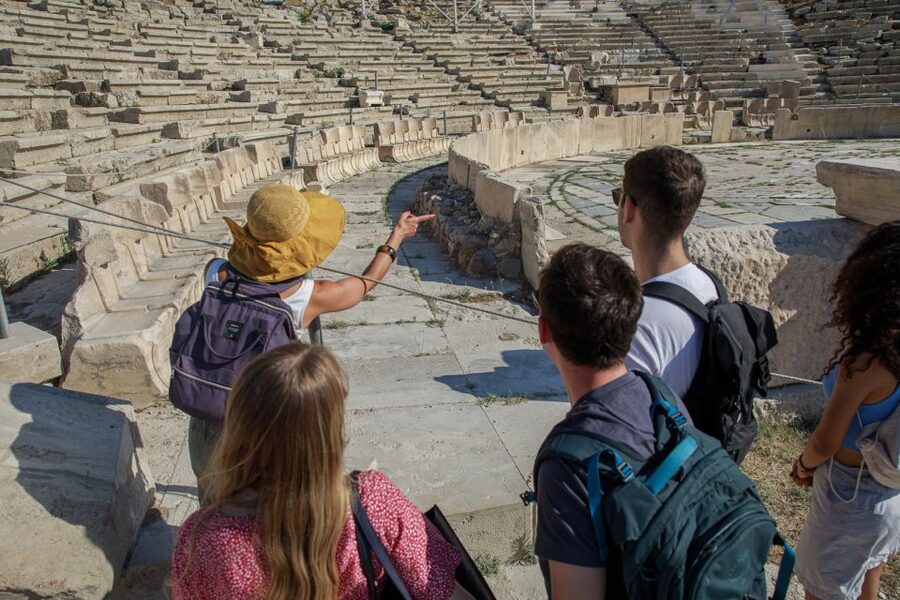
- South-side Acropolis approach: Enter near the Dionysus Theater, a useful route for seeing the ancient theater and reaching the monuments without starting at the busiest northern entrance.
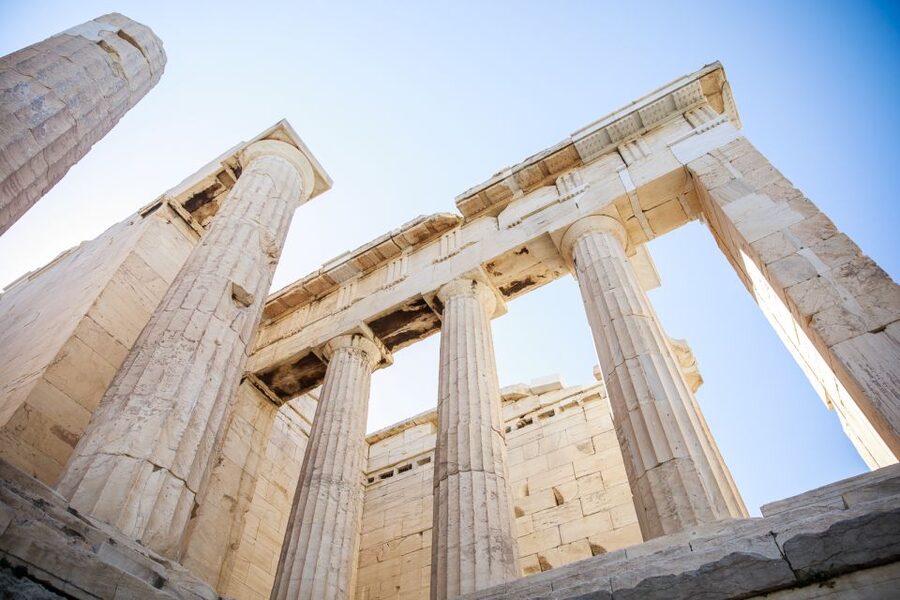
- Major Acropolis monuments: See the Parthenon, Propylaia, Erechtheion, Temple of Athena Nike, Agrippa monument, and views over Athens.
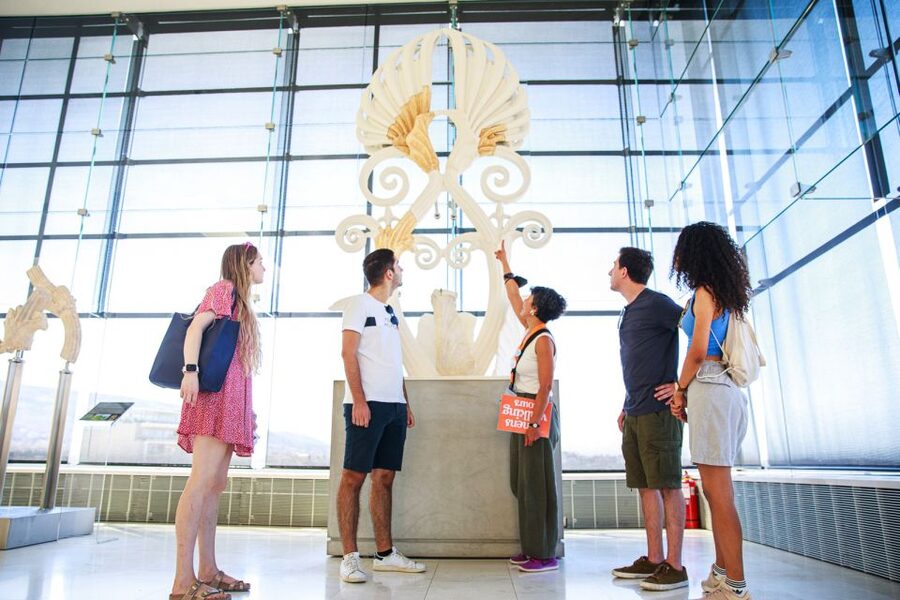
- Acropolis Museum included in the route: Study about 4,000 artifacts in a modern building with glass floors over archaeological excavations.
- Private pacing has real value: You can ask questions, pause for photos, and slow down for children or older family members.
- Plan for extra costs and effort: Tickets are bought separately, and the tour is not suitable for wheelchairs, strollers, or people with mobility impairments.
Why this private Athens tour works well
Athens can feel scattered on a first visit. The Acropolis rises above a web of ancient sites, Roman remains, gardens, grand civic buildings, and modern streets. This tour ties those pieces together on foot, so the Parthenon does not appear as an isolated photo stop.
You begin with a licensed guide in the center of Athens and spend about five and a half hours moving between the city’s main sights. That length is useful. You get a proper introduction to central Athens before the Acropolis, enough time for the monuments, and a visit to the museum afterward.
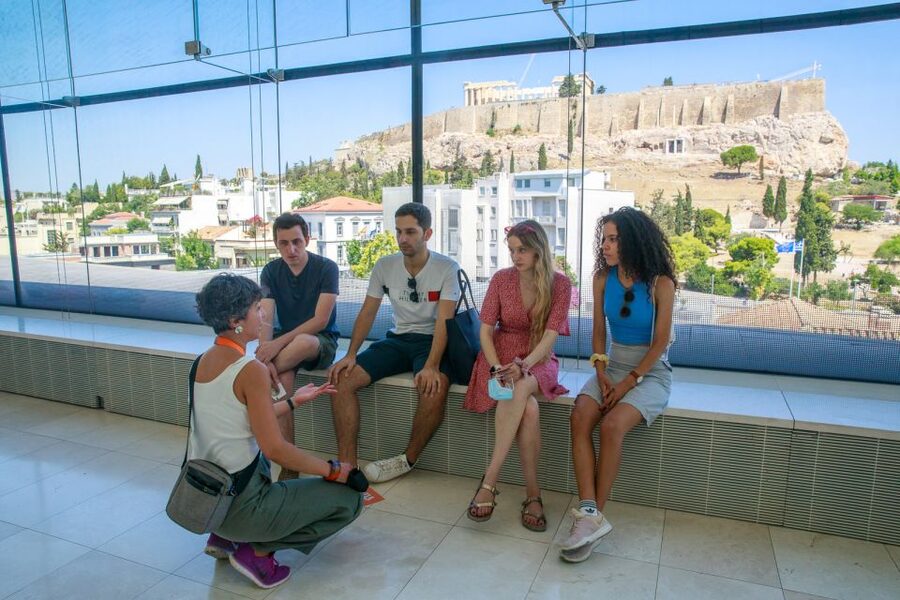
The private setup is the real selling point. A guide can adjust the explanation for your group, answer questions without a headset, and pause when you need water or photographs. Families have found this especially helpful. One guide, Efie, connected well with teenagers by pointing out details likely to hold their attention, while another guide, Dimitrious, handled a group of adults and children at different levels of interest.
I would not book this simply to save time on your feet. You are choosing it for interpretation, personal attention, and a smoother route through a complicated set of sites.
More Museums in Athens
- Athens: Acropolis, Parthenon & Acropolis Museum Guided Tour
★ 4.8 · 9,316 reviews - Athens: Mythology of Delphi, Museum and Arachova Guided Tour
★ 4.6 · 4,008 reviews - Athens: Acropolis, Parthenon & Acropolis Museum Guided Tour
★ 4.8 · 3,579 reviews
Starting at Syntagma Square and the Evzones
The meeting point is inside Syntagma metro station, one level below street level. Look for the orange Athens Walking Tours sign near the ticket-validating machines beneath the large central hanging clock. This is specific enough to find, but give yourself time to locate the correct area before the appointment.
Syntagma Square is a sensible starting point because it places you in the center of modern Greek civic life. Your first stop includes a small collection of archaeological finds from classical times, discovered during excavations in the area. It is a modest opening, but it helps connect today’s city with the ancient settlement beneath it.
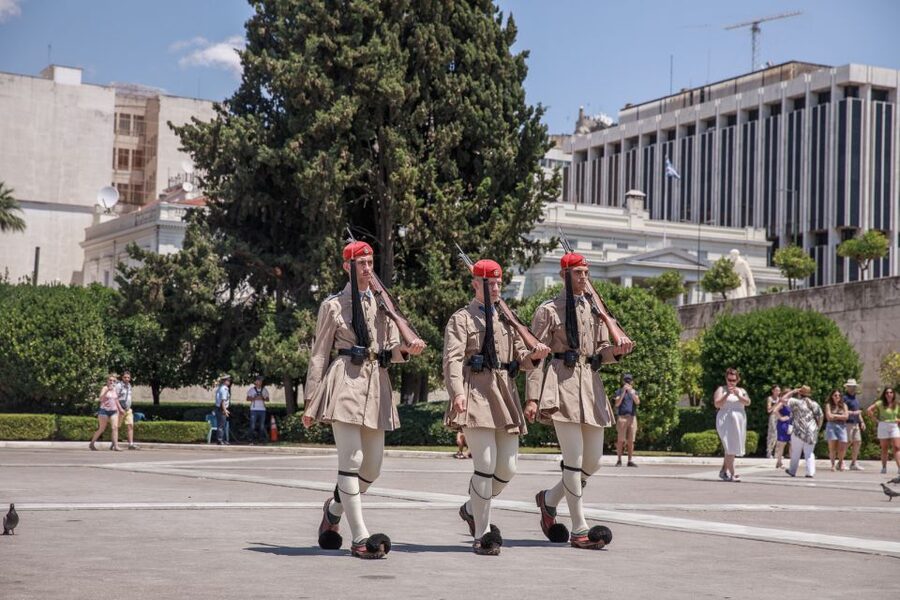
From there, you walk to the House of Parliament and the Tomb of the Unknown Soldier. If the timing works, you can watch the changing of the guards by the Evzones, the highly recognizable ceremonial soldiers. The guide can explain the setting and the role of the ceremony, which makes this more than a quick photograph outside the parliament building.
The changing of the guards is a bonus rather than something to rely on as the main event. Timing matters, and the tour follows a set route toward the Acropolis. If this ceremony is a top priority, confirm the starting time when you book.
The National Garden, Zappeion, and modern Olympic Athens
The route then heads through the National Garden, formerly Queen Amalia’s Garden. This shaded section gives your legs and eyes a break from the stone streets. In hot weather, the shade matters, and one guide, Nikoletta, was praised for knowing where to find cooler spots on the route and on the climb toward the Acropolis.
Next comes Zappeion Hall, an elegant neoclassical building near the National Garden. Here, your guide discusses the first Olympic Games of modern times along with figures from Athens’ more recent past. This portion gives the tour needed balance. You are not spending all five and a half hours in the distant past.
The walk is not a hop-on, hop-off sightseeing trip. You use your feet from one major point to the next, and there is no hotel pickup or drop-off. That is convenient if you are already staying or arriving near central Athens, but less convenient if you have luggage or are coming from a distant part of the city.
Zeus’s Temple and Hadrian’s Arch

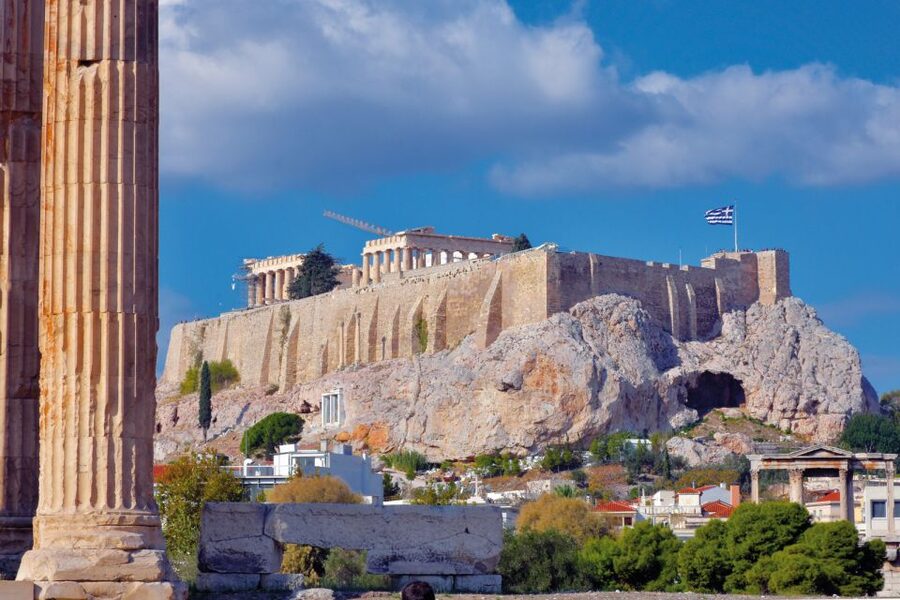
The next major sights belong to Athens under Roman rule: the Temple of Olympian Zeus and Hadrian’s Arch. Their scale helps explain how the city changed after the classical period.
The Temple of Zeus is a broad, imposing ruin with surviving columns that give you a sense of its original size. Hadrian’s Arch is more compact, but it is an excellent marker of the boundary between old Athens and the Roman city. Your guide can place these monuments within the wider story of Athens instead of treating them as disconnected stones beside a road.
This is one reason the private guide is useful. On your own, you might recognize the names and take a few pictures, but the relationship between the classical city and Roman Athens can be easy to miss. The walking route makes that change visible.
More ways to see the Acropolis:
- Athens: Acropolis & up to 5 Archaeological Sites Combo Pass
★ 4.4 · 12,619 reviews - Athens: Acropolis Ticket with Optional Audio or Live Guide
★ 4.2 · 11,055 reviews - Athens: Acropolis and Parthenon Guided Walking Tour
★ 4.6 · 5,882 reviews - Athens: Acropolis Ticket with Audio Guide
★ 4.0 · 3,575 reviews
Walking the Dionysiou Areopagitou walkway
From the Roman sites, you continue along the Dionysiou Areopagitou walkway toward the Acropolis. This is one of the more pleasant stretches of the tour, with clear views and a direct approach to the hill.
The path leads toward the south entrance, where you visit the Dionysus Theater before climbing higher. This theater is important because it is often described as the first theater of antiquity. Its worn stone seating and open setting help you picture the role of drama in ancient Athens.
The south-side approach also has a practical advantage. The route is designed to avoid the heaviest crowds found at the main entrance, though no Acropolis entrance is guaranteed to be quiet, especially in peak season. You still face security checks, and waits can reach more than 30 minutes during busy periods.
Entering the Acropolis from the south slope
The climb to the Acropolis is the physical center of the day. The surface is uneven, the sun can be intense, and there are steps and sloping paths. Wear sturdy, comfortable shoes, carry a hat, and bring cash for a snack or drink during the break afterward.
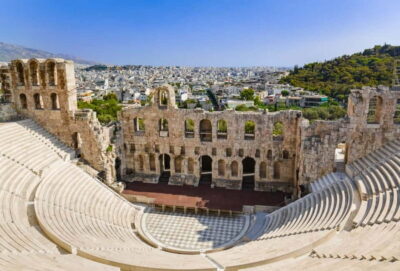
Before reaching the summit, you see the Philopappos Hill monument and the Odeon of Herodes Atticus. The Odeon is a striking ancient performance space built into the Acropolis slope. Its curved structure is easier to appreciate from the route than from a quick viewpoint, so listen as your guide explains how the buildings fit into the hillside.
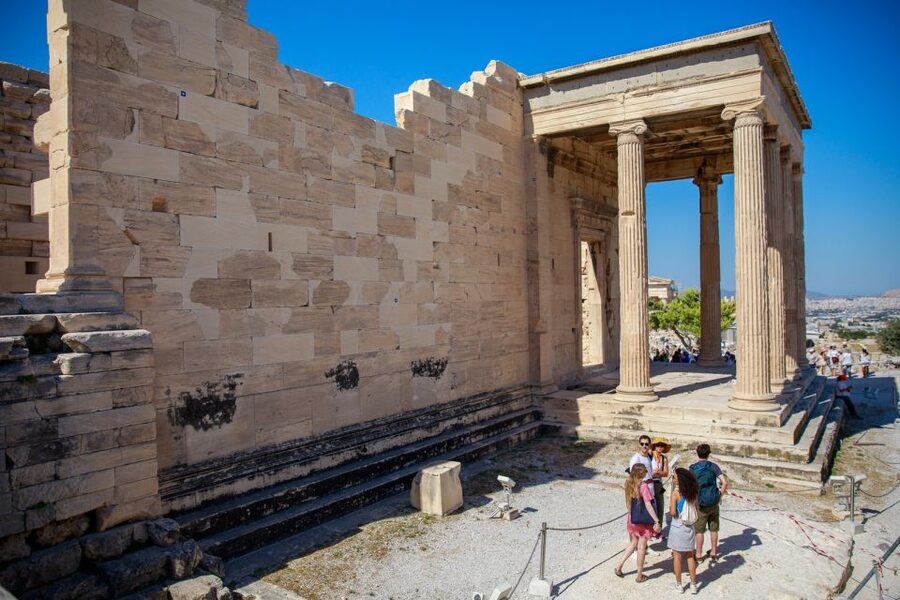
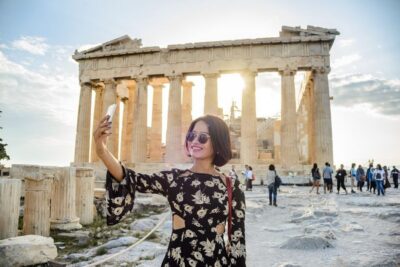
At the top, the famous monuments take over. You see the Temple of Athena Nike, the Propylaia gateway, the Erechtheion, the Agrippa monument, and the Parthenon. Each has a different role and character, and the guide’s job is to keep them from blending into one marble-colored blur.
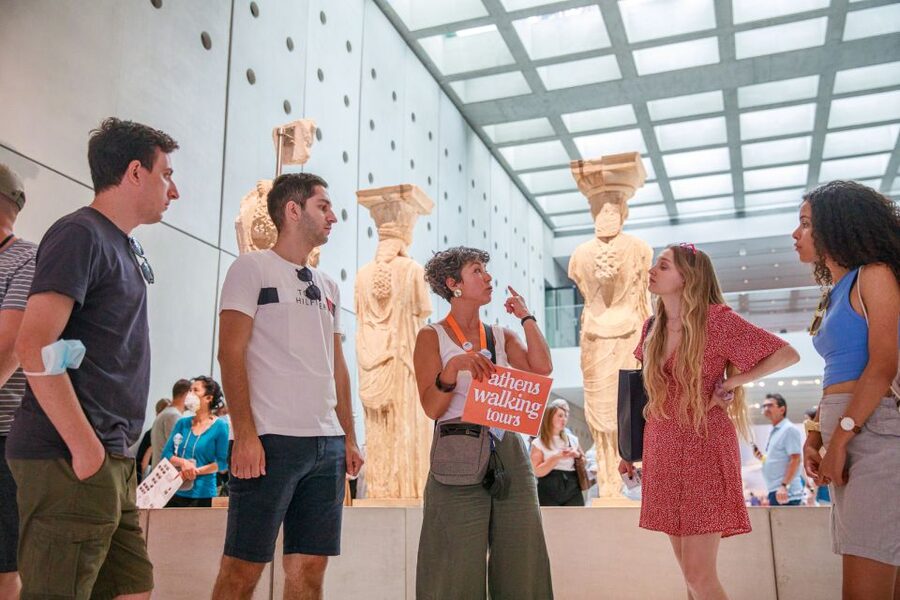
The Propylaia is the ceremonial gateway, while the small Temple of Athena Nike occupies a prominent position near the entrance. The Erechtheion is known for its unusual layout and the famous female figures associated with its porch. The Parthenon receives the most attention, rightly so, but it is more rewarding when you understand how it relates to the rest of the hill.
A strong guide turns the building work into a human story: how the monuments were planned, what they represented, and why the site has survived through centuries of change. Several guides, including Theodora, Katerina, and Dafni, were praised for combining archaeology, history, and modern Greek culture rather than giving a string of dates.
The views from the Acropolis
The views are a major part of the experience, not a spare extra between monuments. From the Acropolis, you look across Athens toward Mars Hill, the Ancient Agora, and the Temple of Hephaestus.
This broad view helps you understand Athens as a city shaped around a central rocky hill. The Ancient Agora below is not just another ruin. It was a key public area, and seeing it from above gives you a useful sense of how the ancient city was arranged.
You get time to explore and take pictures after the guided portion of the Acropolis visit. That pause matters because a private tour can otherwise feel like a steady march from explanation to explanation. Use it for photographs, water, and a quiet look at the city.
The guide will not eliminate the heat, crowds, or difficult footing. What you gain is direction. You do not waste time trying to identify the right monument or wondering which view is worth stopping for.
The Acropolis Museum’s glass floors and 4,000 artifacts
After the hill, you continue to the New Acropolis Museum. Its design by Swiss architect Bernard Tschumi, in cooperation with Greek architect Michalis Photiadis, is a sharp change from the open archaeological site.
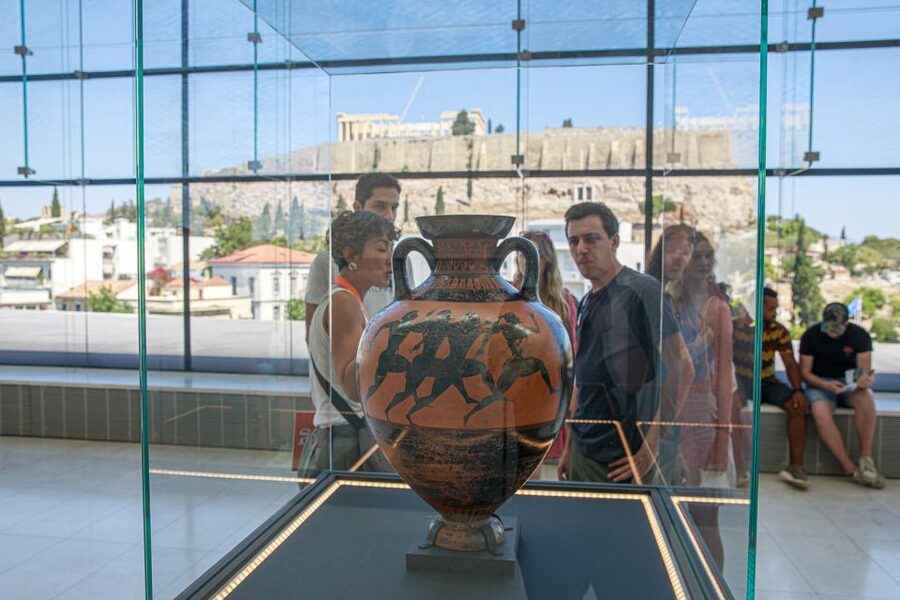
Glass floors reveal excavations beneath the building, making the museum feel tied to the city rather than sealed off from it. Inside, about 4,000 artifacts are displayed in spaces planned around natural light, clear access, and views back toward the Acropolis.
This is where the morning’s monuments receive closer attention. At the Acropolis, you are looking at architecture in strong sunlight and open air. In the museum, you can study sculpture and objects at a more deliberate pace, with the guide explaining why particular pieces matter.
I especially like the pairing of the two sites. The Acropolis gives you place and scale. The museum gives you detail and protection from the weather. If you visit the hill alone, you miss part of the story. If you visit only the museum, you lose the physical setting that makes the objects meaningful.
The museum does add to the day’s walking and mental load. After several hours in the sun, younger children may need a break, and even adults can reach their limit. The private format helps because you can ask the guide to focus on the pieces most relevant to your group instead of trying to absorb every display.
What the $318 price really buys
At $318 per person, this is a major splurge, especially because entrance tickets are not included. Food and drinks are also extra, and you arrange your own way to and from the meeting point.
The price makes the most sense for a small private group that values personal attention. You are paying for a licensed English-speaking guide, a planned route, site-to-site navigation, and explanations tailored to your interests. You also avoid the common frustration of keeping up with a large group on crowded Acropolis paths.
A private guide can be particularly valuable if you have only a short stay in Athens. One couple with roughly 36 hours in the city used the format to ask questions freely and get a stronger feel for Athens in a limited window. Another family chose it so they could move at their own pace with a four-year-old and stop for photographs.
The value is weaker if you mainly want admission and a quick look at the Parthenon. In that case, the separate ticket cost and private-guide fee may feel high. It is also worth remembering that skip the ticket line does not mean you skip security or ignore your assigned Acropolis entry time.
You must buy your entrance tickets separately through the supplied ticket link, choose the correct category, and enter the booking reference beginning with GYG. If you qualify for a reduced or free ticket, bring official proof and valid identification showing your age and nationality. Without the required documents, you may be denied entry or asked to pay the full ticket price, with no refund for the tour fee.
Walking demands, heat, and timing
Take the warnings seriously. This tour includes extensive walking, the Acropolis climb, uneven archaeological ground, and exposure to changing weather. It is not suitable for wheelchair users, people with mobility impairments, electric wheelchairs, baby strollers, or anyone bringing large luggage.
The tour runs rain or shine. Wear comfortable shoes and weather-appropriate clothing. A hat is useful, and cash is recommended for the break after the Acropolis. One past participant reported walking roughly 12 miles on a similar day, while another logged about 20,000 steps, so you should expect a demanding outing rather than a short guided visit.
Heat can shape your enjoyment. Summer guides who know the shadier sections, such as Nikoletta, can make a real difference, but shade cannot cover the entire hill. Start with water, pace yourself, and tell the guide early if someone in your group needs a slower climb.
Strict Acropolis entry times mean the guide cannot wait for late arrivals, and latecomers receive no refund. Arrive early at Syntagma station, especially if you are unfamiliar with the metro layout.
Free cancellation is available up to three days in advance. After that point, the strict admission timing and nonrefundable tour conditions make last-minute changes costly.
Which guide style suits your group?
The experience depends heavily on the guide assigned to your booking, but the pattern is clear: the strongest guides combine facts with warmth and adapt to the people in front of them.
Annie was praised for energy, storytelling, and her ability to adjust the focus to what mattered most to the group. Tina received praise for being friendly, clear, and fun, with a pace that worked well. Panagiota was singled out for extraordinary command of the subject, while Vicky brought a personal, picture-making quality to the story of Athens.
Families should tell the guide at the start what will keep children interested. Greek myths, Athena, and the Parthenon can hold a child’s attention when the explanation is shaped for younger listeners. Older adults may benefit from slower pacing, though the physical route remains demanding even when the guide is accommodating.
The tour is offered in English. If your group has strong interests in archaeology, philosophy, architecture, language origins, or modern Athens, say so early. The private setting gives you a much better chance of following those threads.
Should you book this Athens Acropolis tour?
Book it if you want the Acropolis and museum explained as part of a wider Athens story, and if your budget allows for a private guide plus separate admission. It is especially well suited to first-time visitors, families, history fans, and people with only a day or two in the city.
Skip it if you dislike long walks, need step-free access, are bringing a stroller or luggage, or mainly want the cheapest way to enter the Acropolis. The tour is not physically light, and the ticket arrangements require care.
For most suitable groups, the strongest reason to book is not simply seeing the Parthenon. It is having someone connect Syntagma Square, Roman Athens, the theater, the Acropolis monuments, the city views, and the museum into one readable story. At this site, that extra context can turn a famous ruin into a place you understand.
FAQ
Where does the tour meet?
Meet your English-speaking licensed guide inside Syntagma metro station, one level down, near the ticket-validating machines beneath the large central hanging clock. Look for the orange Athens Walking Tours sign.
How long does the tour last?
The tour lasts approximately five and a half hours. Starting times vary, so check availability when booking.
Are Acropolis and museum entrance tickets included?
No. You must purchase entrance tickets separately through the provided ticket link. Select the correct category and enter your booking reference, which begins with GYG.
Is the tour suitable for children?
Yes, children can join, and guides have adapted explanations for families and teenagers. The route includes extensive walking and an Acropolis climb, so children need to manage a physically demanding day.
Is the tour suitable for wheelchair users or strollers?
No. The experience is not suitable for wheelchair users, people with mobility impairments, electric wheelchairs, baby strollers, or large luggage.
What happens if I arrive late?
Acropolis entry times are strict, so the guide cannot wait for late arrivals. No refund is provided for missed entry because of lateness.
Just added around Athens
- Delphi One Day Trip from Athens★ 4.0 · 98 reviews
- Mercedes Private Tour to Delphi and Arachova★ 5.0 · 30 reviews
- Private Delphi and Hosios Loukas Monastery – Great Lunch and Drinks Included★ 5.0 · 36 reviews
- Day tour to Ancient Olympia,Ancient Sparta Mycenae Including Meal★ 5.0 · 54 reviews
- Athens: Half Day Trip To Cape Sounio/Poseidon Temple Semi Private★ 5.0 · 131 reviews
- Athens Half-Day Private Tour Acropolis, Parthenon City Highlights★ 5.0 · 35 reviews
- From Athens: Day Tour to Mykonos★ 5.0 · 64 reviews
- Culinary Secrets of Downtown Athens★ 5.0 · 103 reviews
Acropolis Tours, compared.
Acropolis & up to 5 Archaeological Sites Combo Pass
Read our review →
Acropolis, Parthenon & Acropolis Museum Guided Tour
Read our review →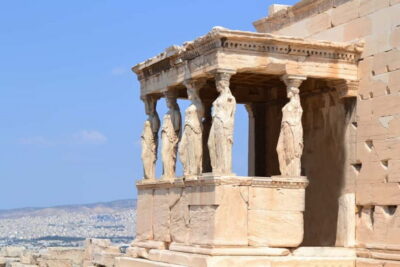
Acropolis, Parthenon & Acropolis Museum Guided Tour
Read our review →
Acropolis: Acropolis and Parthenon Guided Walking Tour
Read our review →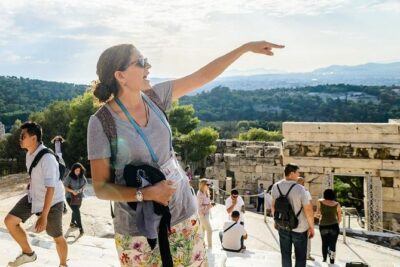
Acropolis monuments & Parthenon Walking Tour with Optional Acropolis Museum
Read our review →Browse the lists this tour appears in