
Reviewed · MUSEUMS
Athens: National Archaeological Museum Ticket w/ Opt. Audio
Ancient Greece is waiting indoors. Athens’s National Archaeological Museum gives you a close look at the country’s finest antiquities, from the Mask of Agamemnon to the Antikythera mechanism. I like the freedom to explore without a group and the convenience of a pre-booked ticket. The main catch is that the museum is huge, while the optional audio guide can be awkward to follow.
You scan your e-ticket at the entrance, then set your own pace through galleries covering prehistoric Greece, Mycenae, Crete, Athens, Santorini, and later Greek art. I also like that the museum is usually calmer than Athens’s most famous outdoor sights. But at $30, this ticket makes the most sense for visitors over 25 who value convenience, not for every budget-conscious museumgoer.
In This Review
- Key points to know before you go
- Why this museum belongs on your Athens plan
- Getting to the museum and handling the entrance
- A chronological walk through ancient Greece
- Santorini and the prehistoric Aegean
- Marble gods and celebrated sculpture
- What the audio guide adds, and where it falls short
- Timing your visit around Athens crowds and heat
- The Antikythera mechanism and other can’t-miss objects
- Is the $30 ticket good value?
- Who should book this experience?
- Should you book the National Archaeological Museum ticket?
- FAQ
- Where is the National Archaeological Museum in Athens?
- How long is the ticket valid?
- How much does admission cost?
- Is the audio guide included?
- Do I need to bring headphones?
- What identification should I bring?
- Can children receive free or reduced admission?
- What are the museum’s winter opening hours?
- Is the museum wheelchair accessible?
Key points to know before you go
- See famous treasures up close: The gold death mask linked with Agamemnon, the Antikythera mechanism, the Cup of Nestor, and the Ring of Theseus are among the major draws.
- Plan for a large museum: You can spend an hour on a quick visit, but the collection deserves much longer if ancient Greece is a main interest.
- Use the ticket line correctly: There are separate lines for buying tickets, entering with a ticket, and collecting an electronic narrator device.
- Treat the audio guide as optional help: The English app adds background, but its route and activation have caused problems for some users.
- Check Tuesday hours carefully: The museum opens later on Tuesday, from 1:00 PM to 8:00 PM during the stated operating periods.
- Bring identification and headphones: A passport or ID card may be requested, and headphones are needed for the audio tour.
Why this museum belongs on your Athens plan
The Acropolis tells you about classical Athens from a hilltop. The National Archaeological Museum shows you the objects themselves, often at close range and eye level. That difference matters. Instead of looking at ruins from outside, you can study painted pottery, carved marble, gold work, burial objects, bronze tools, and delicate pieces that survived thousands of years.
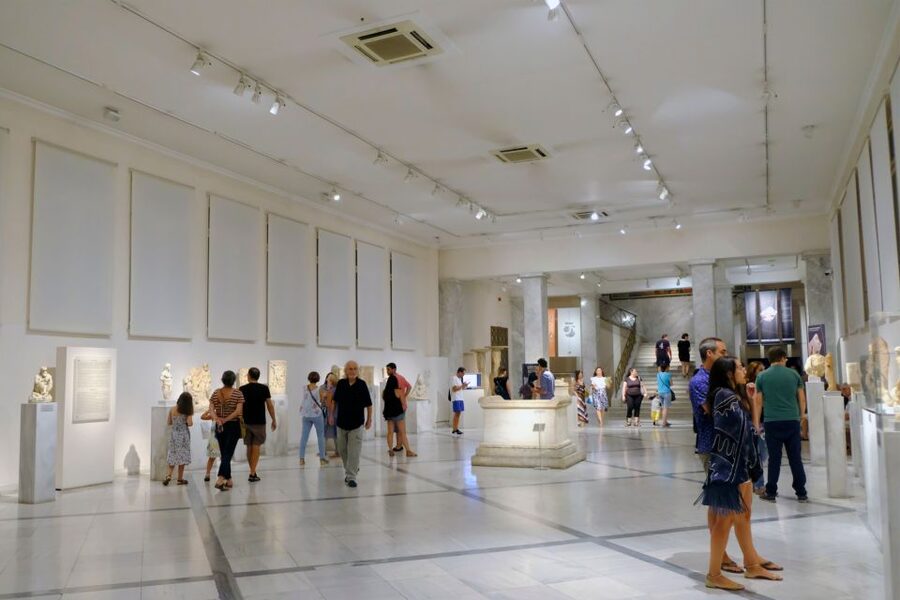
This is Greece’s largest archaeological museum and one of the world’s major museums devoted to ancient Greek art. The scale can feel almost excessive. One room leads to another, and another, with material from different eras and sites across the country. That abundance is both the pleasure and the problem.
I would not treat this as a quick box-ticking stop unless your schedule is tight. A short visit of about an hour can cover several headline pieces, but you will miss much of the chronological story. If you have three hours, you can take in far more without racing from case to case.
The museum works especially well for people who want context. You can see how styles changed from prehistoric objects to Mycenaean treasures, classical sculpture, and later Greek works. The displays also help explain that ancient Greece was not one single period or culture. Mycenae, Crete, Athens, and Santorini each add a different chapter.
More Museums in Athens
- Athens: Acropolis, Parthenon & Acropolis Museum Guided Tour
★ 4.8 · 9,316 reviews - Athens: Mythology of Delphi, Museum and Arachova Guided Tour
★ 4.6 · 4,008 reviews - Athens: Acropolis, Parthenon & Acropolis Museum Guided Tour
★ 4.8 · 3,579 reviews
Getting to the museum and handling the entrance
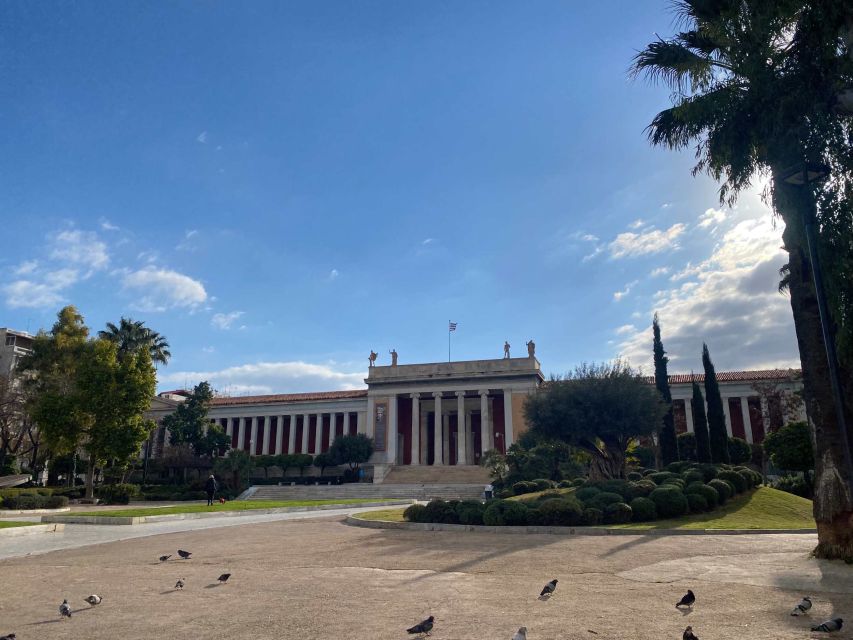
The nearest metro station is Omonoia. From there, you make your way to the museum on foot. The approach itself can feel grand, and the museum building offers a fitting setting for the objects inside.
Your admission is for the selected date and time slot. Keep the ticket on your phone and scan the e-ticket at the gate. Pre-booking can save you from waiting at the ticket-purchase counter, especially when the museum is busy.
Do not assume every queue serves the same purpose. One line is for buying a ticket, another is for people who already have tickets, and a third is for those collecting an electronic narrator device. Go to the line marked for pre-booked admission rather than following the crowd automatically.
There is still a security and bag-check process, so pre-booking does not remove every wait. In winter, when queues are often shorter, buying in advance may save less time. In busier periods, though, the convenience is easier to appreciate.
Bring your passport or ID card, or a copy. The ticket is intended for people over 25. Children under five and EU citizens under 25 may qualify for free or reduced admission at the ticket booth with suitable identification. Non-EU citizens under 25 can receive reduced admission from April through October with ID at the booth.
That age rule is important. If you qualify for a reduced fare, the $30 online ticket may not be your best value. Check your eligibility before paying.
A chronological walk through ancient Greece
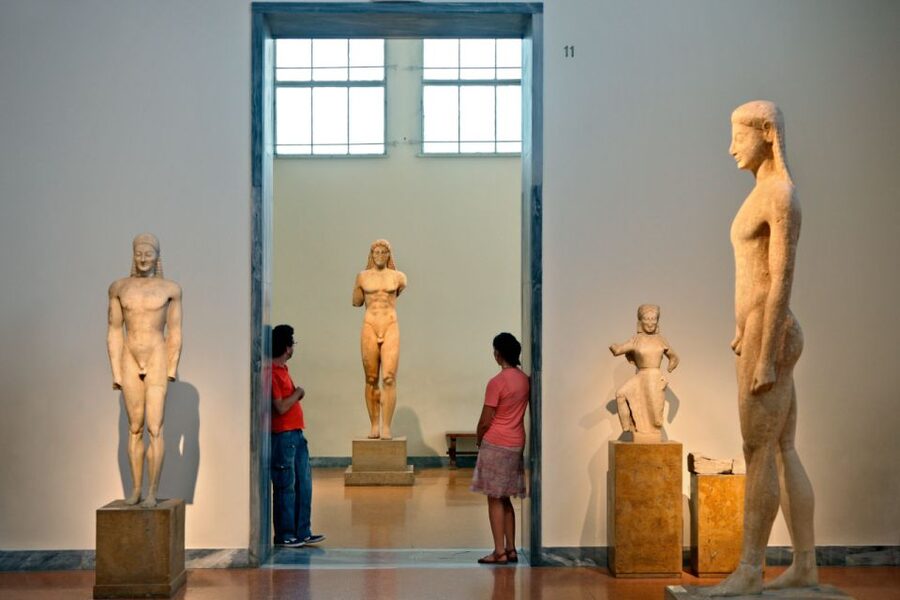
The museum is not simply a room full of attractive objects. Its greatest strength is the way the collection lets you move through long stretches of Greek civilization.
You might begin with prehistoric material, where the objects feel surprisingly intimate. Early pottery, tools, burial goods, and small decorative pieces show daily life as much as ceremony. These displays make a good opening because they remind you that Greek civilization developed over many centuries, not all at once.
The Mycenaean material is one of the major highlights. This is where you find the famous gold death mask associated with Agamemnon. The name comes from the epic world of Homer, but the object itself belongs to a much earlier archaeological setting. You do not need to settle every question about its identity to appreciate its workmanship and the sense of power it conveys.
The gold is the obvious attraction, but look beyond the most famous case. The surrounding objects help you picture the wealth, burial customs, and craft skill of the Mycenaean period. If you rush straight to the mask, you may leave with a photograph but little understanding of why it matters.
The Cup of Nestor and the Ring of Theseus add to this early Greek section. Their names connect them with legendary figures, yet the museum’s larger value is in showing how myth, archaeology, and later storytelling overlap. Give yourself time to read the labels, since a small object can carry as much historical weight as a large statue.
Santorini and the prehistoric Aegean
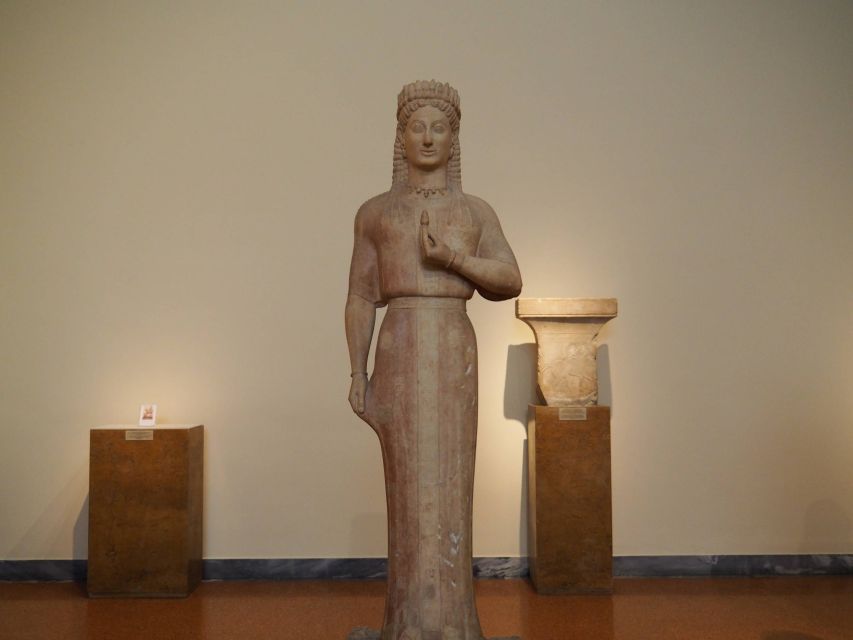
One of the most memorable areas is devoted to the culture of Santorini. The island’s volcanic past helped preserve objects that might otherwise have vanished. Painted vessels, images, and household pieces give you a rare look at Aegean life before the classical age.
This section is valuable because it changes your idea of what ancient Greek art can be. You will find more than the familiar white marble figures and idealized gods. The Santorini displays include color, movement, animals, people, and scenes that feel lively even after thousands of years.
The volcanic setting also gives the material a powerful story. Objects were preserved by ash from one of the island’s major eruptions. You can see how archaeology links natural disaster with cultural survival, though the museum does not turn the experience into a theme-park spectacle. The objects remain the focus.
The gallery layout is generally clear, with displays separated by period and culture. Still, it is possible to lose the intended route. Some sections need more directional arrows, and the chronology does not always flow as naturally as you might expect. I recommend checking the room signs often instead of assuming the next doorway continues the story.
More museums and sites in Athens:
- Acropolis monuments & Parthenon Walking Tour with Optional Acropolis Museum
★ 5.0 · 2,678 reviews - Athens All Included: Acropolis and Museum Guided Tour with Ticket
★ 4.5 · 2,673 reviews - Athens: Acropolis Museum Ticket with optional Audio Guide
★ 4.4 · 2,652 reviews - From Athens: Small-Group Delphi, Museum & Arachova Day Trip
★ 4.8 · 2,476 reviews
Marble gods and celebrated sculpture
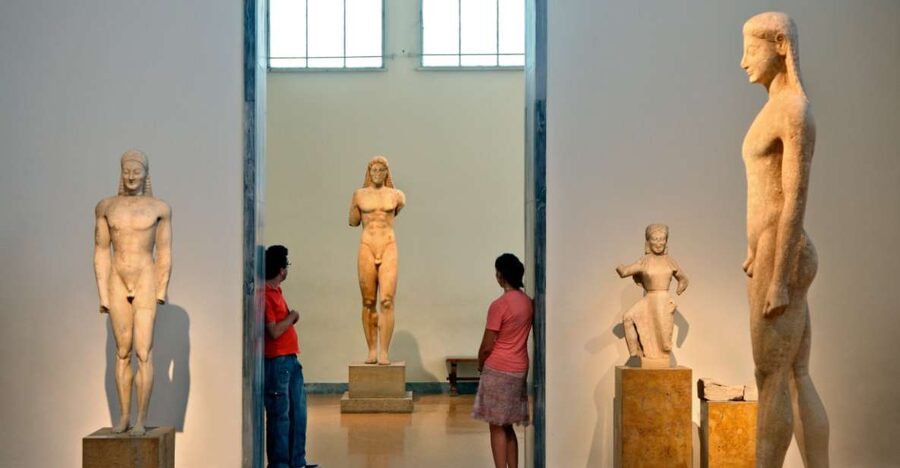
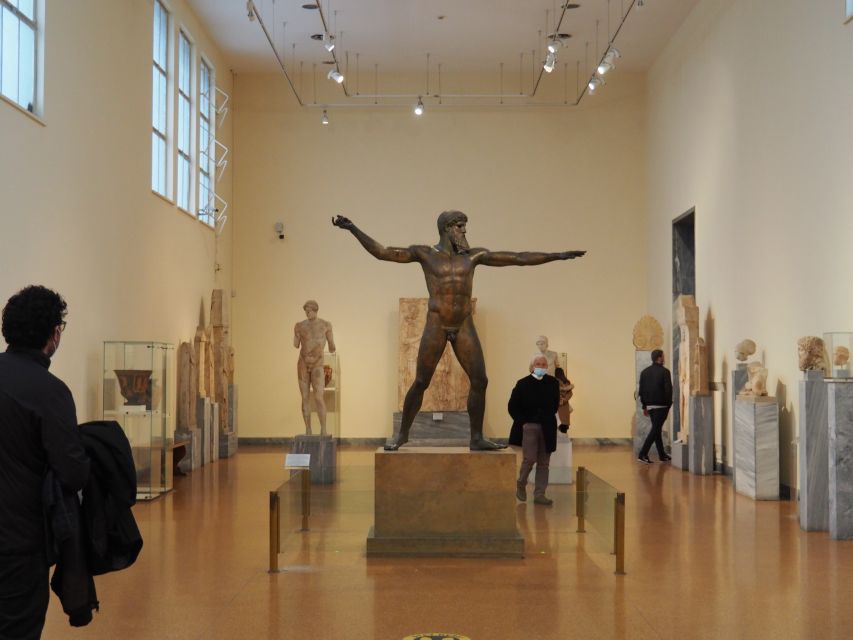
The sculpture galleries deliver the visual drama many people expect from Athens. The statues of Zeus and Poseidon are major attractions, and Aphrodite offers a different kind of beauty. These works are best seen slowly, from more than one angle, rather than treated as quick photo stops.
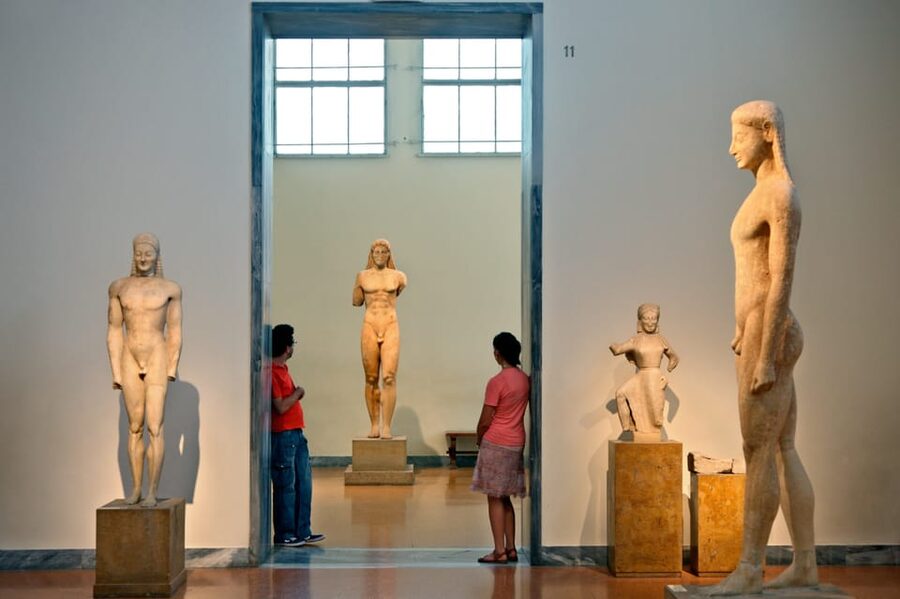
The museum’s statues help correct a common modern misconception. Ancient sculpture was not limited to the familiar image of perfectly white marble. The works you see here represent changing approaches to the human body, gods, movement, clothing, and ideal beauty. Even when a statue is damaged, its pose and proportions can still communicate an enormous amount.
The statues of Zeus and Poseidon are especially interesting because viewers often debate which god a work represents. The pose, missing attributes, and surviving details affect the interpretation. You do not need to become an art historian. Simply notice how a small object once held in a hand could change the entire meaning of a figure.
A few hours can pass quickly in these rooms. Some displays are positioned near face and eye level, making details easier to study. On the other hand, not every label is easy to read. In darker rooms, some text sits low or is poorly lit, so take your time and use the audio option only if the app is working well.
What the audio guide adds, and where it falls short
The optional audio tour is in English and is self-guided. It is created by professional guides and is intended to give you background as you move through the museum. You need your own headphones, and the app uses your phone’s battery.
At its best, the audio guide gives meaning to objects that might otherwise blur together. A museum this large can overwhelm you with names, dates, and unfamiliar styles. A short explanation can tell you why a particular cup, mask, mechanism, or statue deserves your attention.
The weakness is navigation. The route does not always guide you cleanly from one exhibit to the next. An explanation may refer to objects on the opposite side of a room as if they were nearby. Some audio references have also failed to activate, and the app may need to be reset.
For that reason, I would not buy the audio option expecting the polish of a private museum tour. Think of it as a useful supplement. Download or open everything before entering if possible, bring headphones, and carry a portable charger. The app can use a lot of phone power.
You can also explore independently. The museum has enough visual and written material for a self-guided visit, especially if you choose a small number of sections in advance. If your main goal is to understand every display, you may prefer a separate guided experience, but that is not included here.
Timing your visit around Athens crowds and heat
Opening hours vary by season and day. From November 1 through March 31, the museum is open Wednesday through Monday from 8:30 AM to 3:30 PM, with Tuesday hours from 1:00 PM to 8:00 PM.
From April 16 through October 31, the stated hours are Wednesday through Monday from 8:00 AM to 8:00 PM, and Tuesday from 1:00 PM to 8:00 PM. Special occasions can change these hours, so check before setting out. Pay particular attention to Tuesday, since a morning arrival then will not work.
An early start is a smart choice in the warmer months. The museum can offer a welcome break from the Athens heat, but air-conditioning is not equally strong in every room. July and August can be uncomfortable in some galleries, and seating is limited if your legs need a rest.
Morning visits also help you avoid the heaviest crowds. The galleries are often manageable early in the day, and you can look closely at major objects without feeling pushed along. A midday visit can still work, especially if you need shelter from the heat, but plan for warm rooms and fewer places to sit.
Allow more time than you think you need. The museum is large, and comfortable shoes are sensible. If you have only one hour, choose the Mycenaean objects, the Antikythera mechanism, the famous sculptures, and the Santorini galleries. If you have three hours, add pottery, funerary art, and the chronological sections between them.
The Antikythera mechanism and other can’t-miss objects
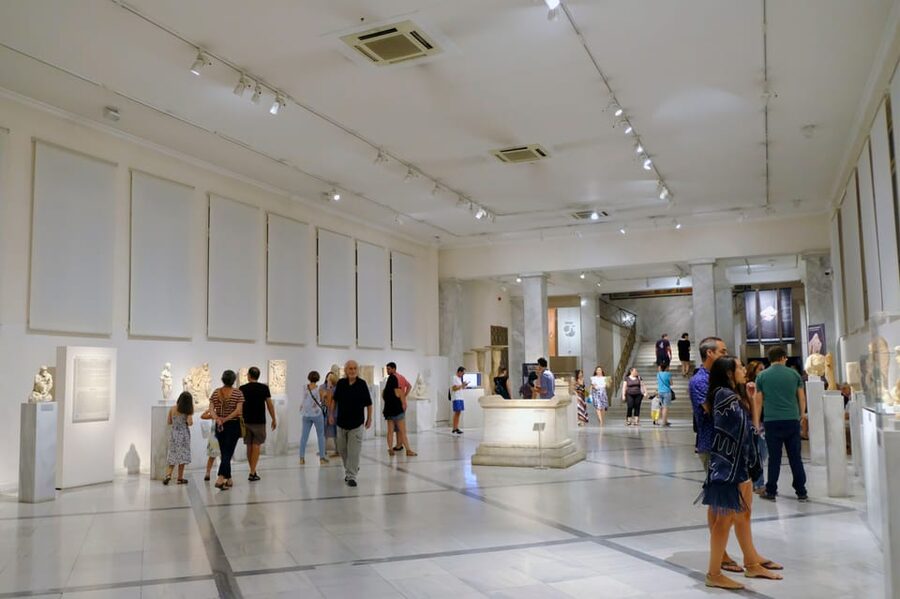
The Antikythera mechanism is a special reason to visit. Often described as an ancient clock or calculating device, it is one of those objects that feels astonishing even before you know the details. Its survival and complexity invite questions about ancient technology and scientific thinking.
Make time for it rather than walking past quickly. The device is smaller and less immediately dramatic than a marble statue, but its importance grows when you understand what it represents. This is one of the museum’s best reminders that ancient achievement was not limited to sculpture and architecture.
The Gold Deathmask of Agamemnon is the obvious icon. The statues of Zeus, Poseidon, and Aphrodite provide the grand scale. The Cup of Nestor and Ring of Theseus reward closer attention. Together, these pieces give you a balanced visit across gold work, mechanics, ceramics, jewelry, and sculpture.
The museum also contains many stelae, vases, and smaller finds from archaeological sites across Greece. These are not merely filler between the famous objects. They show how people worked, worshipped, buried their dead, decorated their homes, and recorded their world.
Is the $30 ticket good value?

At $30 per person, the ticket is not the cheapest museum admission in Athens. Its value depends on what you want from the visit and whether you qualify for a reduced price.
For someone over 25 who wants a simple, pre-arranged entry, the ticket is reasonable. You avoid the ticket-buying queue, receive admission for the chosen date and time, and can spend the day exploring at your own pace. The museum’s collection is large enough to justify the cost if you care about Greek archaeology.
The value is weaker if you plan to stay only 45 minutes or an hour and do not need the convenience of advance booking. It is also weaker in winter, when lines may be short. The ticket does not include hotel pickup, a live guide, personal expenses, or an audio guide unless you choose that option.
The included material can also be confusing. The package includes a self-guided audio tour of Athens Old Town and Plaka with all options, while the National Archaeological Museum audio tour is included only when selected. Read the option details carefully so you do not assume the museum audio is automatic.
Who should book this experience?
I recommend it most strongly to adults over 25 who want flexibility and a major museum visit without joining a group. It suits people who enjoy moving slowly, choosing their own galleries, and stopping whenever an object catches their eye.
It is also a good rainy-day or hot-afternoon plan. The museum gives you several hours of indoor sightseeing, though summer heat inside some rooms can still be an issue.
Families with young children should check the age rules first. Children under five may receive free entry, and younger EU citizens may qualify for reduced admission at the ticket booth. Paying the full online rate without checking could waste money.
Art and archaeology fans will want the extra time. Casual sightseers can still enjoy the museum, but I would set a clear target list so the sheer number of objects does not wear you down.
Should you book the National Archaeological Museum ticket?
Book it if you are over 25, want a self-paced museum day, and care about seeing major Greek antiquities with less time spent at the ticket counter. The collection is exceptional, and the chance to stand close to the Antikythera mechanism, Mycenaean gold, and monumental sculpture makes this one of Athens’s strongest cultural stops.
Skip the advance ticket if you qualify for free or reduced admission, have a very short schedule, or are visiting in a quiet winter period when queues are minimal. Choose the audio option only if you want extra context and are prepared to manage an imperfect app.
My practical choice would be an early visit, comfortable shoes, a charged phone, headphones, and at least two hours. Start with the Mycenaean treasures, continue through Santorini, then spend time with the major sculpture. That plan gives you the museum’s greatest hits without turning the whole day into a race.
FAQ
Where is the National Archaeological Museum in Athens?
The nearest metro station is Omonoia. The museum is in central Athens, and you walk from the station to the entrance.
How long is the ticket valid?
The ticket is valid for one day, on the selected date and time slot.
How much does admission cost?
The stated price is $30 per person.
Is the audio guide included?
The National Archaeological Museum audio guide is included only if you select that option. The audio guide is self-guided and available in English.
Do I need to bring headphones?
Yes. Bring headphones if you select the museum audio tour.
What identification should I bring?
Bring your passport or ID card. A copy is accepted.
Can children receive free or reduced admission?
Children under five and EU citizens under 25 can receive free or reduced admission at the ticket booth with suitable identification. Non-EU citizens under 25 receive reduced admission from April through October with ID at the booth.
What are the museum’s winter opening hours?
From November 1 through March 31, the museum is open Wednesday through Monday from 8:30 AM to 3:30 PM. On Tuesday, it is open from 1:00 PM to 8:00 PM.
Is the museum wheelchair accessible?
Yes, the activity is listed as wheelchair accessible.
More Audio Tours in Athens
- Athens: Acropolis Ticket & Optional Self-Guided Audio Tours
★ 4.1 · 2,542 reviews - Parthenon & Acropolis Museum with Audio or Live Tour Option
★ 4.1 · 2,446 reviews - Athens: Peloponnese Highlights Day Trip and V.R. Audio Guide
★ 4.5 · 1,425 reviews - Athens: National Archaeological Museum Ticket & Audio Guide
★ 4.3 · 1,330 reviews
More Self-Guided Tours in Athens
- Athens: Acropolis Ticket with Optional Audio or Live Guide
★ 4.2 · 11,055 reviews - Athens: Cape Sounio & Poseidon Temple Trip with Audio Guide
★ 4.4 · 4,521 reviews - Athens: Acropolis Ticket with Audio Guide
★ 4.0 · 3,575 reviews - From Athens: Delphi Full Day V.R. Audio Guided Tour
★ 4.6 · 3,028 reviews
Just added around Athens
- Delphi One Day Trip from Athens★ 4.0 · 98 reviews
- Mercedes Private Tour to Delphi and Arachova★ 5.0 · 30 reviews
- Private Delphi and Hosios Loukas Monastery – Great Lunch and Drinks Included★ 5.0 · 36 reviews
- Day tour to Ancient Olympia,Ancient Sparta Mycenae Including Meal★ 5.0 · 54 reviews
- Athens: Half Day Trip To Cape Sounio/Poseidon Temple Semi Private★ 5.0 · 131 reviews
- Athens Half-Day Private Tour Acropolis, Parthenon City Highlights★ 5.0 · 35 reviews
- From Athens: Day Tour to Mykonos★ 5.0 · 64 reviews
- Culinary Secrets of Downtown Athens★ 5.0 · 103 reviews
Museums, compared.

Acropolis, Parthenon & Acropolis Museum Guided Tour
Read our review →
Mythology of Delphi, Museum and Arachova Guided Tour
Read our review →Acropolis, Parthenon & Acropolis Museum Guided Tour
Read our review →
Acropolis monuments & Parthenon Walking Tour with Optional Acropolis Museum
Read our review →
Athens All Included: Acropolis and Museum Guided Tour with Ticket
Read our review →
Acropolis Museum Ticket with optional Audio Guide
Read our review →
Small-Group Delphi, Museum & Arachova Day Trip
Read our review →
Parthenon & Acropolis Museum with Audio or Live Tour Option
Read our review →Browse the lists this tour appears in