
Reviewed · MUSEUMS
Lychnostatis Open Air Museum: Entry Ticket with Add-Ons
Step into Crete’s past without leaving the coast. I like the way Lychnostatis Open Air Museum brings old Cretan life together in real buildings, working craft spaces, gardens, and displays rather than placing everything behind glass. I also like the low $10 entry price, which gives you plenty of time to explore at your own pace and makes this an easy addition to a Crete itinerary.
The main thing to consider is that the standard visit is self-guided, with a Greek-speaking live guide and audiovisual film available only with selected add-ons. Some information sheets may feel worn, so visitors who want detailed explanations should consider the private tour or film option. Still, the museum offers a clear, hands-on look at how Cretans lived around 200 years ago.
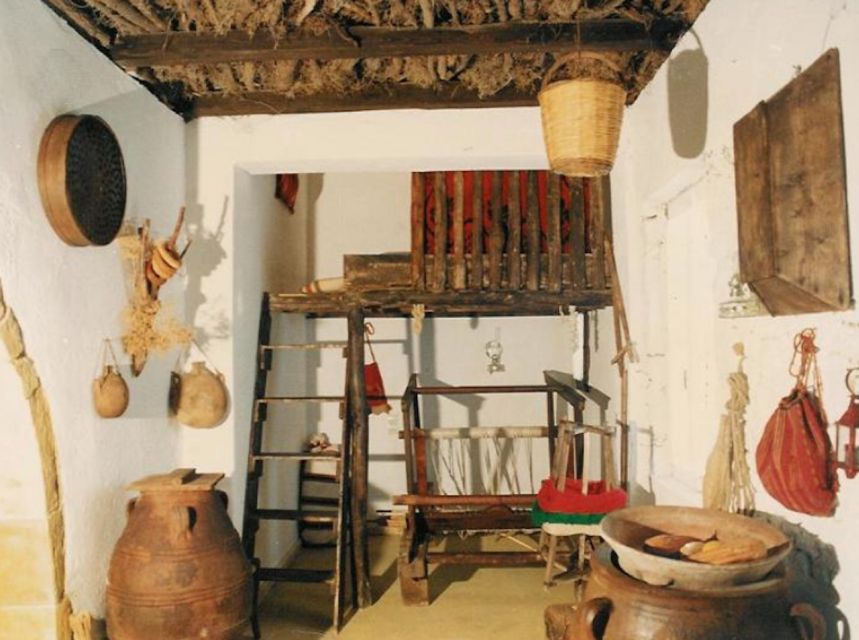
- Traditional buildings you can enter: See a village house, chapel, olive oil press, distillery, workshops, and other places tied to daily life.
- Cretan crafts in context: Weaving, plant dyeing, shoemaking, carpentry, pottery, beekeeping, and wax work show how useful objects were made.
- Nature alongside culture: The herbarium, fruit garden, herb garden, mineral display, and stone exhibition connect rural life with Crete’s natural resources.
- A taste of local life: Finish at the café with a typical Cretan drink or sweet, though food and drinks cost extra.
- Optional ways to learn more: Add an audiovisual film or private guided group tour if you want more structure.
- Easy, flexible visit: The museum is valid for one day, wheelchair accessible, and reachable by car or taxi.
In This Review
- Why Lychnostatis Is More Than a Collection of Old Objects
- Entering the Village House and Chapel
- Olive Oil, Raki, and the Work Behind Cretan Food
- Workshops That Make Old Skills Easier to Understand
- Gardens, Herbs, Minerals, and the Cretan Environment
- The Library, Gallery, and Changing Exhibitions
- Choosing the Audiovisual Film or Private Tour
- How Long to Allow and How to Reach the Museum
- Is the $10 Entry Price Good Value?
- Who Will Get the Most From This Visit?
- My Verdict on Lychnostatis Open Air Museum
- FAQ
- Where is the Lychnostatis Open Air Museum?
- How much does admission cost?
- How long is the ticket valid?
- Is transportation included?
- What can I see at the museum?
- Can I add a film or guided tour?
- What language is the live tour guide?
- Is the museum wheelchair accessible?
Why Lychnostatis Is More Than a Collection of Old Objects
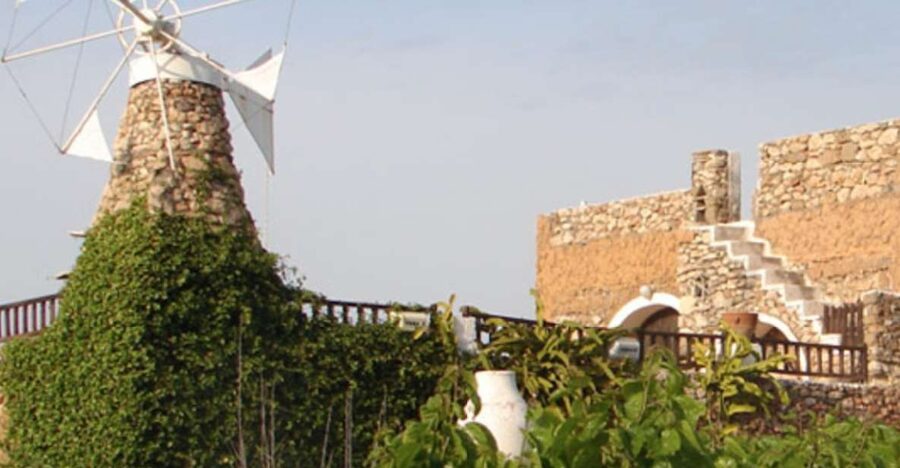
Many museums show you tools and expect you to imagine the work. Lychnostatis makes that effort easier by placing the objects inside houses, workshops, gardens, and production areas that explain their purpose.
You can see how olive oil was processed, where raki was made, how cloth was woven, and how shoes or wooden tools were produced. That setting matters. A threshing floor means more when you can connect it with farming, storage, food, and the rhythm of village life.
The museum focuses on three broad themes: Cretan folk tradition and ethnology, Cretan nature and the environment, and Cretan folk culture. You are not simply walking through a display of antiques. You are following the relationship between people, land, work, religion, food, and craft.
I find that especially useful if you have already seen Crete’s ancient ruins and want a better sense of its more recent past. Knossos can explain Bronze Age civilization. Lychnostatis helps explain the ordinary routines that shaped Cretan families much later.
Entering the Village House and Chapel
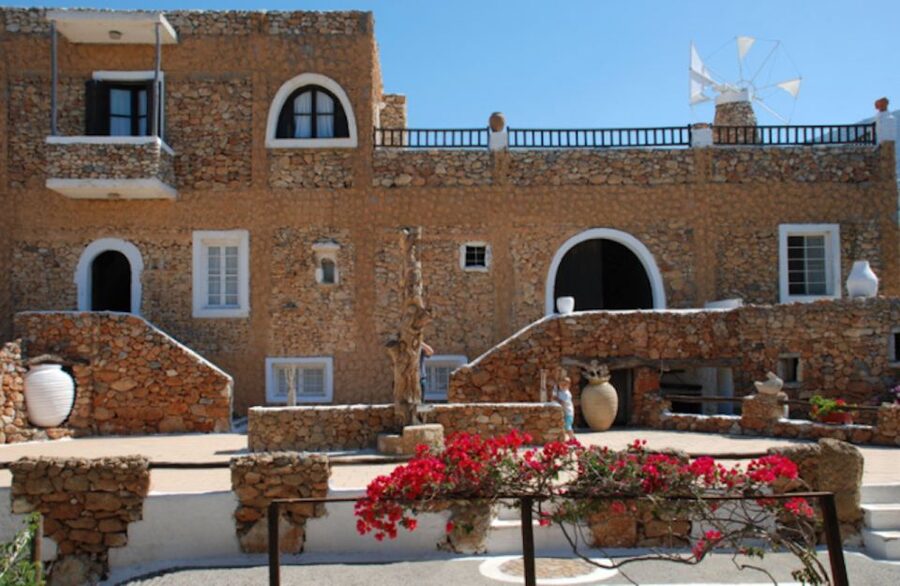
Start with the traditional dwellings. The village house gives you a direct look at domestic life, including the kind of practical spaces and household items that supported everyday routines.
The appeal here is scale. A house can explain family life more clearly than a case filled with disconnected objects. Look closely at the tools and furnishings, then imagine how cooking, storage, sleeping, and work would have overlapped in a modest home.
The chapel adds another piece of the picture. Religion was not a separate subject in village life. It was part of the calendar, the community, and the way people marked important moments.
The museum’s buildings are also useful for younger visitors, since they can walk through spaces rather than stare at labels for an hour. Families should still allow enough time for the adults to read and connect the details. Children may prefer the workshops, gardens, and open-air areas.
More Museums in Crete
- Crete: Knossos Palace and Museum E-Tickets with Audio Guides
★ 4.0 · 828 reviews - Heraklion Archaeological Museum Ticket & Audio Guide
★ 4.3 · 396 reviews - Minoans World 3D Museum & 9D Cinema
★ 4.5 · 315 reviews
Olive Oil, Raki, and the Work Behind Cretan Food
The olive oil press is one of the strongest stops for understanding Crete. Olive oil is not just a familiar ingredient on a restaurant table. It has long been tied to farming, household work, trade, and local identity.
At the tsikoudia distillery, you can see the setting connected with raki, Crete’s well-known grape spirit. The distillery helps explain that traditional drinks come from a process, not just a bottle placed on a café shelf.
You will not receive food or drinks as part of the $10 admission. The café offers a chance to try a typical beverage or sweet, but you should plan to pay separately. I consider that a useful optional finish rather than a hidden part of the ticket price.
The café is also a natural pause point after the open-air sections. Crete can be hot, and a drink gives you time to sit, collect your thoughts, and decide if you want to visit the shop or see more of the museum.
Workshops That Make Old Skills Easier to Understand
The museum includes a ceramic shop, weaving and plant-dyeing workshop, bees and wax workshop, shoe-making workshop, and carpentry area. Each one shows a different kind of self-sufficiency.
Weaving and plant dyeing are especially helpful for understanding how raw materials became useful household goods. The process connects plants, color, fabric, clothing, and patience. You may find that these displays explain more about daily work than a polished historical summary could.
The shoemaking and carpentry areas show another side of village life. Items were repaired, adapted, and made for use. They were not disposable products ordered from far away.
The bees and wax workshop adds a smaller but important subject. Wax had practical and religious uses, while beekeeping linked farming with seasonal knowledge. It is the kind of stop that can be easy to skip if you rush, but it adds detail to the larger story.
You should not expect every workshop to operate like a modern demonstration class. The information provided describes the spaces and collections, but not a guaranteed hands-on activity at each one. Think of them as carefully arranged cultural displays rather than a full day of live craft lessons.
Gardens, Herbs, Minerals, and the Cretan Environment
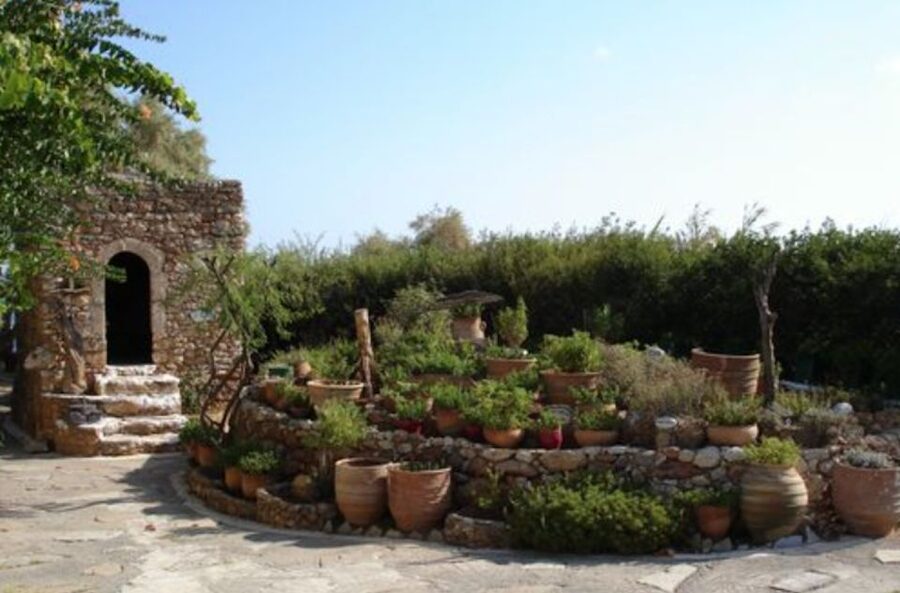
Lychnostatis does not separate folk culture from nature. The herbarium, Cretan fruit garden, and herb garden show how plants supported food, medicine, fragrance, household tasks, and local customs.
This section gives the visit a welcome change of pace. After looking at buildings and tools, you can move through outdoor areas and consider the materials behind those objects. A plant-dyeing workshop makes more sense when you can connect it with local vegetation.
The mineral and stone exhibition adds another layer. Stone shaped buildings, tools, walls, and work areas, while minerals help explain the physical setting in which communities developed.
I would give these outdoor sections time instead of treating them as decoration between the main displays. They are part of the museum’s central idea: Cretan life grew from what people could farm, gather, build, and make nearby.
More museums and sites in Crete:
- Crete: Knossos Palace and Museum E-Tickets with Audio Guides
★ 4.0 · 126 reviews - Knossos Palace, Museum & Heraklion City Tour From Chania
★ 4.2 · 61 reviews - Crete: Knossos E-Ticket with Audio Guide & Optional Museum
★ 3.8 · 48 reviews - Archaeological Museum of Heraklion: Guided Walking Tour
★ 4.9 · 26 reviews
The Library, Gallery, and Changing Exhibitions
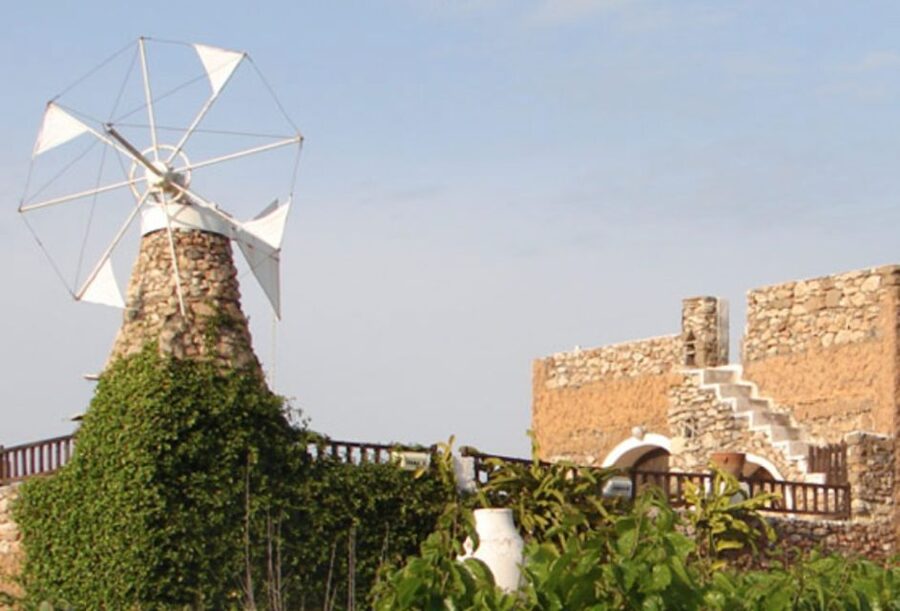
The library is stocked with Cretan books and periodicals. You may not spend long there during a holiday visit, but it gives the museum an academic side and shows that Cretan culture is not limited to costumes and farm tools.
The Cretan folk artists’ gallery expands the visit beyond the older village setting. It provides a place to consider how local artistic traditions continue and how artists interpret Cretan subjects.
A temporary exhibitions hall means the exact experience can change from one visit to another. Since no specific exhibition is guaranteed, I would treat it as a bonus rather than the main reason to buy a ticket.
The souvenir shop is worth a look if you want a physical reminder of the visit. The available information does not specify its stock, so I would not make a special purchase plan around it. Still, it fits naturally at the end of the route.
Choosing the Audiovisual Film or Private Tour
The basic ticket gives you free time to explore. That suits independent visitors who like to read, pause, photograph, and move at their own speed.
The audiovisual film is a useful add-on if you want a clearer introduction without committing to a private guide. The museum has a 100-seat auditorium for films, seminars, and related presentations. The exact film schedule and starting time should be checked when you reserve.
A private guided group tour is the better choice if you want the buildings and objects explained as you go. It can help you notice links between the house, distillery, olive press, gardens, and workshops that you might miss on a casual walk.
The listed live tour language is Greek. That is an important practical point. If you do not understand Greek, the standard visit or audiovisual option may suit you better, depending on the language offered for the selected film. The available information confirms Greek for the live guide but does not specify other guide languages.
How Long to Allow and How to Reach the Museum
The ticket is valid for one day, so you have flexibility rather than a short timed slot. Starting times depend on availability, and you should check them before setting out.
You arrange your own transportation. The museum can be reached by car or taxi, but transportation is not included in the ticket. That makes the experience easiest for people already staying nearby or using a rental car.
I would avoid treating the museum as a rushed stop between unrelated sights. The site includes homes, workshops, gardens, exhibitions, a café, a library, an auditorium, an open-air theater, and a shop. You can see the headline areas quickly, but the value improves when you slow down.
The open-air theater has 250 seats and hosts cultural and artistic events. No event is guaranteed as part of the entry ticket, so think of it as an important museum facility rather than a scheduled feature of your visit.
Wheelchair access is available, which makes the museum more practical for visitors with mobility needs. Since the experience includes open-air areas and several different buildings, you may still want to confirm the exact route and current access arrangements before arrival.
Is the $10 Entry Price Good Value?
At $10 per person, the entry price is modest for a full-day-valid cultural attraction. You are paying for access to a broad collection of buildings, workshops, gardens, exhibitions, and public spaces, not just one small gallery.
The value is strongest if you enjoy cultural context. Someone looking only for a quick photo stop may feel the ticket is less rewarding, since the museum’s purpose is to explain how Cretan life worked.
The add-ons change the calculation. A self-guided visit keeps the cost low. A film or private tour costs more, but can make the museum easier to understand if you prefer a planned narrative.
Food, drinks, transportation, and optional extras are not included. I would budget for those separately, especially if you want to try a Cretan sweet or traditional drink at the café.
The rating of 4.8 from 49 bookings reflects a very positive response overall. The strongest praise centers on the museum’s beauty, information, history, and traditions. One practical criticism concerns information sheets that may be damp or worn from frequent handling. That is a small issue, but it suggests you should not rely on every handout being in perfect condition.
Who Will Get the Most From This Visit?
I would recommend Lychnostatis to you if you want more than beaches and archaeological sites. It gives you a grounded picture of homes, work, tools, food production, religion, plants, and craft.
Families can use the open-air layout and walk-through buildings to keep children interested. People who enjoy folk culture, traditional crafts, rural life, or local food will find plenty to examine.
The museum also suits first-time visitors who want an introduction to Crete before exploring other parts of the island. It gives you useful background for understanding village buildings, olive groves, raki, herbs, and handmade goods elsewhere.
You may want to skip it if you have very little time, dislike open-air museums, or want a fully guided experience in a language other than Greek. In that case, check the details of the audiovisual option before booking.
My Verdict on Lychnostatis Open Air Museum
You should book Lychnostatis if you want a calm, practical look at Cretan culture and daily life. The traditional house, olive press, raki distillery, workshops, gardens, and chapel give the visit a clear sense of place.
I would choose the basic $10 ticket for a flexible visit, then add the private tour if you want detailed explanations and the Greek language is suitable for your group. Leave time for the café, but remember that food and drinks are extra.
This is not a flashy attraction built around one spectacular object. Its strength is the steady accumulation of small details. By the end, you have a better idea of what people made, drank, grew, repaired, and believed in ordinary Cretan life.
FAQ
Where is the Lychnostatis Open Air Museum?
The museum is in Crete, Greece. You can reach it by car or taxi.
How much does admission cost?
The listed entry price is $10 per person.
How long is the ticket valid?
The ticket is valid for one day. You should check availability for the starting times when booking.
Is transportation included?
No. Transportation is not included, so you need to arrange your own car or taxi.
What can I see at the museum?
You can see traditional dwellings, a chapel, an olive oil press, a tsikoudia distillery, a threshing floor, craft workshops, gardens, a herbarium, mineral and stone displays, a folk artists’ gallery, a library, a café, a souvenir shop, and exhibition spaces.
Can I add a film or guided tour?
Yes. You can select an audiovisual film or a private guided group tour as an add-on.
What language is the live tour guide?
The listed live tour language is Greek.
Is the museum wheelchair accessible?
Yes. The activity is described as wheelchair accessible.
Just added around Crete
- VIP Luxury Private Tour – Full Day – 4×4 Excursion with LandRover★ 5.0 · 32 reviews
- Lasithi –Plateau Traditional Vilages★ 5.0 · 40 reviews
- Private Full-Day Knossos-Lasithi Plateau-Cave of Zeus from Elouda★ 5.0 · 28 reviews
- Sarakina Gorge, Kritza, Oliveoil Tasting, Mountains, South Coast★ 5.0 · 92 reviews
- Full-Day Land Rover Safari from Rethymno with Lunch Swimming★ 5.0 · 215 reviews
- Knossos Palace and Pottery experience (Luxury Adventure)★ 4.5 · 32 reviews
- Island Spinalonga, Milatos Cave,private Speedboat,OliveOilTasting★ 4.5 · 39 reviews
- Richtis Waterfall, History, Azoria, OliveTasting, NorthCoast★ 5.0 · 83 reviews
Museums, compared.

Acropolis, Parthenon & Acropolis Museum Guided Tour
Read our review →
Mythology of Delphi, Museum and Arachova Guided Tour
Read our review →Acropolis, Parthenon & Acropolis Museum Guided Tour
Read our review →
Acropolis monuments & Parthenon Walking Tour with Optional Acropolis Museum
Read our review →
Athens All Included: Acropolis and Museum Guided Tour with Ticket
Read our review →
Acropolis Museum Ticket with optional Audio Guide
Read our review →
Small-Group Delphi, Museum & Arachova Day Trip
Read our review →
Parthenon & Acropolis Museum with Audio or Live Tour Option
Read our review →Browse the lists this tour appears in