
Reviewed · COOKING CLASSES
Traditional Greek Cooking Class @ Lefkada Micro Farm
Fresh food begins in the soil. At Lefkada Micro Farm, you harvest organic produce, cook Greek classics in an open-air kitchen, and sit down to eat what you made. I like the direct farm-to-table connection and the calm, hands-on pace. I also like that Andreas brings real warmth and practical knowledge to the class.
The main consideration is the $123 price. One German participant felt the value fell a little short for the cost, even though the activity itself was enjoyable and informative. You are paying for more than lunch: the four-hour visit includes time on the farm, cooking instruction, ingredients, and a shared meal. Still, this is not the right pick if you want a cheap cooking demonstration.
In This Review
- Key things to know before you book
- Starting in the soil at Lefkada Micro Farm
- Cooking Greek classics in the open-air kitchen
- The traditional wood-burning oven
- Cooking with Andreas and a small group
- The Farmer’s Table and the meal you made
- How the four hours are best understood
- Is $123 a fair price?
- Who will enjoy this class most?
- What makes it different from a normal Greek cooking class?
- Should you book Lefkada Micro Farm?
- FAQ
- Where does the cooking class take place?
- How long does the experience last?
- What language is the class taught in?
- How many people are in the group?
- What food might I prepare?
- Is the activity wheelchair accessible?
- What should I do about food allergies or dietary restrictions?
Key things to know before you book
- You harvest the ingredients first: The meal begins in the organic garden, with an introduction to regenerative farming and seasonal produce.
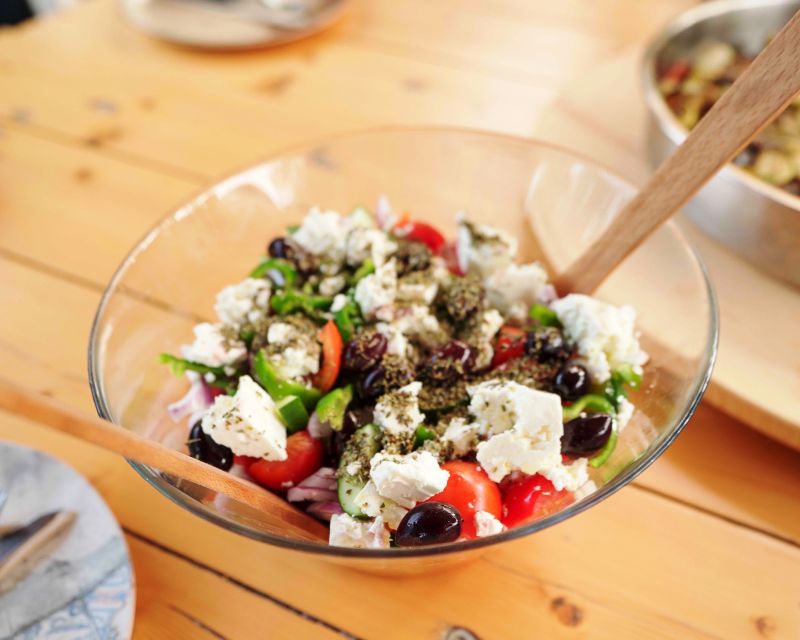
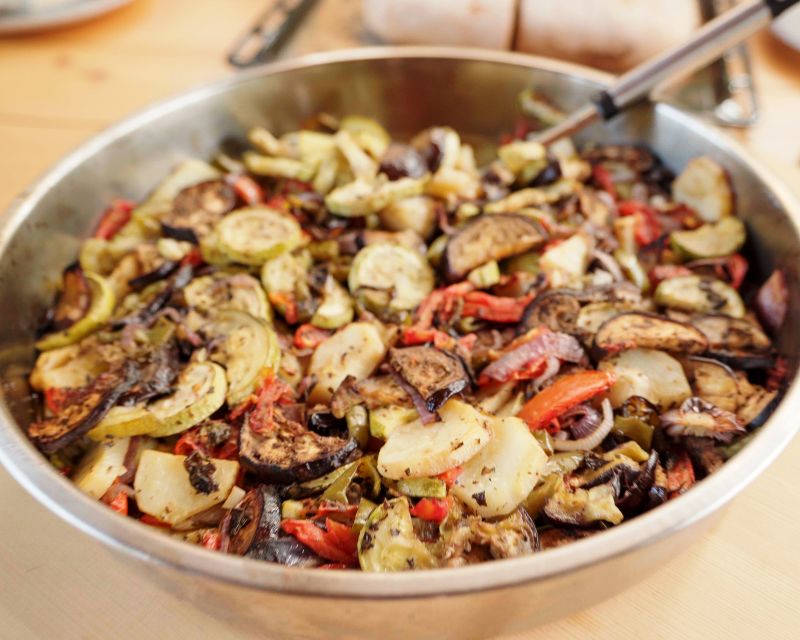
- The menu is traditional and practical: Past classes have included bread, briami, tzatziki, and Greek salad.
- The wood-burning oven sets the pace: Cooking here is slower and more tactile than using a modern kitchen.
- Andreas is a warm, engaging host: You can expect conversation about food, gardening, healthy produce, and everyday life.
- The Farmer’s Table is part of the lesson: The group eats together, turning the finished meal into a social experience.
- Small groups help: With no more than 10 participants, you get a more personal class in English.
Starting in the soil at Lefkada Micro Farm
The smart thing about this class is that it does not begin with a chopping board. It begins with the farm itself.
You first learn how Lefkada Micro Farm works with the soil, including its regenerative and organic approach. The farm is part of the Slow Food International farms network, so the focus is not simply on producing ingredients quickly. The point is to care for the land, use seasonal food, and keep the connection between farming and cooking visible.
That matters because Greek cooking can look simple on the plate. A tomato salad, a tray of vegetables, or a bowl of tzatziki may use only a few ingredients, but freshness makes the difference. When you have just seen the garden and helped gather the produce, you understand why these dishes do not need a long list of spices or elaborate techniques.
You should expect the farm portion to be educational rather than rushed. The available information does not promise a large-scale farm tour or a long list of crops, so it is best to think of this as an introduction to the way the land supports the meal. You will learn about the principles behind the produce and help collect seasonal ingredients for cooking.
That first step gives the class its character. You are not simply being handed ingredients prepared in advance. You see where part of the food comes from, then use it a short time later.
More cooking classes in Lefkada:
- Traditional Greek Cooking Class @ Lefkada Micro Farm
★ 5.0 · 28 reviews - Athens: Classic Cooking Class with Market Visit and Wine
★ 5.0 · 1,101 reviews - Athens: Food Market Visit and Cooking Class with Wine
★ 4.9 · 1,087 reviews
Cooking Greek classics in the open-air kitchen
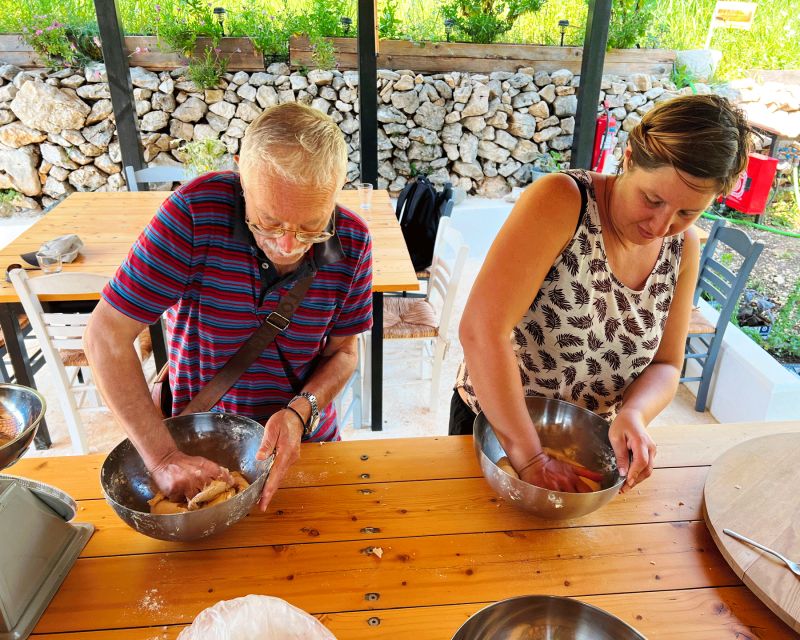
After harvesting, the group moves to the open-air kitchen. The cooking is built around three basic ideas: freshness, seasonality, and simplicity.
That is good news if you want recipes you can actually repeat at home. The class is not presented as a technical cooking school full of difficult knife work or restaurant-style tricks. Instead, you learn how straightforward Greek dishes depend on good produce, careful preparation, and a little patience.
One especially useful menu reported from the class included:
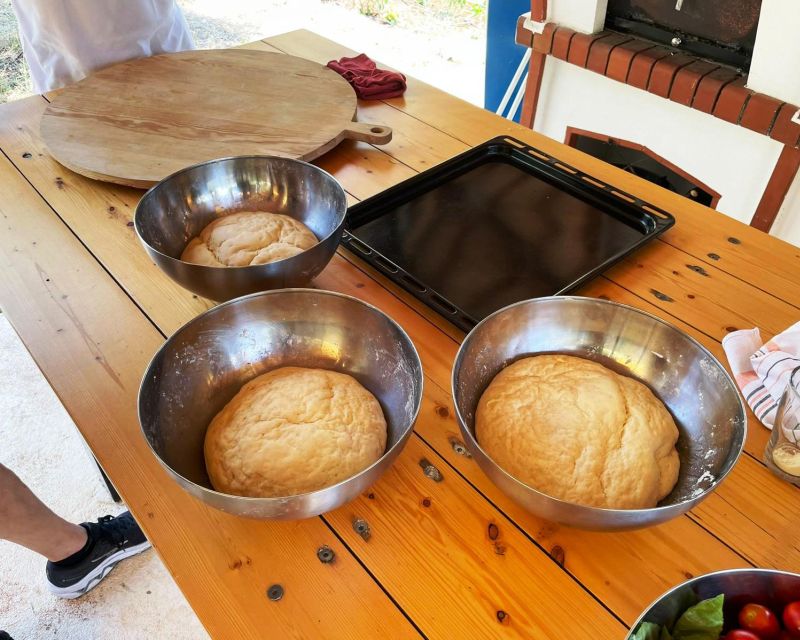
- Homemade bread
- Briami, a Greek baked vegetable dish
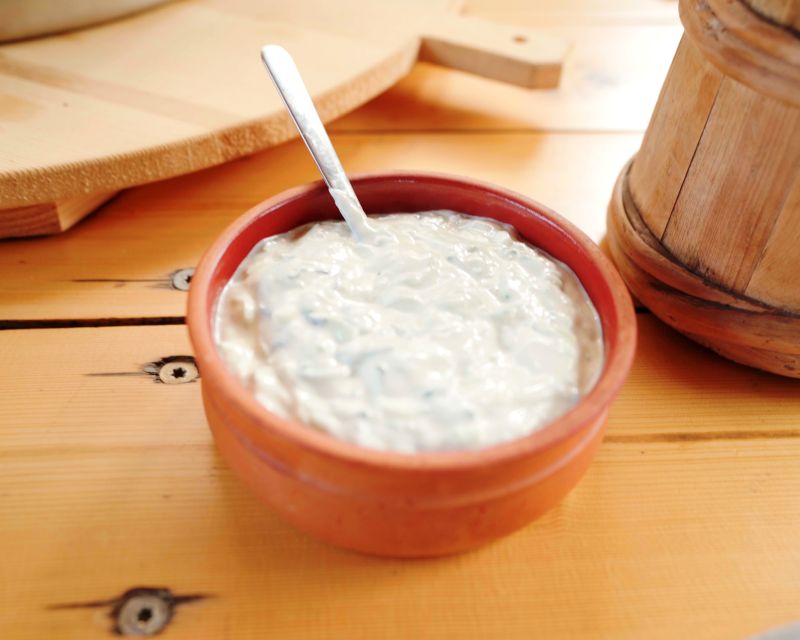
- Tzatziki
- Greek salad
This is a well-chosen set of dishes for understanding Greek home cooking. Bread gives you a feel for the foundation of the meal. Briami shows how vegetables can become the main event when cooked slowly. Tzatziki brings yogurt, cucumber, garlic, and herbs together, while Greek salad keeps the raw, fresh side of the cuisine in view.
Menus can depend on the season, so you should not assume that every visit will include exactly these four recipes. The important point is that the food is based on what the farm can provide and what fits the local cooking tradition.
I like this format because you get variety without losing the thread. You are not making four unrelated dishes. You are seeing how a Greek meal balances bread, vegetables, dairy, herbs, and fresh produce.
The traditional wood-burning oven
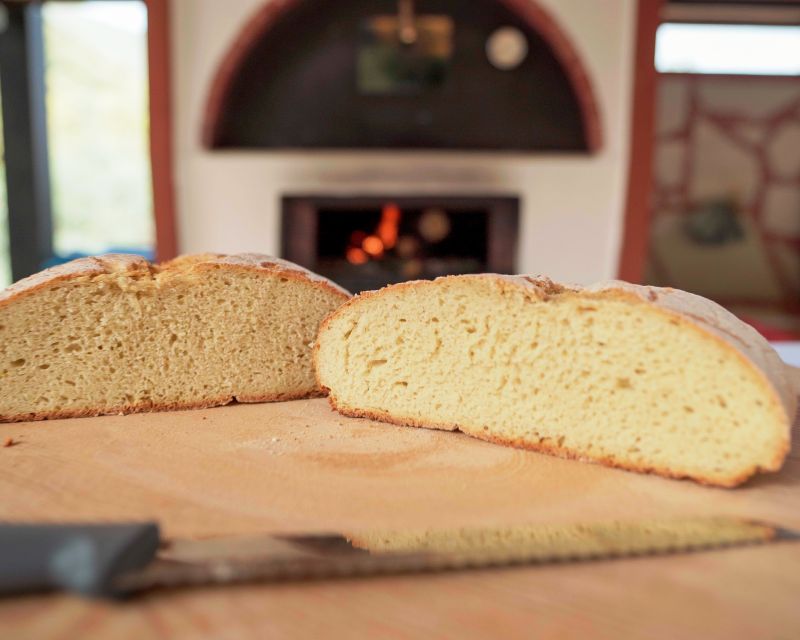
The wood-burning oven is more than a picturesque detail. It changes how you cook.
A modern oven encourages speed and exact settings. A traditional oven asks you to pay attention to heat, timing, and the food itself. That slower rhythm fits the farm’s wider philosophy, and it gives the cooking a more physical quality.
Briami is especially suited to this setting. The dish relies on vegetables cooked until tender, allowing their flavors to mingle. A wood-fired oven reinforces the idea that you do not need to interfere constantly. Prepare good ingredients, give them time, and let the heat do its work.
The class also uses the farm’s award-winning, high-polyphenol olive oil. This is one of the more distinctive details of the experience. You are not only told that olive oil is important in Greek food. You get to taste how a strong, well-made oil works with garden vegetables, bread, salads, and cooked dishes.
Do not expect a formal tasting session unless the instructor adds one on the day. The focus is the cooking class and meal, not a separate olive oil course. Still, the oil is central to the food, and it helps explain why simple Greek recipes can taste full and satisfying.
Cooking with Andreas and a small group
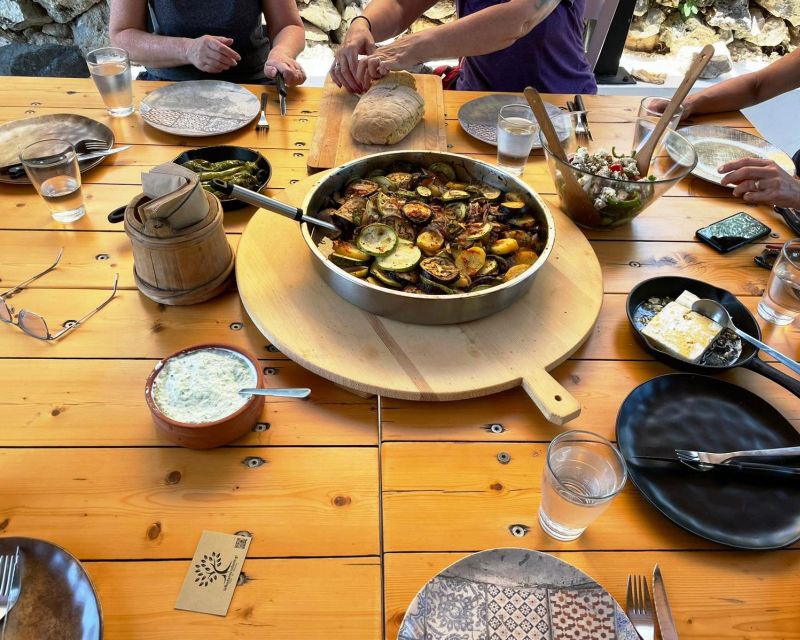
Andreas receives particularly warm praise for his hosting. His style appears to be friendly and conversational, with plenty of room to talk about food, gardening, healthy produce, and daily life.
That makes a difference in a class built around simple recipes. You do not need a performer shouting instructions across a large kitchen. You want someone who can explain why an ingredient matters, answer questions, and keep the group involved. Andreas seems to bring that personal touch.
The class is limited to 10 participants and runs in English. That is a useful size for hands-on cooking. You are more likely to hear the explanations, take part in the preparation, and ask about the recipes than you would in a large group.
The small-group format also shapes the social side. Past participants cooked alongside couples from Malta and Austria, and the meal became a shared event between people from different countries. That is a pleasant bonus for solo visitors and couples who enjoy meeting others while they eat.
The English instruction should work well for most international visitors. If you need a class in another language, this experience is not a fit because English is the listed language.
A few more Lefkada half-days to weigh up
- The Olive Oil Experience @ Lefkada Micro Farm
★ 4.5 · 43 reviews - The Olive Oil Experience @ Lefkada Micro Farm
★ 4.7 · 42 reviews - Mykonos: Farm, Ano Mera Village, and Beaches Guided Tour
★ 4.4 · 1,283 reviews - Crete: Road-trip to Lasithi Plateau & Olive Mill Farm
★ 4.4 · 420 reviews
The Farmer’s Table and the meal you made
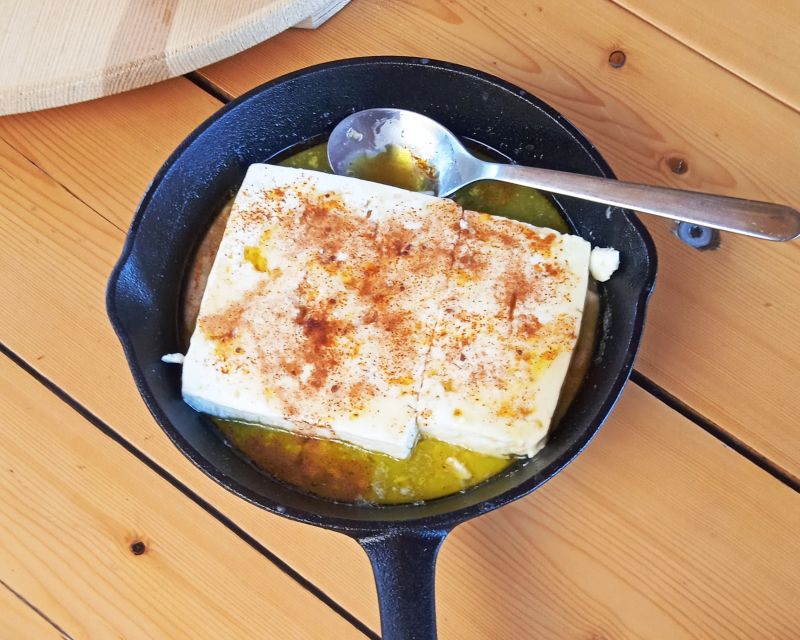
The best part comes after the cooking. Everyone gathers at the Farmer’s Table to eat together.
This is not just a convenient way to serve lunch. It completes the farm-to-table idea. You have seen the land, picked ingredients, prepared the food, and now share the result with the group. That sequence gives the meal more meaning than eating a dish prepared entirely by someone else.
The food is described as simple, fresh, and filling. Ben from the United Kingdom particularly valued the straightforward ingredients and the farm’s olive oil. That combination is worth keeping in mind: this is not a high-end tasting menu, and it is not trying to be one. It is a generous Mediterranean meal built on produce and good oil.
The shared table also gives the class a human side. Conversations can continue after the utensils are put down, and you may find yourself comparing cooking habits with people from other countries. If you prefer to eat privately or move on quickly, this part may feel longer than necessary. If you enjoy relaxed meals and conversation, it is likely to be one of the strongest parts of the visit.
The presence of friendly farm cats has also added charm for some participants. They are not an advertised feature of the class, so do not book for that reason, but animal lovers may enjoy seeing them around the property.
How the four hours are best understood
The duration is four hours, but this is not four hours of nonstop cooking. The time includes learning about the farm, harvesting, preparing the dishes, using the oven, and eating together.
That is a sensible length for the experience. A shorter class might show you one recipe and send you away. Four hours gives the activity a more natural rhythm and allows the meal to unfold without constant clock-watching.
The pace is part of the appeal. This is designed around slow living, not efficiency. You should be ready to spend time listening, preparing food with others, and letting the oven work. If you want a fast class with a recipe card and a quick tasting, choose something else.
Starting times vary, so check availability when booking. The experience is wheelchair accessible, which makes it more practical for visitors who need an accessible setting. You should tell the provider about food allergies or dietary restrictions before arrival. That is especially important here because the menu is based on seasonal farm produce and shared preparation.
Cooking utensils and an apron are included. You do not need to bring specialist kitchen equipment.
Is $123 a fair price?
At $123 per person, this sits in the premium range for a four-hour cooking activity. The price makes more sense if you value the full setting rather than viewing the class as a meal with instructions.
You are paying for several parts at once:
- Time with a small group and an English-speaking instructor
- A visit centered on regenerative, organic farming
- Harvesting ingredients from the farm
- Use of the open-air kitchen and wood-burning oven
- Cooking utensils and an apron
- The food prepared during the class
- A shared Farmer’s Table meal
The value is strongest for people who care about farming, local food, and the story behind a dish. You get a closer look at how the ingredients are grown and why the recipes remain simple.
The value is weaker if you measure the price only by the amount of food served or the number of recipes taught. One participant felt more should have been included for the cost. That is a fair warning. This is an experience built around time, setting, and personal contact, not a bargain cooking lesson.
I would compare it with the price of a standard meal plus a separate farm visit and class. If you would happily pay for those pieces, the cost may feel reasonable. If your main goal is to learn a few inexpensive Greek recipes, the price may seem high.
Who will enjoy this class most?
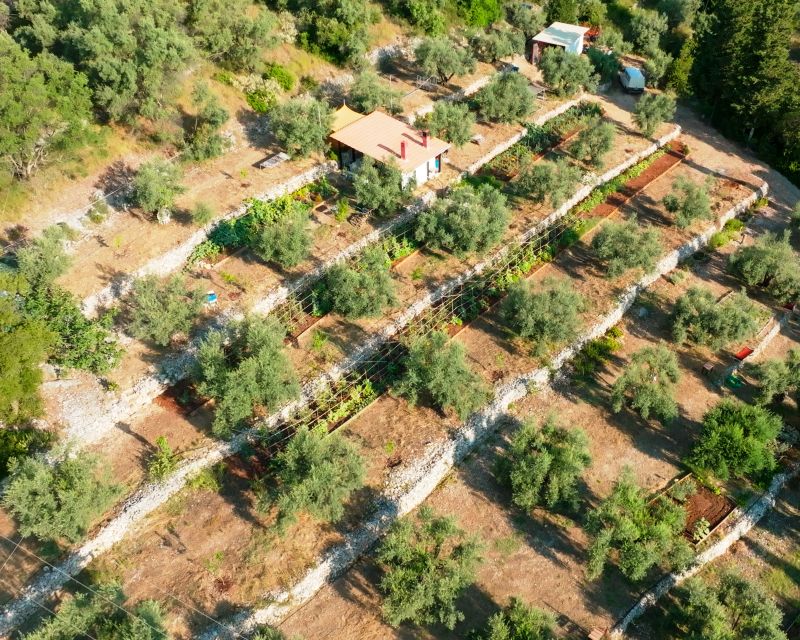
I would recommend Lefkada Micro Farm to people who like food with a clear sense of place. You will get the most from it if you enjoy knowing where ingredients come from and do not mind a slower pace.
It suits:
- Couples looking for a shared activity
- Solo visitors who enjoy small-group conversation
- Families interested in organic farming and simple cooking
- Home cooks who want repeatable Greek recipes
- Food lovers curious about olive oil and seasonal produce
- Visitors who prefer local contact over a standard restaurant meal
It may be less suitable for someone who wants advanced culinary training. The emphasis is on traditional recipes and fresh ingredients, not professional technique.
It is also not ideal for visitors with a tight schedule. Four hours is a serious block of time, and the class works best when you let it unfold. You should also be comfortable eating as part of a group, since the Farmer’s Table is central to the experience.
What makes it different from a normal Greek cooking class?
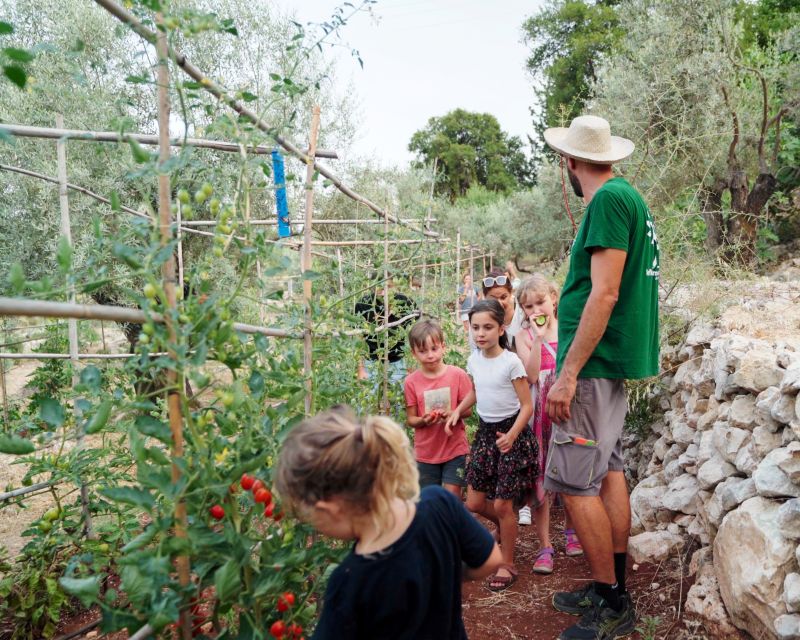
Many cooking classes begin with ingredients already measured and arranged. This one connects the recipe to the farm before you start.
That gives you a clearer sense of the Greek food tradition. You see that the meal is shaped by the season, the garden, the oven, and the quality of the olive oil. The approach is less about showing off technique and more about making good food without getting in its way.
The Slow Food connection adds another layer. The farm’s membership in the Slow Food International farms network points to an interest in responsible growing and local food values. You are not simply preparing dishes that happen to be Greek. You are learning about an approach to eating that gives time and care to the land and the table.
For me, that is the real reason to book. The recipes are useful, but the larger lesson is even better: simple food works when the ingredients are treated well.
Should you book Lefkada Micro Farm?
Book this class if you want a personal, four-hour food experience tied closely to farming. The fresh harvest, wood-burning oven, good olive oil, and shared meal create a strong sense of place. Andreas adds the kind of friendly contact that can turn a cooking lesson into a memorable afternoon.
Think carefully about the price before you commit. At $123, you should want the farm setting and social meal, not just the recipes. If you do, this is a thoughtful choice for experiencing Greek food beyond the restaurant table.
You can cancel up to 24 hours before the activity for a full refund, and you can reserve now and pay later. With a top rating of 4.7 from 32 ratings, the experience has earned strong approval, though the value question is worth keeping in mind.
FAQ
Where does the cooking class take place?
The class takes place at Lefkada Micro Farm in Western Greece, Greece.
How long does the experience last?
The cooking class lasts four hours. Starting times depend on availability.
What language is the class taught in?
The instructor teaches the class in English.
How many people are in the group?
The class is limited to 10 participants, making it a small-group experience.
What food might I prepare?
A menu used in the class has included bread, briami, tzatziki, and Greek salad. Recipes may reflect seasonal farm produce.
Is the activity wheelchair accessible?
Yes, the activity is listed as wheelchair accessible.
What should I do about food allergies or dietary restrictions?
Tell the provider about any food allergies or dietary restrictions before the activity.
More Workshops in Lefkada
- Greek Cuisine Cooking Class in Santorini with Recipes and Wine
★ 5.0 · 969 reviews - Naxos: Half-Day Cooking Class at Basiliko Family Tavern
★ 5.0 · 887 reviews - Greek Cooking Class in Athens Including Rooftop Dinner with Acropolis View
★ 5.0 · 826 reviews - Greek Small-Group Athens Cooking Class & Dinner
★ 5.0 · 574 reviews
Just added around Lefkada
- Lefkada: Mountain Gems Electric Fat Bicycle Tour & Tasting★ 5.0 · 68 reviews
- Traditional Greek Cooking Class @ Lefkada Micro Farm★ 5.0 · 28 reviews
- The Olive Oil Experience @ Lefkada Micro Farm★ 4.5 · 43 reviews
- All Day 4×4 Adventure / Lefkada / With Brunch★ 5.0 · 73 reviews
- Nydri: Island-hopping Boat Cruise with Lunch and Drinks★ 4.4 · 78 reviews
- Nydri: Full-Day Sailing Cruise with Swim Stops & Meal★ 4.5 · 67 reviews
- Nydri: Island Hopping Boat Cruise with Beach BBQ Lunch★ 4.9 · 116 reviews
- Nydri: Boat Cruise to the famous beaches of Lefkada★ 3.3 · 27 reviews
Cooking Classes, compared.
Classic Cooking Class with Market Visit and Wine
Read our review →
Food Market Visit and Cooking Class with Wine
Read our review →
Greek Cuisine Cooking Class in Santorini with Recipes and Wine
Read our review →
Half-Day Cooking Class at Basiliko Family Tavern
Read our review →
Greek Cooking Class in Athens Including Rooftop Dinner with Acropolis View
Read our review →
Greek Small-Group Athens Cooking Class & Dinner
Read our review →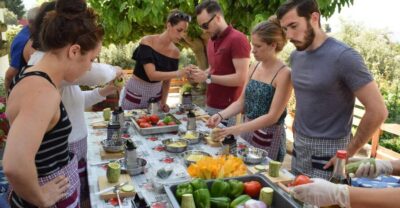
Authentic Cooking Class in the White Mountains
Read our review →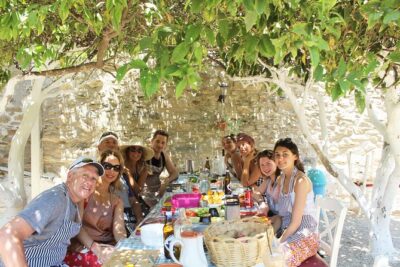
Browse the lists this tour appears in